
Livraison le jour même ou le lendemain

Qualité garantie

Débloquez vos offres de bienvenue: Livraison GRATUITE | Jusqu'à -80 % | 30 jours d'essai gratuits à JoyPlus
Téléchargez l'application
A well-organised kitchen relies on dependable storage solutions. Yet, choosing a food storage container can quickly become a headache. Between broken promises of a perfect seal and materials that degrade over time, it's easy to make a bad investment. Before you stock your cupboards, let's review the pitfalls to avoid and the criteria that truly make a difference.
The goal isn't just to store, but to preserve freshness, prevent waste, and simplify meal prep. Forget about lids that leak in your bag or plastic containers that hold onto the smell of last week's sauce. Here's how to make an informed choice.
Marketing can be misleading. Many products look practical on the shelf but reveal their flaws after just a few weeks of use. Here are the three most common pitfalls?:
For a durable and genuinely useful purchase, focus on these three technical points. They are your guarantee of a quality product that will simplify your daily life.
An airtight seal is the non-negotiable feature. To ensure this, check for a removable silicone gasket (for easy cleaning) integrated into the lid. This gasket should be compressed by a locking mechanism on all four sides of the container. It's this uniform pressure that prevents air and liquids from getting through, whether for a lunch box on the go or for storing a saucy dish.
The choice of material depends on your primary use.
A good design should save you space. Look for ranges where containers of different sizes can nest inside one another when empty and stack stably when full. Square or rectangular shapes are generally more efficient than round ones for optimising space on a shelf or in a drawer.
There's a solution for every need. Here is our selection of products that meet specific uses while adhering to the quality and practicality criteria we've just discussed.
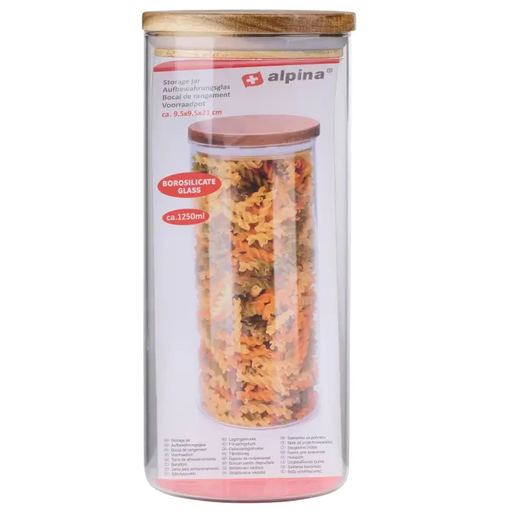
Why we chose it : For those who want to combine practicality and aesthetics, this glass jar with its acacia wood lid brings a natural, elegant touch to the pantry. It's perfect for showcasing dry goods like pasta, rice, or legumes.
With its durable glass body and solid wood lid, it sidesteps the trap of low-quality materials. Built to last, it won't retain stains or odours, unlike poor-quality plastics.
Its square shape allows for perfect alignment and efficient stacking, optimising storage space while creating visual harmony.

Why we chose it : This is the all-in-one solution for meal prep enthusiasts. Cook directly in the glass dish in the oven, store it in the fridge or freezer, then reheat it in the microwave. Its large capacity is ideal for family meals.
It delivers on its airtight promise thanks to its locking lid with a silicone gasket. The borosilicate glass resists thermal shock (with proper precautions) and does not degrade.
Its lid features a steam vent, a clever detail that allows for even, splatter-free reheating in the microwave.
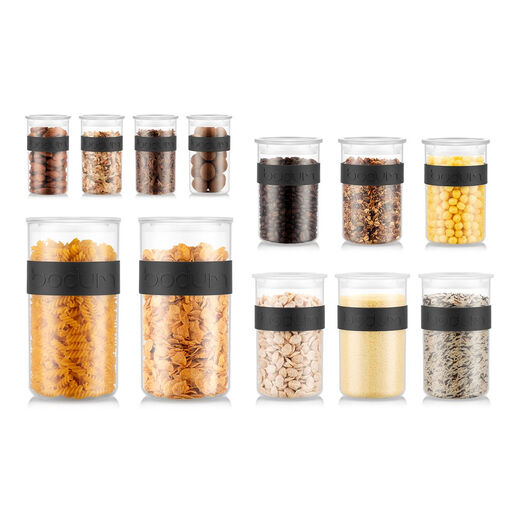
Why we chose it : This comprehensive 12-piece set is a perfect solution for a family. With four different sizes, it covers every need, from dinner leftovers and school snacks to storing dry ingredients.
This set tackles the problem of inefficient storage by offering a coherent, stackable system. No more chaos from mismatched containers. The BPA-free plastic is durable and food-safe.
Its value and versatility are its greatest strengths. A single purchase is enough to equip the entire kitchen, streamline organisation, and reduce waste.
We have selected a full range of products that meet our quality criteria and current safety standards.
Borosilicate glass contains boron trioxide, which gives it superior resistance to thermal shock. In practical terms, this means a glass dish with a lid made of borosilicate can better handle transitions from cold to hot (e.g., from the fridge to room temperature before going into the oven) without the risk of cracking. Regular (soda-lime) glass is less resistant to these sudden temperature changes.
To preserve the gasket's elasticity and seal, it's best to remove it from the lid before each cleaning. Wash it by hand with warm, soapy water, then let it air dry completely before putting it back. Avoid storing the containers sealed shut when they're empty; simply rest the lid on top so you don't compress the gasket unnecessarily.
No, it's crucial to check. Only plastic containers with the specific microwave-safe pictogram should be used in a microwave. Even for these, it's recommended to use them only for reheating, not for cooking food over a long period. Always remove the lid or open the designated vent before starting the microwave to allow steam to escape.