
Livraison le jour même ou le lendemain

Qualité garantie

Débloquez vos offres de bienvenue: Livraison GRATUITE | Jusqu'à -80 % | 30 jours d'essai gratuits à JoyPlus
Téléchargez l'application
Finding the perfect food storage container? In theory, it's simple. In practice, it's often a real headache. Between marketing promises and the reality of daily use, many containers end up being a disappointment: they leak, get stained, or warp after just a few dishwasher cycles. Yet the goal is clear: keep food fresh longer, organise your kitchen, reduce waste, and, increasingly, prepare meals in advance (the famous meal prep).
To avoid buyer's remorse, here's how to steer clear of the most common traps.
To make the right choice, focus on a few technical details that make all the difference.
The choice of material is crucial and depends entirely on your needs.
Forget lids that simply snap on. for a truly leak-proof seal, opt for four-latch locking systems paired with a quality silicone gasket. This type of closure ensures your meal container won't leak in your bag and will preserve the freshness of your food longer by limiting air exposure.
To optimise space in your cupboards and refrigerator, a stackable container is a real bonus. Some manufacturers offer complete ranges where containers of different sizes nest or stack perfectly, which greatly simplifies storage.
Rather than an exhaustive list, here are our recommended options, each tailored to a specific user profile.
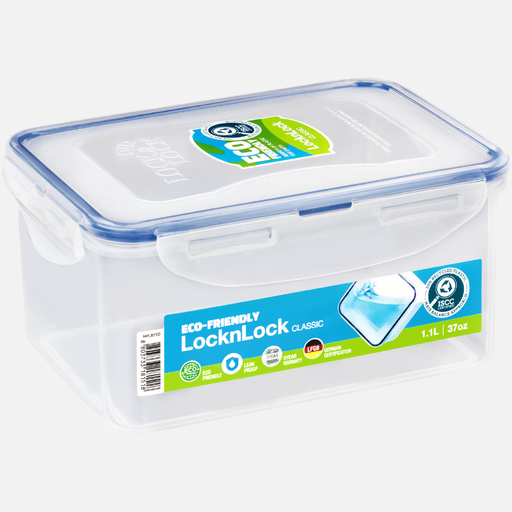
Why we chose it: This is the quintessential all-purpose container. Its 1.1 L capacity is perfect for leftovers or a full lunch. Lightweight and sturdy, it's ideal for those looking for a reliable solution without breaking the bank.
It sidesteps the "fake airtight" trap with its four-latch locking system and silicone gasket—a proven technology. It is clearly made from BPA-free plastic (polypropylene), leaving no ambiguity about the material.
Its reliability-to-price ratio is unbeatable. The locking system is designed to last, even after countless dishwasher cycles.

Why we chose it: For those who prioritise a healthy and versatile material. This glass container lets you bake a casserole, store it, freeze it, and then reheat it, all in the same dish. Perfect for meal prep and (almost) zero-waste cooking.
It eliminates the confusion around plastics by offering an inert, non-porous material. Its borosilicate glass is specifically designed to withstand high oven temperatures and thermal shock (when following proper precautions), sidestepping the trap of hidden incompatibilities.
Extreme Versatility: it goes from the freezer to the oven (without the lid), then to the microwave and dishwasher. One dish to do it all: cook, store, and reheat.
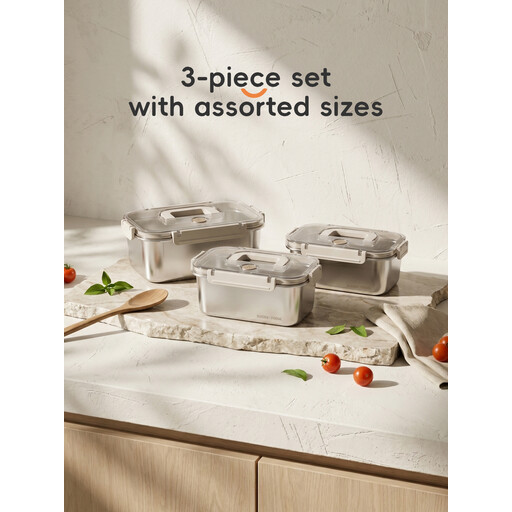
Why we chose it: For families or meal prep enthusiasts who need robust, high-capacity solutions. Stainless steel is unbreakable, lightweight, and perfectly hygienic. This set of three different sizes allows for complete organisation.
Food-grade 304 stainless steel is the ultimate defence against stains and odours, a classic pitfall of entry-level plastics. Its sturdy latch closures are designed for intensive, long-lasting use.
Exceptional Durability and Hygiene. Stainless steel doesn't scratch easily, doesn't retain grease, and is very easy to clean, ensuring safe use for many years to come.
Explore our full selection of food storage containers that meet our quality criteria and current standards.
No, and it's crucial to check the manufacturer's recommendations. Stainless steel containers should never be placed in a microwave. For plastic containers, even if the base is compatible, it is often advised to remove the lid before reheating to avoid pressure build-up and potential warping. Borosilicate glass remains the safest option for this purpose.
To preserve the seal, it is recommended to remove the silicone gasket from the lid before each wash, especially in the dishwasher. This allows for a deep clean of any food residue that might get trapped and prevents mould growth. Let it air dry completely before putting it back in place.
The BPA-free (Bisphenol A) label guarantees that the product complies with regulations that ban the use of this substance in food containers due to the health risks it poses. The alternative plastics used, such as polypropylene (PP) or Tritan, are considered by health authorities to be stable and safe choices for food contact under recommended usage conditions.