
Livraison le jour même ou le lendemain

Qualité garantie

Débloquez vos offres de bienvenue: Livraison GRATUITE | Jusqu'à -80 % | 30 jours d'essai gratuits à JoyPlus
Téléchargez l'application
A good food storage container is essential for a tidy kitchen, keeping food fresh longer, and reducing food waste. The problem? The market is saturated with products and disappointing marketing claims. A lid that warps, a seal that fails after a few washes, stubborn stains… these frustrations are unfortunately all too common.
As the Head of Product Recommendations at Joybuy, my mission is to help you make sense of it all. This guide breaks down the essential criteria for making an informed choice and avoiding the most common pitfalls.
Before you even start comparing models, it's crucial to know how to spot the flaws that can turn a good deal into a hassle.
To avoid these traps, focus on three fundamental criteria that make all the difference in quality and durability.
The choice of material has a direct impact on use, durability, and maintenance.
A leak-proof seal is a non-negotiable feature, especially if you're transporting saucy dishes or soups.
A good set of food storage containers should fit your daily routine. Check that they are stackable to optimise space in your cupboards and refrigerator. A variety of sizes will allow you to store everything from dinner leftovers to an individual portion for lunch at the office.
Instead of an endless list, here are a few models that meet specific needs, all selected according to the quality criteria we've just covered.

Why we love it : This set is perfect for *meal prep* enthusiasts who prepare their week's meals in advance. With two practical sizes (1040 ml and 370 ml), it makes it easy to portion out main dishes and sides. The borosilicate glass goes directly from the refrigerator to the microwave for a hot, hassle-free lunch at the office.
The borosilicate glass body won't stain or retain any odours, even with a bolognese sauce. The clip-lock system ensures a reliable seal for transport.
A complete storage container set that covers most daily needs, with a healthy, built-to-last material.
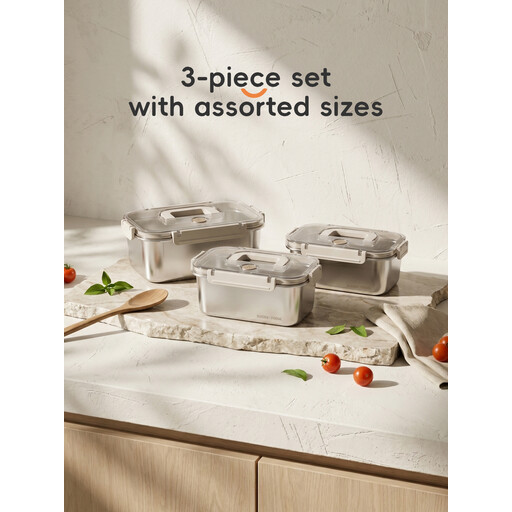
Why we love it : For families, durability and capacity are the top criteria. This 304 stainless steel set is virtually indestructible, resistant to both impacts and corrosion. The large volumes (1700 ml, 2100 ml, and 3200 ml) are perfect for storing leftovers from a family meal, preparing a large salad, or storing bulk foods.
Stainless steel doesn't warp, crack, or retain odours. It's a long-lasting investment that ends the endless cycle of replacing plastic containers.
Durability and large volumes. The handled lid makes it easy to carry for picnics or shared meals.

Why we love it : This individual lunch box is the perfect compromise. Its 630 ml size is ideal for a single lunch portion. Its borosilicate glass body allows you to reheat your meal directly in the microwave, while the renowned 4-clip locking system prevents any risk of leaks in your bag.
This model directly tackles the "false seal" pitfall. Its clip-lock system with a silicone gasket is designed to prevent leaks, even with soup.
A compact, reliable, and versatile airtight food container that goes from the fridge to the microwave with complete peace of mind.
We've curated a complete selection of products that meet our strict selection criteria and current safety standards.
Borosilicate glass is designed to withstand wide temperature swings. However, to maximise its lifespan, it's best to avoid extreme thermal shock. Never place a dish straight from the freezer into a preheated oven. Let it return to room temperature for a few minutes first. And of course, the plastic lid should never go in the oven.
For a deep clean and to eliminate odours, remove the gasket from the lid. Wash it by hand with hot water and dish soap. If an odour persists, let it soak in a mixture of water and white vinegar, or scrub it with a baking soda paste. Make sure it is completely dry before putting it back in place.
It varies greatly depending on the material and care. A high-quality stainless steel container or glass container can last for years, or even a lifetime. A plastic container, even a good one, will inevitably wear out faster (scratches, stains, warping); expect an average of a few years with regular use.