
Livraison le jour même ou le lendemain

Qualité garantie

Débloquez vos offres de bienvenue: Livraison GRATUITE | Jusqu'à -80 % | 30 jours d'essai gratuits à JoyPlus
Téléchargez l'application
Choosing the right food storage container? It seems simple enough. In reality, it's often where the trouble begins. Who hasn't been frustrated by cupboards overflowing with leaky containers, stubborn lids, or plastic permanently stained by bolognese sauce? Beyond the money down the drain, a poor choice jeopardizes the freshness of your food and turns your kitchen organization into a real headache.
To avoid regretting your purchase after just a few months, here are the pitfalls to avoid at all costs:
Fortunately, you just need to know the right criteria to sort through the options and avoid these disappointments.
Knowing how to read the label of an airtight food container is the secret to separating the wheat from the chaff. Here are the three points to examine closely.
The choice of material directly impacts the durability, health, and use of your containers.
A container's effectiveness hinges on its lid. The most reliable systems combine two elements: sturdy locking clips (usually on all 4 sides) and a removable silicone gasket. This gasket is what creates a perfect barrier against air and liquids. The fact that it's removable is a real bonus for deep cleaning, which prevents mould growth.
A good set of food storage containers must be cleverly designed to save space. Opt for sets where containers of different sizes stack stably in the fridge and, most importantly, nest perfectly inside one another when empty. This modular design frees up a surprising amount of cupboard space and radically simplifies storage.
To put theory into practice, here are a few models that perfectly illustrate these criteria, designed for different needs.
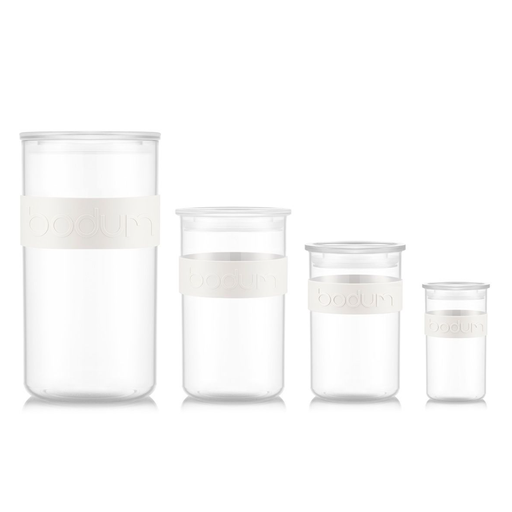
Why it's a great choice: This ultra-comprehensive 12-piece set, with its four sizes, is perfect for managing everything: dinner leftovers, dry ingredients, or kids' snacks. It's the ideal solution for streamlining storage in both the pantry and the fridge.
The stackable design counters the trap of chaotic storage. The BPA-free plastic and airtight seal are guarantees against premature wear and leaks.
Its great versatility thanks to the 4 different sizes. It's the perfect starting point for bringing lasting and cohesive order to your kitchen.
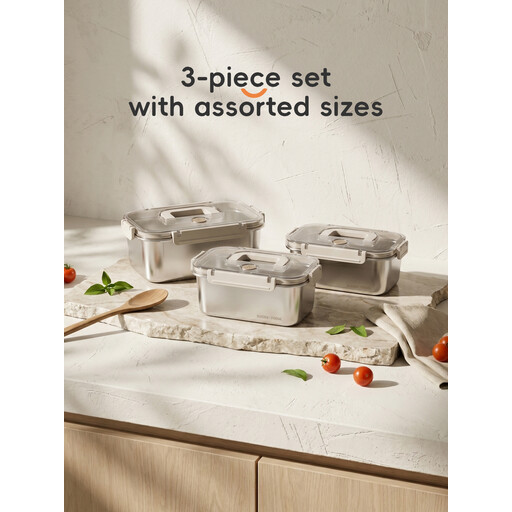
Why it's a great choice: Designed for those who are serious about prepping meals in advance. Stainless steel is robust, lightweight, and impervious to odours, even from the most stubborn saucy dishes. The clip-on lids with a handle ensure transport without any nasty surprises, whether to the office or the gym.
Its food-grade 304 stainless steel body eliminates the risk of materials that stain and age poorly. The 4-sided locking clips ensure a foolproof seal.
Unbreakable and very easy to clean. The handle integrated into the lid is a real plus for taking it anywhere.
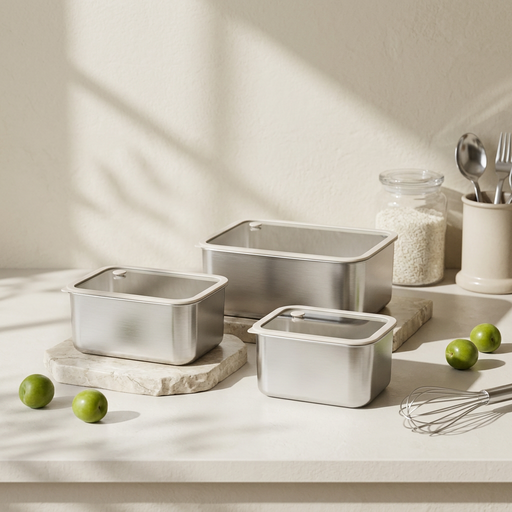
Why it's a great choice: The perfect solution for those who want to banish plastic from their kitchen. The combination of stainless steel and borosilicate glass creates a premium, elegant set that is literally built to last for years.
The choice of premium materials (304 stainless steel and borosilicate glass) is the best defence against wear and tear. The EU-compliant silicone gasket promises a seal that lasts.
A zero-plastic solution that handles both hot and cold temperatures. The transparent glass lid lets you see the contents at a glance.
Discover our full selection of products that meet our quality criteria and European safety standards.
No, not all materials handle freezing equally well. Stainless steel and borosilicate glass tolerate it without any issues. For plastic, it's crucial to check for the snowflake pictogram or the "freezer safe" mention. Unsuitable plastic can become brittle and crack.
If an odour persists despite regular washing, fill the container with a mixture of warm water and baking soda (about one tablespoon per litre of water) or white vinegar. Let it sit for several hours, or even overnight, before rinsing thoroughly.
Yes. Glass is an "inert" material, which means it transfers absolutely no chemical substances to food, even when in contact with fatty or acidic ingredients. It provides peace of mind for anyone wishing to avoid the potentially harmful compounds found in some plastics.