
Same-day & Next-day Delivery

Quality Guaranteed

Unlock Your Welcome Offers: FREE Delivery | Up to 80% OFF | Free 30-day JoyPlus trial
Download the APP
Finding the perfect food storage container can revolutionize your kitchen routine. The problem?? The market is saturated with promises that rarely deliver. A lid that warps in the dishwasher, a supposedly airtight seal that lets salad dressing leak into your bag, or those impossible-to-stack containers that take over an entire cabinet... Do any of these scenarios sound familiar??
To avoid throwing your money away, let's review the most common pitfalls:
To avoid these disappointments, it's best to rely on objective technical criteria. These are the true guarantors of a food storage container's quality and durability.
The choice of material depends primarily on your intended use. There is no one-size-fits-all solution, but rather a specific answer for every need.
Airtightness relies on a power duo: the gasket and the locking mechanism.
Always check the maximum and minimum temperatures supported by both the container AND its lid. Most plastic lids are not oven-safe. Period. For the microwave, it is almost always recommended to remove the lid or open the steam vent to let vapor escape and avoid any risk of over-pressurization.
Rather than searching for a one-size-fits-all container (which doesn't exist), it's better to choose based on your habits. Here is our selection for specific needs.
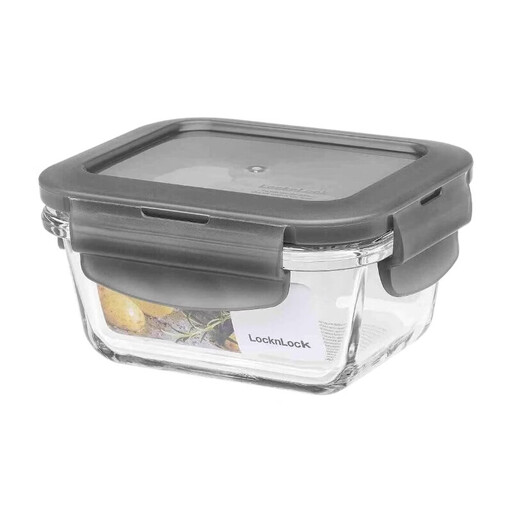
Why it's a great choice ? Perfect for those who love to go from preparing a casserole or roast to storing leftovers in the same dish. It moves seamlessly from the oven to the table, then to the fridge, significantly simplifying cleanup and organization.
Its body, made of heat-resistant glass (up to 400 °C without the lid), won't stain or retain odors, unlike low-quality plastics. It solves the problem of using materials unsuitable for cooking.
Its oven/microwave/freezer versatility. The screw-on lid with a silicone seal ensures an excellent airtight seal for storage.
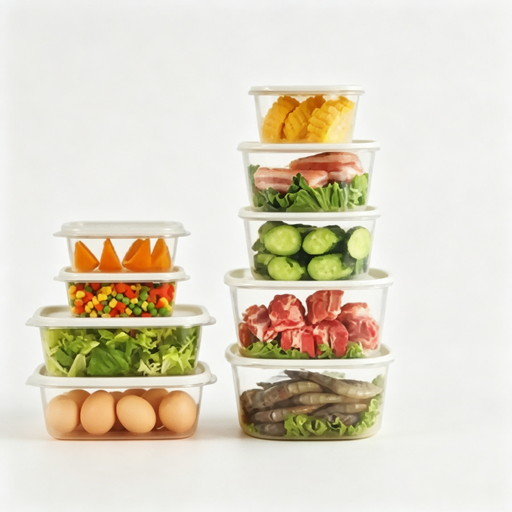
Why it's a great choice ? For families or anyone who likes having a dedicated solution for every need: dinner leftovers, kids' snacks, or dry food storage. A food storage container set brings both visual and practical consistency.
This set is designed for stable stacking, which solves the problem of counterproductive design and wasted space. You get a cohesive organizational system instead of a mismatched collection.
Unbeatable value for the price. The variety of sizes covers most everyday needs.
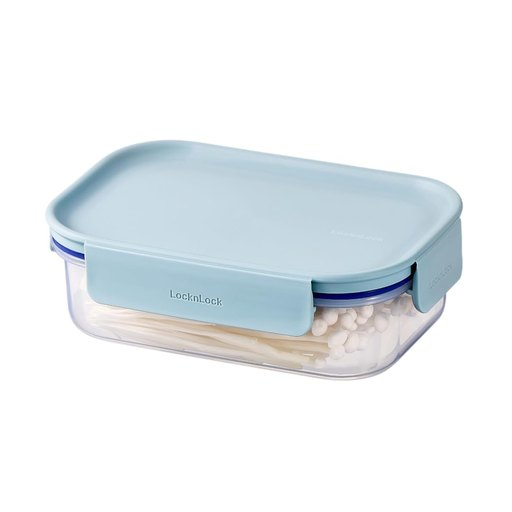
Why it's a great choice ? Perfect for meal preppers who take their lunch to go. Its light weight is a major advantage, and its rectangular shape is optimized to slip into a bag without taking up too much space.
Its locking system is designed for daily use, and its BPA-free material is safe for the microwave (without the lid). It avoids the "false airtightness" trap with a seal and clips that inspire confidence.
Lightweight, stackable, and food-safe (BPA-free). Its 910 ml capacity is ideal for a full meal.
We have selected a full range of products that meet our quality criteria and the strictest safety standards.
The "BPA-Free" label must be clearly visible on the packaging or product page. It's a selling point that reputable manufacturers always highlight. When in doubt, it's best to steer clear and choose another product or opt for glass.
Absolutely not; this is a common mistake. The vast majority of lids, especially those with silicone seals or locking clips, are not designed for the microwave. The heat can warp them and destroy their airtight seal. The golden rule?: always remove the lid before reheating.
Proper care can significantly extend their lifespan. Wash them after each use. To prevent stubborn stains on plastic (from tomato sauce, curry, etc.), rinse them immediately. For models with a seal, remember to remove it periodically for a separate cleaning to prevent residue and mold buildup. Finally, with glass, avoid extreme thermal shock (like moving it directly from the freezer to a hot oven) to prevent any risk of breakage.