
Livraison le jour même ou le lendemain

Qualité garantie

Débloquez vos offres de bienvenue: Livraison GRATUITE | Jusqu'à -80 % | 30 jours d'essai gratuits à JoyPlus
Téléchargez l'application
Whether for taking lunch to the office, organising your weekly meal prep, or simply keeping leftovers fresh, the food storage container is a cornerstone of our kitchens. Yet, when faced with a shelf overloaded with marketing promises, a purchase often ends in disappointment: leaky lids, plastics that stain at the first sign of tomato sauce, and stubborn odours.
As a product expert for the editorial team, my mission is to do the groundwork for you. This guide is based on objective criteria to help you choose a durable food container that truly fits your daily life—and most importantly, comes without any nasty surprises.
Before we get into the technical details, let's review the most common disappointments. Once you know them, you won't be fooled again.
To avoid buyer's remorse, let's focus on the three pillars that define the quality and suitability of a food storage container.
Each material has its strengths and weaknesses. The choice will depend on your primary use.
For an on-the-go meal container, being leak-proof is non-negotiable. A truly reliable system depends on two inseparable elements:
A tidy kitchen (and an optimised fridge) starts with smart containers.
Here are our recommendations, selected to meet specific needs by strictly applying the quality and practicality criteria we've just discussed.

Our verdict: This set of three sizes (600 ml, 1.1 L, and 2.2 L) is the perfect starter kit for organising your weekly meals. The 316 stainless steel is a long-term investment: it withstands everything (freezer, dishwasher) and guarantees impeccable hygiene, even with heavy use.
Unlike plastics that degrade quickly, 316 stainless steel offers unmatched resistance to corrosion, stains, and odours. Its lifespan is virtually unlimited.
The quality of the 316 stainless steel, a surgical-grade material, and the versatility of the three-size set, which is ideal for meticulous meal prep organisation.
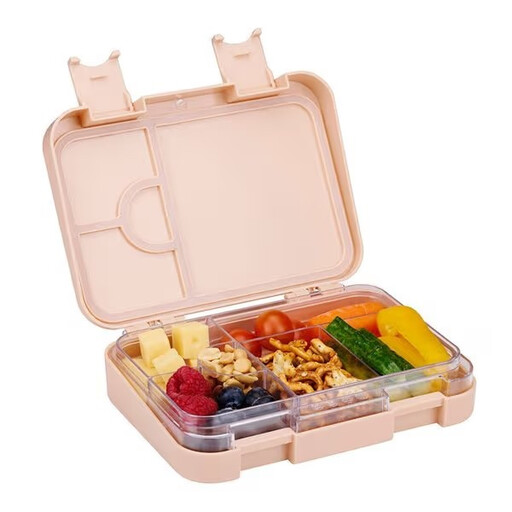
Our verdict: This bento box is designed for life on the go. Its six compartments allow you to create a complete and varied meal without the flavours mixing. Its compact size slides easily into a tote bag or backpack.
No more single dishes swimming in sauce! Its multi-compartment design solves the problem of everything mixing together, for a lunch that actually tastes great.
Perfect meal organisation thanks to its six compartments, all in an ultra-compact format designed for transport.
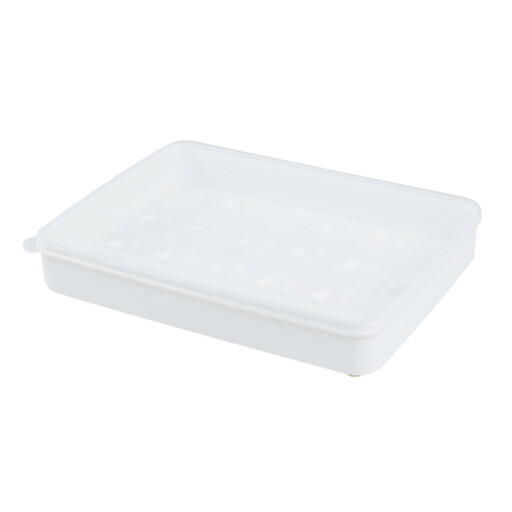
Our verdict: For organisation fanatics who want to optimise every square centimetre of their fridge, this dedicated egg box is a clever accessory. It protects eggs much better than cardboard and allows you to make use of vertical space.
It does away with flimsy cardboard packaging that's impossible to stack. Instead, it offers a rigid, transparent, and stackable solution that prevents accidents and wasted space.
A 24-egg capacity, a stackable design, and total transparency to see your stock level at a glance.
Discover our full selection of products that meet our quality criteria and food safety standards.
Absolutely not! You should never put any metal object, including a stainless steel container, in a microwave. Metal reflects the microwaves, which can damage your appliance and cause dangerous sparks. To reheat your food, simply transfer it to a suitable plate or bowl.
The old trick that always works: fill the container with a mixture of hot water and baking soda (use one to two tablespoons). Let it sit for several hours, or ideally overnight, before rinsing thoroughly. Diluted white vinegar is also an excellent alternative.
These are two types of high-quality stainless steel, both perfectly suitable for food contact. 304 stainless steel is the most common and already offers very good corrosion resistance. 316 stainless steel, sometimes called "marine-grade stainless steel," also contains molybdenum. This addition gives it superior resistance to corrosion, especially from salt and acids (like those in tomato sauce or vinaigrette). It's the gold standard for durability.