
Livraison le jour même ou le lendemain

Qualité garantie

Débloquez vos offres de bienvenue: Livraison GRATUITE | Jusqu'à -80 % | 30 jours d'essai gratuits à JoyPlus
Téléchargez l'application
Finding the perfect food storage container can feel like a daunting task. Between promises of a perfect seal and a multitude of materials, we quickly end up with cupboards full of containers that leak, stain, or warp after just a few uses.
As a product expert at Joybuy, my mission is to help you navigate the options. Let's cut through the marketing jargon and focus on what really matters for preserving your food, organising your kitchen, and simplifying your life. Here's how to avoid the most common pitfalls.
To make an informed choice, you need to consider a few technical points. They are the guarantee of your containers' durability, safety, and everyday convenience.
Each material has its own advantages and disadvantages for specific uses.
The effectiveness of an airtight container relies on the lid-and-gasket duo. Systems with four side clips, paired with a removable silicone gasket, are generally the best guarantee against both air and liquid leaks. The fact that the gasket is removable is a real plus: it allows for deep cleaning to hunt down any trace of mould.
meal prep to FreezingYour habits will dictate the level of versatility you need. If you're a meal prep fan, you'll appreciate containers that go effortlessly from the fridge to the microwave. For this, check for a steam vent on the lid: it allows you to reheat your meal without having to open it completely (and without redecorating your microwave). For freezing, make sure the material is designed to withstand low temperatures without becoming brittle. A set of food storage containers in different sizes is often the most cost-effective solution to cover all your needs.
Rather than an endless list, we've selected a few models that meet specific needs, applying the criteria we've just discussed.

Perfect for those who prepare their week's meals in one go. This large glass dish allows you to cook directly in the oven, store in the fridge, and then reheat in the microwave. The entire meal prep process is simplified from start to finish.
Its borosilicate glass body is impervious to stains and odours. Most importantly, its lid with an integrated steam vent puts an end to the "false versatility" headache: you can reheat cleanly and safely.
Its large 2.3 L capacity is ideal for family-sized meals. Its total versatility: oven (without lid), microwave, freezer, and dishwasher safe.

The ideal alternative to plastic and glass. This set of stainless steel containers is lightweight, virtually indestructible, and therefore perfect for taking lunch to work or storing food in the freezer without fear of breakage.
316 stainless steel is a stable, food-grade material that retains no odours and contains no controversial substances. Its durability is simply no match for that of low-end plastics.
Unbreakable, lightweight, and perfectly hygienic. The set of three sizes (0.6 L, 1.1 L, 2.2 L) covers most needs.
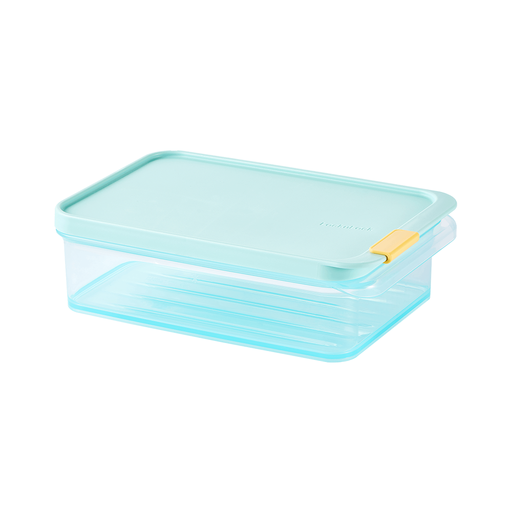
Specially designed to optimise every nook and cranny of your freezer. Its shape and recessed lid ensure stable and perfectly neat stacking. A real game-changer for freezing food.
This model tackles the problem of containers that stack poorly or become brittle in the cold. Its modular design is the solution to end the clutter and optimise every square inch.
Ultra-stable stackable design thanks to the recessed lid. BPA-free plastic specially designed to withstand very low temperatures without cracking.
We have put together a complete selection of products that meet our selection criteria and the strictest safety standards.
Only borosilicate glass containers can withstand such thermal shocks, and with caution. The golden rule: never move a dish from the freezer to a preheated oven. Let it return to room temperature first. Conversely, never place a hot glass dish in the fridge or freezer. And of course, the plastic lid never goes in a conventional oven.
Glass and stainless steel are unbeatable on this front. For your plastic containers, the first step is to rinse them with cold water immediately after use, before washing with hot, soapy water. For a stubborn odour? Cleaning with a mixture of water and baking soda often works wonders. Finally, dry the containers and lids thoroughly before storing them, leaving them slightly ajar to allow air to circulate.
Polypropylene (PP), identifiable by the number 5 inside a triangle, is known for its heat resistance and its safety for food contact. Unlike older plastics, it is guaranteed to be BPA-free (bisphenol A), a controversial chemical compound. Choosing a PP container is therefore a guarantee of everyday safety, especially for reheating in the microwave.