
Same-day & Next-day Delivery

Quality Guaranteed

Unlock Your Welcome Offers: FREE Delivery | Up to 80% OFF | Free 30-day JoyPlus trial
Download the APP
A well-organised kitchen starts with storage solutions that actually work. However, choosing the right food storage container can quickly become a headache. Between marketing promises and a multitude of options, it's easy to end up with cupboards full of containers that warp, no longer seal properly, or worse, let your food spoil. As a Product Recommendation Manager at Joybuy, my mission is to help you navigate the choices. Let's break down the common pitfalls to avoid so you can make an informed decision.
Before you even think about design, it's crucial to identify the design flaws that can render a container almost useless in just a few months.
To make the right choice, focus on a few technical details that make all the difference.
The secret to proper food preservation lies in the lid. Forget models that clip on with minimal effort. Look for containers with a soft silicone seal and a robust locking mechanism, often with clips on all four sides. This type of closure guarantees a foolproof seal, which is essential for preserving the freshness of leftovers, preparing your meals in advance (meal prep), or protecting your dry goods from moisture.
Each material has its strengths. The key is to choose the one that best suits your needs.
Good design is, above all, functional design. Favour ranges that offer square or rectangular shapes and compatible base sizes. A system where lids are interchangeable between different container sizes is a major plus. Stackable containers transform a messy cupboard into a perfectly optimised kitchen and pantry storage space.
Instead of looking for a one-size-fits-all container, it's better to choose a solution tailored to your daily life.
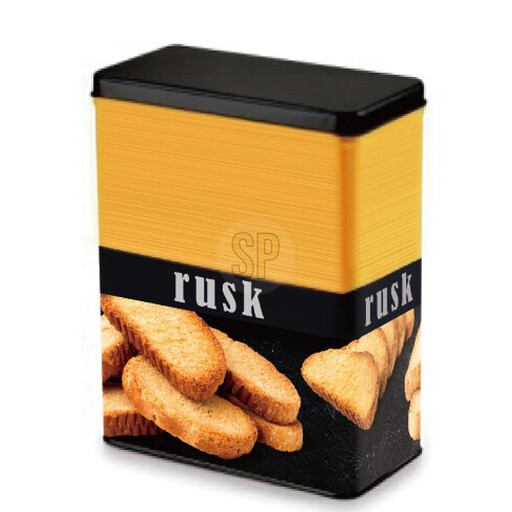
Why we chose it: Ideal for those who love to showcase their homemade creations. Its classic, timeless design looks great on a worktop, turning storage into a decorative piece. It's the quintessential biscuit tin.
It avoids the "wrong material" pitfall: made of tinplate, it's perfect for keeping biscuits crisp by protecting them from air and moisture.
Its durable and opaque metal structure effectively protects from light and air. This is an absolute must for preserving the crunch of biscuits and other treats.

Why we chose it: For those looking for a complete and cohesive solution. This 12-piece set of storage containers in 4 sizes allows you to organise your entire pantry with a modern, consistent style. Perfect for bulk buying, leftovers, and meal prep.
It solves the problem of non-modularity with its space-optimising stackable design. Its truly airtight lids put an end to the "airtight illusion".
A complete and versatile system. Its BPA-free plastic is safe and durable, while the variety of sizes meets most kitchen storage needs.
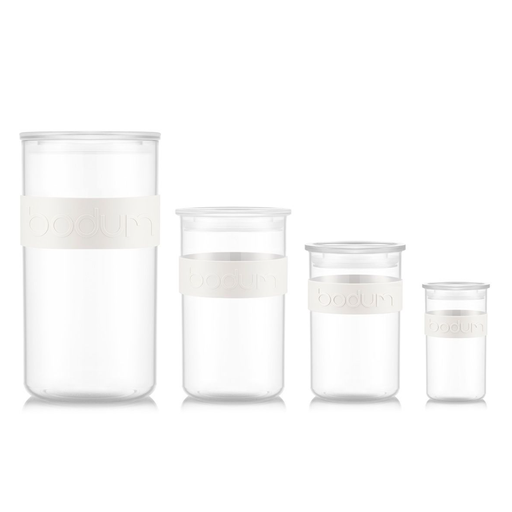
Why we chose it: For those who love the efficiency of the Bodum set but prefer a cleaner aesthetic and the ability to see the contents at a glance. The transparent body and white accents combine visibility with organisation.
Like its black counterpart, this set offers a modular, stackable system with genuinely airtight lids, avoiding the main design flaws of low-end products.
The transparency of the BPA-free plastic allows you to identify food at a glance, simplifying stock management and meal prep.
We have selected a full range of products for you that meet our quality criteria and food safety standards.
Its lifespan depends on the quality of the plastic and how it's maintained. A high-quality, BPA-free plastic can last for several years. To extend its life, avoid the microwave (unless otherwise specified by the manufacturer) and wash the lids by hand to preserve the silicone seals. Be sure to replace any container that is cracked, heavily stained, or warped.
The best indicator is the presence of a silicone or rubber gasket in the lid, combined with a firm locking mechanism (such as clips on all four sides). A lid that simply presses on is rarely truly leak-proof. The trick to test it? Fill the container with water, close it, and turn it upside down. No leaks should appear.
A set of storage containers is often more cost-effective and guarantees a cohesive, stackable system—a major advantage for optimising kitchen and pantry storage. Buying individual containers is still a good option for very specific needs, such as a large container for flour or a pretty decorative biscuit tin.