
Same-day & Next-day Delivery

Quality Guaranteed

Unlock Your Welcome Offers: FREE Delivery | Up to 80% OFF | Free 30-day JoyPlus trial
Download the APP
A good food storage container is the key to better-organized meals, less food waste, and food that stays fresh longer. But with crowded shelves and marketing promises that don't always deliver, how do you make sense of it all? As a Product Manager at Joybuy, I'm here to separate fact from fiction and help you make the right choice—one that will truly fit your daily life.
Before you check out, here are the 3 pitfalls to avoid so you don't regret your purchase:
To avoid falling into these traps, focus on these three points that make all the difference.
The material of your container determines its use, lifespan, and maintenance.
Forget simple snap-on lids. For an infallible seal, especially with liquids, look for the winning combination:
This is the system that separates a simple storage box from a truly leak-proof meal container, ready to be tossed in a bag.
A good container should simplify your life, not complicate it. Always check the manufacturer's icons to confirm its compatibility with:
The right container for every need. Here is our selection of products that check all the boxes on our quality criteria.

Why it stands out: Perfect for families who cook, store, and reheat large portions. Its generous capacity and oven-safe design make it an ideal all-in-one dish for casseroles, lasagnas, or weekend leftovers.
Its lid features a steam vent, which solves the microwave-compatibility headache. You can reheat safely with the lid on, without any splatters.
Its borosilicate glass body is a true oven-safe dish, able to go from high-temperature baking to the fridge or freezer (while respecting thermal shock limits).
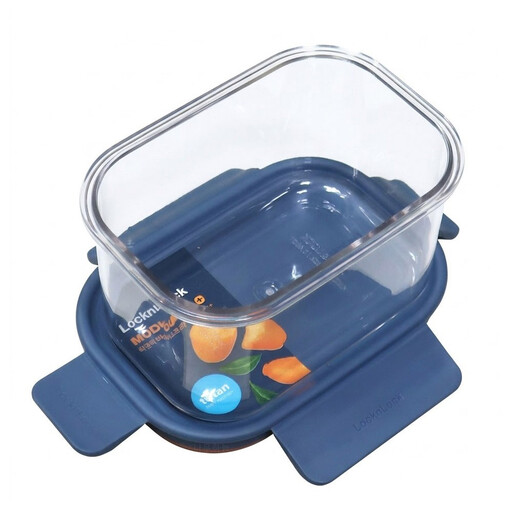
Why it stands out: The perfect partner for those who prep their weekly meals in advance. Its modular design allows containers to be stacked and nested for maximum space-saving in the fridge and cupboards. Lightweight, it is effortlessly portable.
It avoids the trap of false airtightness. Its four-clip locking system and silicone gasket ensure a perfectly leak-proof seal, even for saucy dishes on the go.
Its modular design is a real bonus for organization. A set of storage containers from this range allows you to create an ultra-optimized storage system.

Why it stands out: The healthy and reliable solution for your daily lunch box. The glass guarantees zero transfer of taste or odour, even when reheating yesterday's fish. Its size is ideal for a single serving.
It solves the problem of hygiene and durability in plastics. The borosilicate glass won't stain from tomato sauce and doesn't retain odours—a common flaw in plastic containers after a few months of use.
Its heat resistance allows you to reheat your meal directly in the container in the microwave (without the lid), for a much healthier and more pleasant experience than with plastic.
Discover our complete selection of containers that meet our demanding specifications for quality and safety.
No, and this is a mistake to avoid. Only borosilicate glass is designed to withstand the high temperatures of an oven. Regular soda-lime glass could crack or shatter from the heat. Always look for the "oven-safe" label or the corresponding icon before putting a glass container in to bake.
For stubborn odours, fill the container with a mixture of warm water and white vinegar (or baking soda) and let it soak for several hours before rinsing. Another old-school tip: let it dry in the sun. To avoid this problem altogether, it's best to reserve your glass or stainless steel containers for very odorous, greasy, or saucy foods (like curry, fish, etc.).
Buying a set of food containers is often more advantageous in terms of price per unit. It also ensures perfect modularity for stacking and storage, creating a system that is both practical and streamlined. It's an excellent starting point for getting equipped. Buying single units remains relevant for a very specific need, such as a very large capacity or a special shape not available in a set.