
Same-day & Next-day Delivery

Quality Guaranteed

Unlock Your Welcome Offers: FREE Delivery | Up to 80% OFF | Free 30-day JoyPlus trial
Download the APP
A good food storage container promises a more organised kitchen, food that stays fresh longer, and finally, stress-free on-the-go lunches. Yet, there's often a world of difference between marketing promises and reality. A lid that leaks in your bag, a plastic dish that warps from heat, or a set of containers where half of them just gather dust in the back of a cupboard?– sound familiar?
To help you avoid these disappointments, our editorial team has broken down the topic and is sharing the essential criteria for a successful purchase.
The food storage container aisle is a jungle. Many products boast benefits that, in practice, simply fall flat. Here are the 3 traps to watch out for?:
To avoid buying blind, focus on these few decisive technical points.
This is arguably the number one criterion. The material will dictate the container's use, lifespan, and ease of maintenance.
The entire effectiveness of an airtight container depends on its locking system. The best-performing ones combine two key elements?:
meal prepWhether you're a meal prep pro or simply seeking a well-organised fridge, the shape and modularity of your containers make all the difference. Prioritise stackable and nesting designs. A well-designed food storage container set, with sizes that fit inside one another, is the key to optimising every square inch of your fridge and cupboards.
Rather than searching for a one-size-fits-all container (which doesn't exist), it's better to choose the right product for the right purpose.

Why we chose it : The ideal companion for "batch cooking" fans. You can cook, store, transport, and reheat all in the same dish. Lunch logistics have never been simpler.
Its borosilicate glass body is a genuine oven-safe dish, eliminating the risk of using the wrong material. The 4-clip lock and silicone gasket ensure a foolproof seal.
Total versatility : it's oven-safe (without the lid), microwave-safe, freezer-safe, and dishwasher-safe. One dish from start to finish.
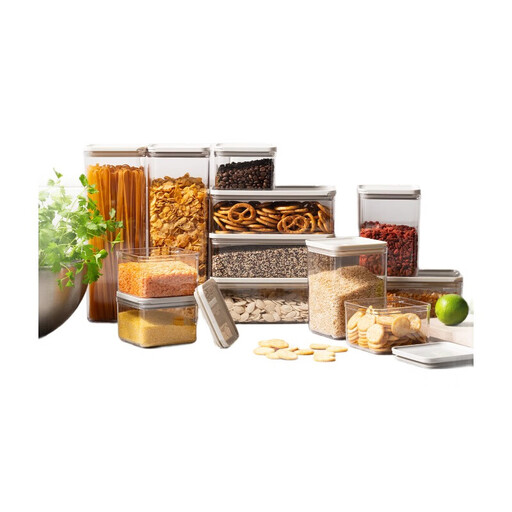
Why we chose it : For those who dream of transforming their chaotic cupboards into an Instagram-worthy pantry. This set allows you to store all your dry goods (pasta, rice, flour, coffee...) in a practical, airtight, and stylish way.
This food storage container set is designed for optimisation. It offers four genuinely useful sizes (goodbye, useless formats!) and a stackable design to make the most of your cupboard height.
A complete and cohesive system of 12 jars with airtight lids, for a kitchen organisation system that actually works.

Why we chose it : The solution for anyone who wants to enjoy a delicious, hot, home-cooked meal at the office or on the move, without waiting in line for the microwave.
This insulated food jar fills a gap left by classic containers : keeping a meal truly hot. No more disappointment of a lukewarm lunch.
Its 316 stainless steel vacuum insulation retains temperature (hot or cold) for 4 to 6 hours. The included insulated carrying bag is a real bonus.
Absolutely not! This is a very bad idea. Even highly resistant borosilicate glass can shatter from extreme thermal shock. To be safe, let the dish thaw for a few minutes at room temperature before putting it in the oven, or opt for a gentle defrost in the refrigerator. And of course, the plastic lid should NEVER go in the oven.
To ensure a long-lasting seal, make it a habit to remove the silicone gasket from the lid before each wash. Wash it by hand with warm water and a little washing-up liquid, then rinse it thoroughly. Make sure both the gasket and the groove in the lid are completely dry before putting it back. This is the best way to prevent mould and extend its lifespan.
The "BPA-free" label is a health and safety prerequisite, but it's not an absolute guarantee of quality. Other factors to consider include the thickness of the plastic, its resistance to stains and odours, and the sturdiness of the locking clips. A low-quality plastic, even if BPA-free, will warp, scratch, and stain much more quickly.