
Livraison le jour même ou le lendemain

Qualité garantie

Débloquez vos offres de bienvenue: Livraison GRATUITE | Jusqu'à -80 % | 30 jours d'essai gratuits à JoyPlus
Téléchargez l'application
Whether you're taking lunch to the office, mastering meal prep, or just organising your pantry, the food storage container has become an everyday essential. The problem? The market is saturated with models that make tempting promises but often disappoint in practice. A container that leaks in your bag, plastic stained by the first tomato sauce, a lid warped in the dishwasher… We've all been there, but these mishaps are avoidable.
To stop you from throwing your money down the drain, let's review the most common pitfalls:
You don't need to be an engineer to make the right choice. Just focus on a few key technical points that will determine the durability, safety, and usability of your next container.
This is arguably the number one criterion. It dictates food safety, the container's lifespan, and its ease of maintenance.
A good locking system is your guarantee of drama-free transport and optimal preservation. Take a look at the silicone gasket: it should be thick, flexible, and, most importantly, removable for a perfect clean. The locking clips should feel sturdy and apply even pressure all the way around. A four-clip system is often a good sign of reliability.
The container's design should fit your lifestyle.
To put theory into practice, here are a few models that meet specific needs and check all the right boxes.

The verdict: Perfect for *batch cooking* fans. The three sizes (600 ml, 1100 ml, 2200 ml) cover every need, from a snack to a family-sized meal, with impeccable hygiene.
The 316 stainless steel ends the nightmare of materials that stain or retain odours. Curry, tomato sauce... nothing fazes it.
Durability and versatility: this set is both freezer and dishwasher safe. The containers are stackable for optimised storage.
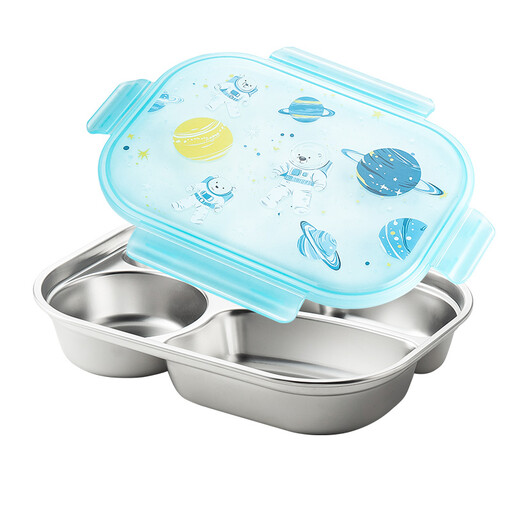
The verdict: The perfect compartmentalised lunch box for carrying a complete, balanced meal without mixing flavours. Its stainless steel design makes it both lightweight and sturdy, ready for the daily grind.
It avoids the trap of counter-productive design. Its four fixed compartments mean you don't have to juggle multiple small containers, simplifying transport and cleaning.
Perfect organisation: the compartments help with portion control and preserve the texture of each food item until your lunch break.
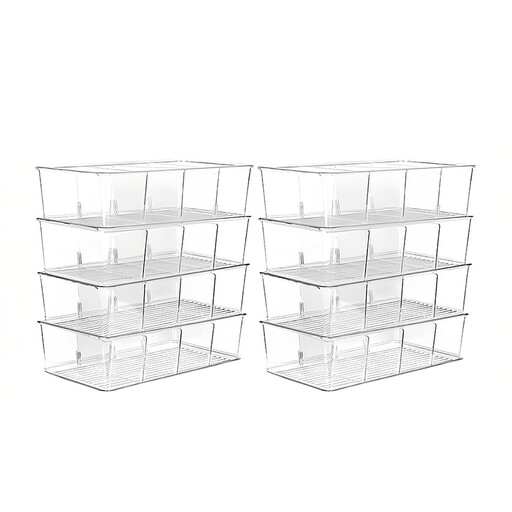
The verdict: This organiser is the solution for tidying up kitchen cupboards or a desk. Perfect for dry foods like tea bags, coffee pods, biscuits, or dried fruit. Also available in a set of 4 and a set of 2.
It checks the practicality box. Its transparent PET design lets you see the contents at a glance, while its open structure provides easy access.
Modularity and visibility: these boxes allow you to create a custom, clear, and ultra-accessible pantry storage system.
We've put together a complete selection of products that meet our strict specifications for quality and safety.
316 stainless steel contains molybdenum. This addition significantly increases its resistance to corrosion, especially from chlorides (found in salt) and acids. For food use, where the container will be in contact with dressings, sauces, or salty foods, 316 stainless steel ensures better durability and greater long-term safety compared to 304 stainless steel.
If possible, inspect the lid in the store. The silicone gasket should be flexible and fit snugly in its groove. The clips should offer slight resistance when closing. The ultimate at-home test: fill the container with water, close it, shake it, and turn it upside down. Not a single drop should escape.
Absolutely not; caution is advised. Metal containers (stainless steel, aluminium) should never be put in the microwave. For plastic, look for the symbol that indicates it's microwave-safe. In any case, it's recommended to remove the lid before reheating to prevent any pressure build-up that could warp the container. Borosilicate glass handles microwave heat very well, but again, always without its lid.