
Livraison le jour même ou le lendemain

Qualité garantie

Débloquez vos offres de bienvenue: Livraison GRATUITE | Jusqu'à -80 % | 30 jours d'essai gratuits à JoyPlus
Téléchargez l'application
A good food storage container is an indispensable ally for a well-organised kitchen and a healthy diet. Yet, the market is saturated with promises that are rarely kept. A lid that warps in the dishwasher, tomato sauce that permanently stains the plastic, or a supposedly leak-proof seal that fails in your backpack: these frustrations probably sound familiar.
Before you buy, it's best to know the most common marketing traps so you can invest in products that are genuinely useful and durable.
To avoid making a mistake, focus on a few key points. They make all the difference in the performance, safety, and daily usability of your containers.
The choice of material is crucial for the container's use, durability, and safety.
The effectiveness of airtight containers depends entirely on their lids. Systems with four-sided clips and a removable silicone gasket (which is easier to clean) are generally the most reliable. Take a look at the sturdiness of the clips: they shouldn't feel flimsy after a few uses.
Good organisation starts with well-designed containers. Favour ranges where containers of different sizes nest when empty and stack securely when full. This modularity is the key to optimised pantry storage and a well-organised fridge. This efficiency truly shines when paired with modern appliances like an air fryer, which is perfect for quickly preparing the base components of your meal prep kit.
There's no one-size-fits-all solution. The right product is the one that fits your daily life. Here is our selection to help you find yours.
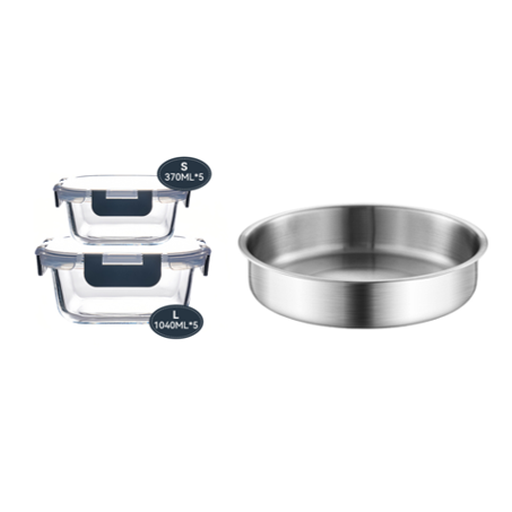
Why we chose it: This kit is designed for those who prep their meals for the week. The borosilicate glass containers allow you to cook, store, and reheat in the same dish, while the stainless steel plate offers a durable and stylish serving solution.
The non-porous glass permanently solves the problem of stains and odours, even with the most stubborn saucy dishes.
Maximum versatility: the glass containers are oven, microwave (without lid), freezer, and dishwasher safe.

Why we chose it: For those who want containers that are virtually indestructible and perfectly safe. The 316 stainless steel offers superior corrosion resistance, making it a very long-term investment ideal for heavy family use.
Unlike plastic, stainless steel does not warp, crack, or degrade, ensuring foolproof food safety.
Lightweight and robust. Perfect for picnics, school lunches, or work without fear of breakage.
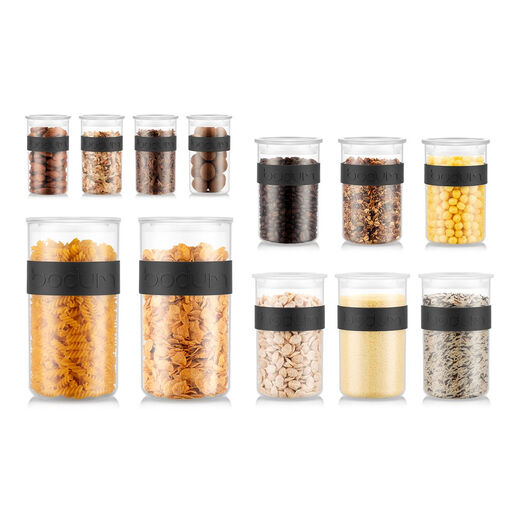
Why we chose it: This comprehensive 12-piece set in various sizes is designed to standardise the storage of dry goods (pasta, rice, flour, cereal). The clean design and stackable nature are perfect for transforming a chaotic cupboard into a model of organisation.
It tackles cupboard chaos by offering a coherent, stackable system, a far cry from an accumulation of mismatched shapes and sizes.
The large number of containers and variety of sizes allow you to standardise all your dry goods storage in one go.
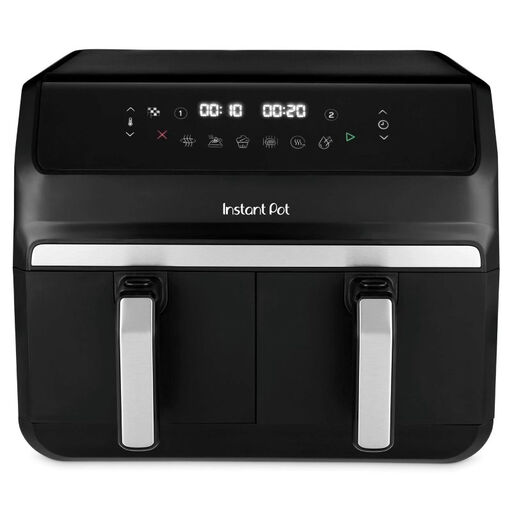
Why we chose it: An efficient kitchen isn't just about storage. This appliance is the starting point for successful meal prep. Its two independent drawers allow you to simultaneously cook roasted vegetables and a protein source, preparing the food for your storage containers in record time.
It tackles the root of the problem: lack of time, by making meal preparation faster and less of a chore.
The dual-zone cooking offers significant versatility and time savings, fitting perfectly into a meal prep routine.
Explore our full selection of products that meet our quality criteria and standards.
A borosilicate glass container, provided you avoid thermal shocks or impacts, can last for many years, or even a lifetime. Its material does not degrade. Conversely, a plastic container, even a high-quality one, will eventually get scratched, stained, or warped after 2 to 5 years of intensive use (repeated cycles in the dishwasher and microwave).
Yes, absolutely! Stainless steel handles low temperatures very well and is an excellent choice for freezing—lighter and less fragile than glass. The only precaution to take: leave a little space at the top of the container if you are freezing liquids, as they expand when they freeze.
Inspect the lid. A thick silicone gasket, well-seated in its groove, is a good sign. Locking systems with clips on all four sides are generally a mark of reliability, much more so than lids that simply snap on top. If possible in a store, test the firmness of the clips. For an online purchase, rely on detailed product descriptions that mention a silicone gasket and a robust locking system.