
Same-day & Next-day Delivery

Quality Guaranteed

Unlock Your Welcome Offers: FREE Delivery | Up to 80% OFF | Free 30-day JoyPlus trial
Download the APP
Finding the perfect food storage container can sometimes feel like an uphill battle. Yet, the right one can revolutionise your kitchen organisation and help reduce food waste. The problem is, the market is a jungle of marketing promises that rarely deliver. Between lids that warp after the first wash and plastics that turn orange after one bolognese, it's easy to make a poor investment. This guide is here to help you cut through the noise and choose the model that truly fits your daily life.
Before you pull out your credit card, beware of these common issues that too often turn a bargain into a regret.
To avoid these traps, focus on two fundamental aspects that determine the quality and longevity of your future airtight food container.
The choice of material has a direct impact on use, durability, and maintenance.
A container's effectiveness depends primarily on its lid. Systems with four-sided locking clips and a removable silicone seal (for impeccable cleaning) offer the best long-term guarantee of being leak-proof. Also, consider modularity: do the containers stack stably to optimise space in the fridge and cupboards? When empty, do they nest inside each other for maximum space-saving? A well-thought-out design makes all the difference in daily use for optimising kitchen storage.
Rather than an endless list, we've selected models for specific uses.
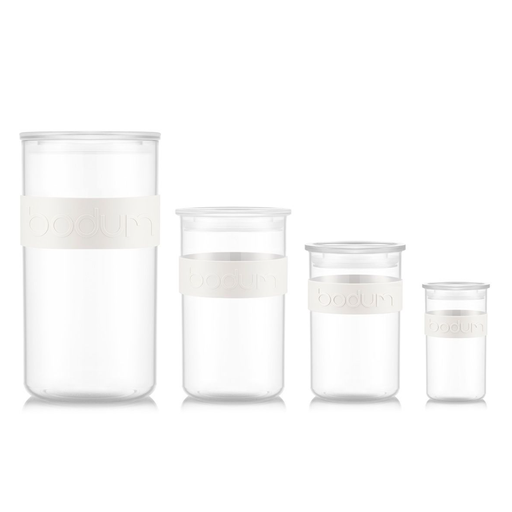
Why we love it: The perfect solution for organising your dry goods (pasta, rice, flour, coffee). The stackable design optimises space in cupboards and on the countertop.
This set avoids the trap of useless sizes. It offers four genuinely practical sizes (0.25L, 0.6L, 1L, and 2L) for everyday needs, from spices to cereals.
Its airtight lid is ideal for preserving the freshness of dry goods. Its BPA-free plastic is robust, and its minimalist design fits in anywhere.

Why we love it: Ideal for prepping your meals for the week. Its borosilicate glass goes from the oven to the freezer, then to the microwave, without ever needing to switch containers. The two sizes (1040ml and 370ml) are perfect for a main dish and a side.
Say goodbye to the risky microwave-safe gamble. Stable borosilicate glass doesn't warp or release any substances when heated. It's the guarantee of healthy and durable use.
Its versatility is its greatest asset (oven, microwave, freezer). The glass doesn't stain or retain any odours, even after a curry or bolognese.
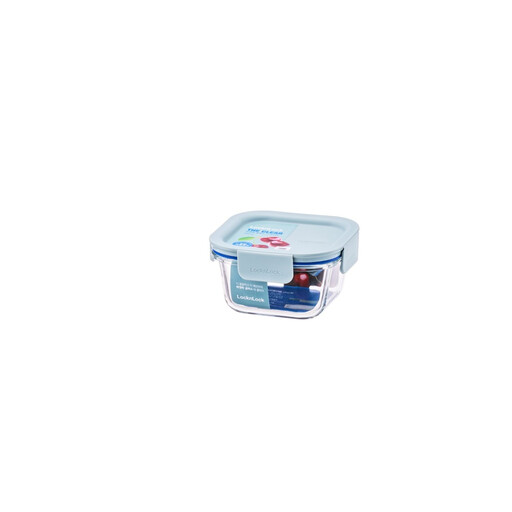
Why we love it: The perfect individual **lunch box**. Its 500ml size is ideal for a single portion. Its glass body allows you to safely reheat your meal at the office, while the locking lid ensures leak-proof transport.
Goodbye to the anxiety of a questionably airtight lid. Its robust locking system, combined with the rigidity of glass, ensures a foolproof seal. No more nasty surprises in your backpack.
Compact, reliable, and healthy. Easy to clean, the glass retains no trace of yesterday's meal. A real plus for daily use.
We have compiled a complete selection of products that meet our quality criteria and safety standards.
1. What is the lifespan of a food storage container? The lifespan depends primarily on the material. A glass food storage container can last for decades if it doesn't suffer a fatal impact. For plastic, the lifespan ranges from 1 to 5 years on average. Repeated trips to the microwave or high-temperature dishwasher cycles can accelerate their wear and tear by warping the plastic and damaging the seals.
2. Can all airtight containers go in the freezer? The vast majority of quality glass and plastic containers are designed to be freezer-safe. However, always check the manufacturer's recommendations as a precaution. Pro tip for liquids (soups, sauces): only fill the container three-quarters full. This leaves enough space for the ice to expand, preventing the container from cracking or warping.
3. How do you remove stubborn odours and stains from plastic containers? Got a stubborn tomato sauce stain? Leave your container in the sun for a few hours: UV rays have a surprising bleaching effect. To combat bad odours, a simple solution: fill the container with a mixture of warm water and baking soda (or white vinegar). Let it sit for several hours before rinsing. Finally, one last tip: always store your containers without their lids to allow air to circulate and prevent odours from setting in.