
Same-day & Next-day Delivery

Quality Guaranteed

Unlock Your Welcome Offers: FREE Delivery | Up to 80% OFF | Free 30-day JoyPlus trial
Download the APP
A good food storage container can be life-changing: it simplifies meal prep, reduces waste, and makes it easy to take your lunch on the go. The problem? The market is saturated with products and disappointing marketing promises. A container that leaks in your bag, plastic that stains after one use with tomato sauce, or a lid that warps in the wash… these frustrations probably sound familiar.
As a product expert at Joybuy, my mission is to help you navigate the options. Let's forget the technical jargon and marketing claims to focus on what really matters for daily use. Here’s how to avoid the most common pitfalls and choose the food storage container that’s perfectly suited to your needs.
The 2 Pitfalls to Avoid When Buying:
To make an informed decision, it's better to rely on objective criteria rather than marketing slogans.
The material of your container will determine its use, durability, and maintenance.
The secret to a great container? Its lid. Opt for models equipped with a removable silicone seal (essential for deep cleaning) and a 4-clip locking system. This design ensures even pressure on the seal and a foolproof, leak-proof closure, even when transporting saucy dishes.
For on-the-go lunches, a compartmentalised lunch box, like a bento box, is an ideal solution. It allows you to separate the different components of your meal (starches, vegetables, sauce) so that each one retains its texture and flavour until you're ready to eat.
Instead of an endless catalogue, we've selected a few models that meet specific needs, based on the quality and practicality criteria mentioned above.
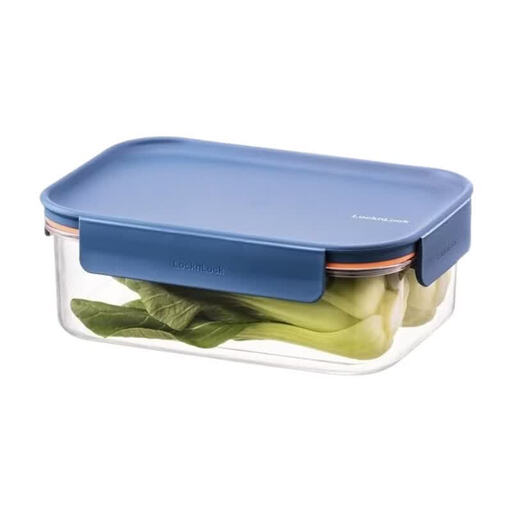
Why we chose it: Ideal for carrying a full meal, this lunch box is made from Tritan, a robust plastic that doesn't stain or retain odours. Its 910 ml capacity is perfect for a main course, and its 4-clip locking system with a silicone seal eliminates any risk of leaks in your bag.
Its 4-clip locking system and thick silicone seal are the direct answer to the pitfall of false leak-proof promises.
Durable, BPA-free Tritan material; microwave-safe (without lid) and dishwasher-safe for easy maintenance.

Why we chose it: This **food storage container set** is the all-in-one solution for weekly meal prep and storing leftovers. Borosilicate glass is as hygienic as it is versatile: it goes safely from the refrigerator to the oven. With 10 pieces in two different sizes, this set covers every need, from small portions to family-sized meals.
Glass is a non-porous material, which definitively solves the problem of stubborn stains and odours, even with the most challenging saucy dishes.
Complete and versatile set; the glass resists thermal shock and won't degrade, ensuring maximum durability.
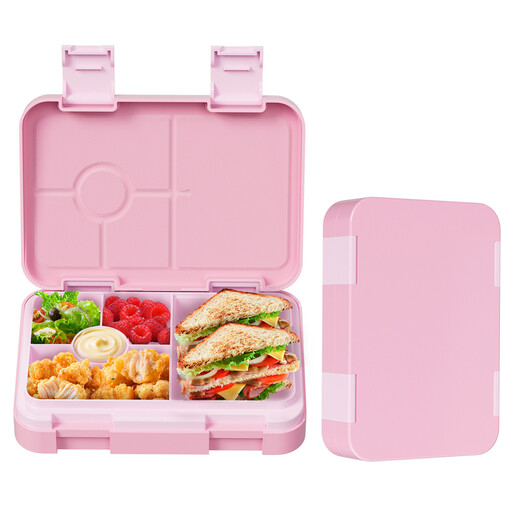
Why we chose it: This bento-style **kid's lunch box** is designed to make lunch as fun as it is balanced. Its 5 compartments allow you to pack a varied meal (fruit, vegetables, sandwich, snack) without anything mixing. The double-latch closure is easy for little hands to operate, while remaining perfectly secure.
Its fixed-compartment design is much smarter than 'modular' boxes with removable dividers that always get lost in the back of a drawer.
5 compartments for a varied and appealing meal; practical and safe design, ideal for daily use at school.
Explore our full collection of products that meet our demanding selection criteria and current safety standards.
If an odour lingers despite a regular wash, fill the container with a mixture of warm water and white vinegar (equal parts) and let it sit for several hours. Another trick: create a paste with baking soda and a little water, coat the inside of the container, and let it sit overnight before rinsing.
No, it is essential to check the pictograms on the product.
Both materials are suitable, but with a few precautions. Glass is an excellent option, as long as you don't fill the container to the brim (especially with liquids) to leave room for expansion during freezing. Plastic, being lighter, won't risk shattering if dropped once frozen, making it easier to handle.