
Livraison le jour même ou le lendemain

Qualité garantie

Débloquez vos offres de bienvenue: Livraison GRATUITE | Jusqu'à -80 % | 30 jours d'essai gratuits à JoyPlus
Téléchargez l'application
Whether for managing leftovers, prepping your meals for the week, or simply keeping food fresh longer, a good food storage container is an indispensable ally in any kitchen. But between glass, stainless steel, different sizes, and various locking systems, the choice can quickly become overwhelming. The stakes are high: preserving the flavour and quality of your food, while optimising your kitchen organisation and fighting food waste.
To help you make sense of it all, our experts have vetted the best solutions on the market. Whether you need to store dishes in the fridge, freeze portions, or organise your cupboards, here is our guide to finding the perfect container.
Before diving into our selection, let's review the key points to consider to make the right choice.
The choice of material is not trivial: it directly impacts food preservation, the container's durability, and its daily use.
A perfectly airtight seal is crucial. An airtight food container prevents leaks, avoids odour transfer in the refrigerator, and slows down food oxidation. The most reliable systems combine a silicone gasket with locking clips. For bags, a quality zip-lock closure is essential.
Beyond materials, it's the ergonomics that will make the difference. A set of storage containers in various sizes that are stackable is a smart move to save precious space in your cupboards and refrigerator. Also, remember to check their compatibility with the dishwasher and freezer—features that are real lifesavers.
Now for our top picks. We have selected three products that stand out for their smart design and effectiveness for specific needs.

Why it stands out: These bags are the modern and sustainable alternative to single-use freezer bags. Their secret? A multi-layer structure (PET, aluminium, PE) that forms a nearly impenetrable barrier against light and moisture, ideal for preserving the most delicate foods (meat, fish) from oxidation.
Pros:
Best for: Anyone who freezes food regularly and is looking for a more effective and eco-friendly solution than traditional plastic bags.
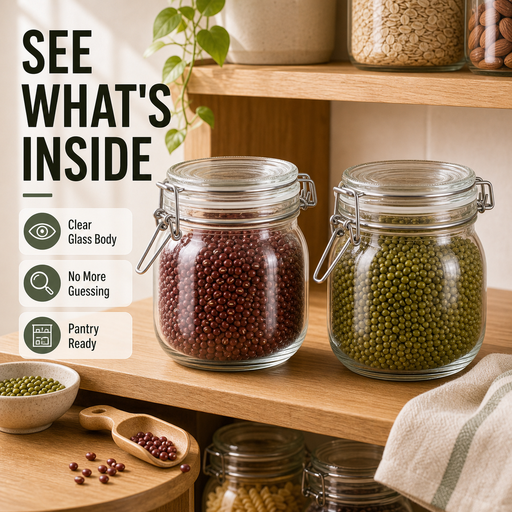
Why it stands out: This storage jar combines the timeless elegance of glass with an ultra-reliable mechanical locking system. Its non-porous borosilicate glass body, paired with a silicone gasket and stainless steel clips, guarantees a foolproof airtight seal.
Pros:
Best for: The ideal partner for organising the pantry and storing bulk items like cereals, legumes, pasta, or dried fruits, while effectively protecting them from moisture.
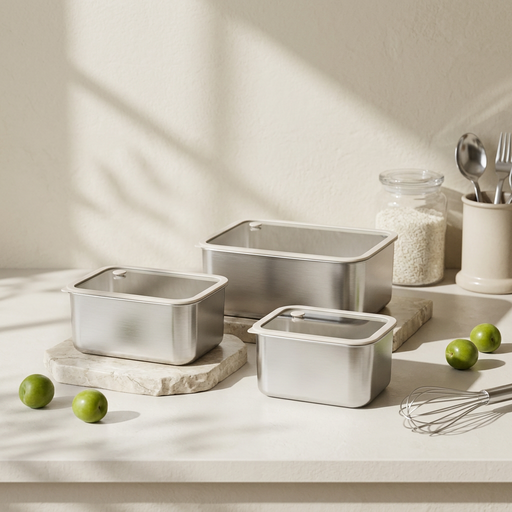
Why it stands out: This smart set combines the best of both worlds: the sturdiness of 304 stainless steel and the convenience of a transparent glass lid. Their deep, stackable design makes them a key asset for meal prep and optimising fridge space.
Pros:
Best for: A must-have for meal prep enthusiasts, families who prepare dishes in advance, or anyone looking for a versatile and virtually indestructible storage solution.
If your quest is focused on organising fresh produce, we have what you need. To keep your salads crisp and your fruits and vegetables fresh for longer, explore our dedicated collection.
Discover our range of fruit and vegetable storage containers
1. What is the difference between glass and stainless steel for food storage? Glass is chemically neutral (it doesn't retain odours or stains) and transparent. Its weakness: it's heavier and can break. Stainless steel, on the other hand, is lightweight, virtually unbreakable, and ideal for transport. The trade-off is that it's opaque, which protects from light but prevents you from seeing the contents.
2. Can you freeze food in glass containers? Yes, but with a few precautions. You must use borosilicate glass, which is more resistant. Remember to leave a 2 to 3 cm space at the top of the jar, as food expands when it freezes. Most importantly, never move the container directly from the freezer to the oven or microwave: the thermal shock could cause it to shatter.
3. How do you properly maintain your storage containers so they last? Washing by hand with a non-abrasive sponge is usually sufficient. For added convenience, check if they are dishwasher-safe. Pro tip: remove and clean the silicone gaskets separately to prevent any mould growth. Finally, drying them completely before storing is the key to preserving their airtight seal over the long term.