
Livraison le jour même ou le lendemain

Qualité garantie

Débloquez vos offres de bienvenue: Livraison GRATUITE | Jusqu'à -80 % | 30 jours d'essai gratuits à JoyPlus
Téléchargez l'application
Perfect, uniform slices for a carpaccio, a charcuterie board, or even a simple cucumber salad can transform an ordinary dish into a chef-worthy presentation. A food slicer is the ideal solution. But be warned: the market is flooded with models making tempting promises, and it's easy to end up with a disappointing, or even dangerous, appliance.
To avoid buyer's remorse, it's crucial to know how to spot the flaws that can turn a good deal into a nightmare after just a few months. Here are the three most common traps and our advice on how to avoid them.
To make an informed choice, ignore the marketing hype and focus on these key technical features. They are the true guarantors of your future cutting tool's performance and longevity.
The blade is the heart of your slicer. It dictates what you can (and cannot) slice with precision.
The sturdiness of the frame guarantees both your safety and the quality of the cut.
This choice depends entirely on your needs.
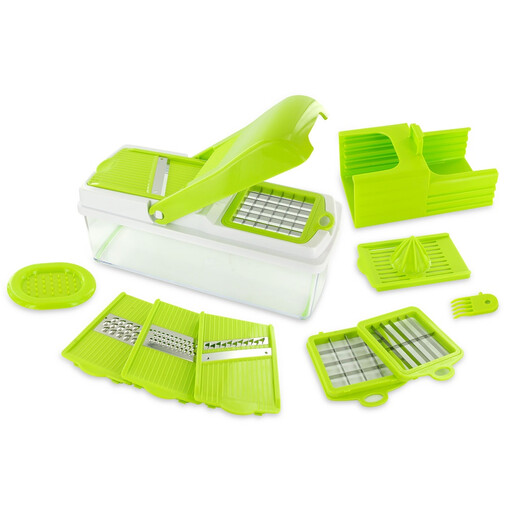
Why we chose it: Perfect for those who want a versatile tool for daily tasks. It slices, grates, and juliennes vegetables, fruits, and cheeses without taking up the counter space of a large electric appliance.
It sidesteps the trap of a single, non-versatile blade thanks to its 7 interchangeable accessories. Each blade is designed for a specific cut, ensuring a flawless result every time.
Its smart design includes a container that directly catches the sliced food, keeping your work surface clean. Meanwhile, the safety pusher guarantees risk-free use.
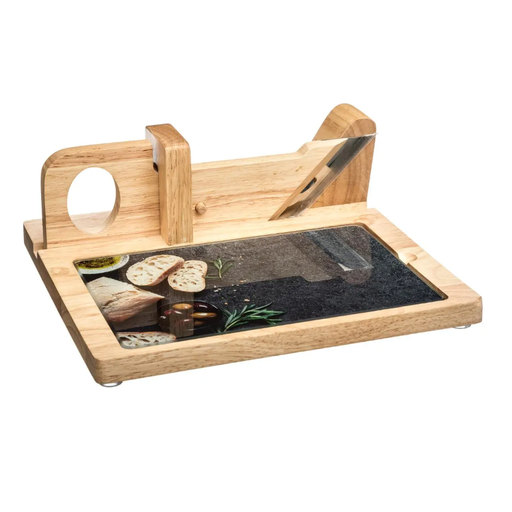
Why we chose it: A must-have for appetizer enthusiasts who love to present beautiful charcuterie or cheese boards. Its elegant wood design makes it an object that is as practical as it is aesthetic, perfect for placing directly on the table.
It solves the stability problem with its solid wood base, which doubles as both a cutting support and a serving platter. The structure is rock-solid and won't bend, even against the driest sausages.
Its sharp stainless steel blade ensures a clean, precise cut—a must for charcuterie. The manual control allows you to adjust the thickness of each slice to perfection, much to the delight of purists.
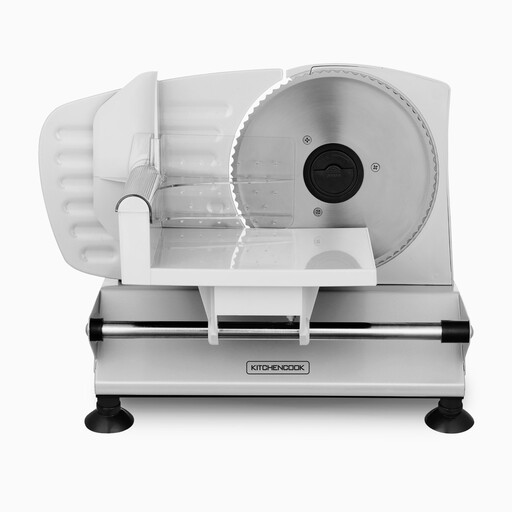
Why we chose it: For those who regularly slice large volumes (whole loaves of bread, roasts, blocks of cheese) and want the consistency and speed of an electric model, without investing in a prohibitively expensive professional one.
It avoids the trap of illusory power and overheating by being transparent: the manufacturer states a maximum continuous run time of 10 minutes, which is honest information. Its cast aluminium frame and suction cup feet give it impeccable stability.
Its precise thickness adjustment (from 0 to 15 mm) and its 190 mm serrated stainless steel blade allow it to tackle a wide variety of foods. A significant bonus: the removable carriage makes cleaning much easier.
Discover our full selection of products that meet our quality criteria and current safety standards.
Cleaning can be a breeze... if you choose the right model. The secret? Opt for a slicer with a removable carriage and, most importantly, a removable blade. The golden rule before any cleaning: unplug the appliance and set the adjustment dial to "0" to secure the blade. Never immerse the motor block in water; a simple wipe with a damp cloth is sufficient for this part.
The smooth blade is the king of thin, clean cuts. It's what you need for charcuterie, raw fish (sashimi), or carpaccio. It glides through the food without ever tearing it. The serrated blade, on the other hand, is more versatile. Its teeth "bite" into the crusts of bread or the tough skins of certain vegetables without crushing them. It's an excellent choice for more general-purpose use.
That's a very bad idea. Never use a domestic slicer, whether manual or electric, to cut completely frozen food. You risk irreversibly damaging the blade and burning out the motor. The correct practice: let the food partially thaw before slicing. And when in doubt, always consult the manufacturer's instructions.