A food processor is a good choice if you regularly chop, grate, blend or knead, and the version you choose includes the attachments you need. If you mainly use one function, compare it with a dedicated appliance. If you also want to cook in the machine, consider a cooking food processor instead. In every case, usable capacity, storage space and cleaning are just as important as the list of advertised functions.
Who is this option for?
A food processor is best suited to a routine that involves several different food preparation tasks. However, the space you have available and how much importance you place on cleaning and maintenance may point you towards another option.
Home cooks who prepare a variety of dishes
You chop, grate, slice or blend several times a week, and want to check whether the same base unit can also meet your kneading needs. Checking the attachments included with the version on sale is more useful than looking at the number of advertised functions alone.
Small kitchens where every bit of storage counts
You need to be able to get the food processor out, clean it and put it away without disrupting your kitchen. Compare its dimensions and the bowl’s usable capacity, and check how much space you’ll need for the discs and other removable parts.
Shoppers who care about how long an appliance will last
You’d rather check the warranty terms, availability of spare parts and tests carried out on the exact model than collect attachments you’ll rarely use. A lifespan quoted by a manufacturer is not, by itself, a measure of reliability.
Which features should you prioritise?
First decide whether you need several food preparation functions, one main function or cooking built in. Then compare models based on the tasks you actually do, as well as the quantities you prepare and the space you have available.
Food processor
Consider it: if you regularly switch between slicing, chopping, blending or kneading using the same base unit, depending on the tools supplied.
Bear in mind: there are several parts to handle, wash and store, and you shouldn’t assume every function will deliver the same results.
Separate appliances
Consider them: if you mainly use a blender, chopper or mixer and rarely take out the other tools.
Bear in mind: you’ll have several appliances to store if you start preparing a wider variety of dishes.
Cooking food processor
Consider it: if heating or cooking in the same appliance is one of your main needs.
Bear in mind: its cooking function doesn’t mean you can skip checking whether it has the tools you need for slicing and other preparation tasks.
| What matters | What to check | Who it’s for |
|---|
| Tasks and attachments |
Think about the dishes you make regularly, then check which blades, discs and tools are included with the exact version. |
If I often chop and grate, I want to be able to do both with the parts supplied. Around 31% of shoppers would prioritise this ability to handle their regular tasks. |
| Usable capacity |
Compare the bowl’s usable volume with the portions you prepare, and check whether a small bowl would be useful for smaller quantities. |
For family-sized portions or small amounts of sauce, I want a suitable capacity so I don’t have to make several batches. Around 25% of shoppers would prioritise this. |
| Space and cleaning |
Measure the space you have set aside, count the attachments you’ll need to store and check the cleaning instructions for each part. |
In a small kitchen, I want to be able to put the food processor away after every meal. Around 25% of shoppers would put storage and cleaning first. |
| Performance and support |
For the exact model, look for tests covering stability and noise. Also check the warranty terms and availability of spare parts. |
If I knead regularly, I want to know how the machine performs and what after-sales support is available. Around 19% of shoppers would consider this their main need. |
The stated capacity and usable capacity are not necessarily the same. For noise, stability or resistance to repeated washing, look for a test of the exact model you’re considering. UFC-Que Choisir, for example, describes how it assesses basic functions in its food processor testing protocol.
Mistakes to avoid
-
Assuming the number of functions tells you what’s in the box
An advertised function may rely on an attachment that isn’t included with the version you’ve chosen. You might then find you can’t make one of your usual dishes.
Compare the list of included parts with the recipes you make regularly, paying particular attention to the types of disc and kneading tools.
If a disc or small bowl you need is sold separately, you’ll also need to find somewhere to store it.
-
Choosing based on power alone
The wattage alone doesn’t tell you how well a machine will handle small quantities, firm ingredients or longer preparations.
Also look at the tools, usable capacity and the recommended limits for continuous use for the model you’re considering.
-
Forgetting how much space the attachments take up
A food processor may fit on your worktop but still need separate storage for its discs, bowls and other tools. Cleaning them is also a consideration if you use the machine frequently.
Measure the space you have available, including room for the attachments, and check the instructions before putting removable parts in the dishwasher.
-
Assuming a test result applies to an entire range
After dishwasher endurance tests and kneading stability tests, UFC-Que Choisir reported wear-related limitations for the Moulinex Double Force Digital FP826H10. These findings apply to this particular model and don’t automatically describe other Moulinex models.
If kneading performance or noise matters to you, look for a test of the exact model you’re planning to buy.
Brands to consider
These ranges give you a basis for comparing bowls and attachments. The features of one model don’t necessarily apply to every product from the same brand.
Magimix
The CS range is designed for households looking to combine slicing, blending and kneading, with several bowls.
- Magimix says the CS 4200XL comes with three bowls, as well as a motor warranty and spare parts availability for 30 years.
- These manufacturer commitments don’t, by themselves, tell you how noisy or stable the model is in use. Check the warranty terms too.
Moulinex
The range includes food processors designed for tasks such as slicing, grating, chopping and kneading.
- Moulinex says the Easy Force FP242B10 comes with four attachments, offers fifteen functions and has space to store its attachments inside the bowl.
- Check which attachments are included with the version on sale and, if needed, look for a test of this exact model rather than another food processor from the same brand.
Kenwood
The MultiPro range lets you compare different bowl sizes and attachment sets.
- Kenwood says the MultiPro Go Blend FDP23.380GY has a 1.3 L bowl, with a usable capacity of 0.75 L for liquid ingredients. The MultiPro Express FDP65.820SI is listed with a 3 L bowl, with a usable capacity of 1.5 L.
- These capacities and the stated attachments aren’t enough to compare the noise, kneading performance or durability of the two models.
Food processors for different preparations
These products are for food preparation without built-in cooking. Some focus on slicing and chopping, while another combines a baking bowl with a blender. Choose according to the tasks you need to do, and confirm which attachments are included with the version you order.
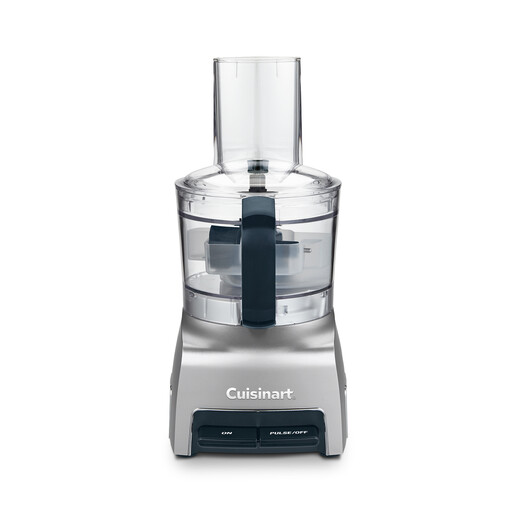 Image unavailable
Cuisinart FlexPrep FP5E, 1.1 L
Worth a look if you want to combine chopping and grating in one food processor. The stated capacity is 1.1 L. Check the usable volume for your portions, as well as which tools are included if you also need to knead.
View on Joybuy
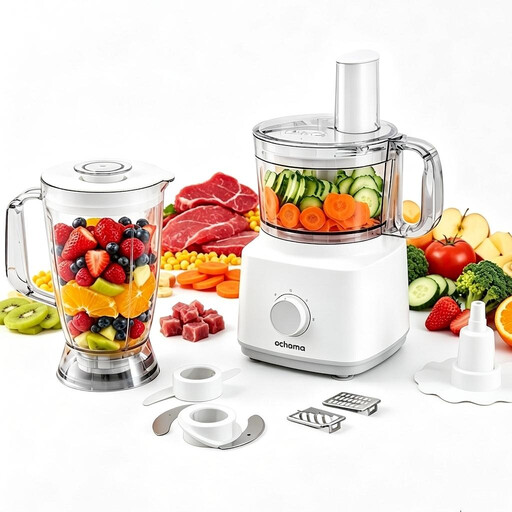 Image unavailable
ochama Food Processor, 750 W, 1.8 L
Worth comparing if you want to chop and grate using the same appliance. The product name lists 750 W, a capacity of 1.8 L and grating discs. Check which other parts are included with this version, particularly for slicing or blending, and confirm the bowl’s usable capacity.
View on Joybuy
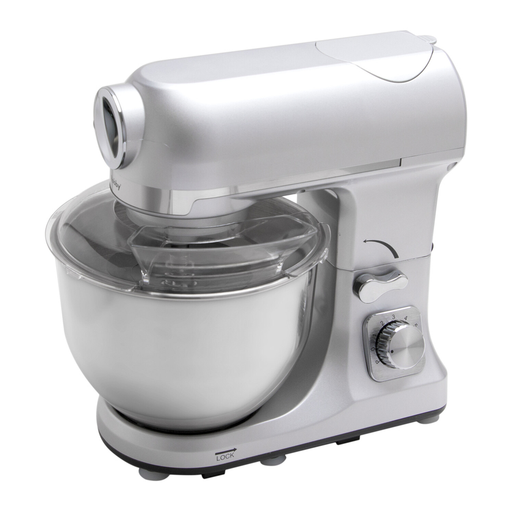 Image unavailable
Robby Kitchen Robot, 5 L, 1.5 L glass blender
Consider it if you mainly bake and make blended drinks. The product name lists 1,000 W, a 5 L bowl, a 1.5 L glass blender and a meat mincer. If grating or slicing is essential for you, check that the relevant tools are included. Also read the cleaning instructions before choosing this size.
View on Joybuy
Frequently asked questions
Which attachments do you need to replace several small appliances?
You need the tools for the tasks you repeat, not necessarily the biggest set of attachments. UFC-Que Choisir includes kneading, blending, chopping, grating and slicing among the functions it assesses in food processors. Check which of these are possible with the parts supplied for the model you’re considering.
Is a higher wattage enough to choose between two food processors?
No. The wattage alone doesn’t tell you whether a food processor will be better suited to all your preparations. Compare the tools, usable capacity and limits for continuous use. For tasks that matter to you, also look for tests of each exact model.
Does the manufacturer’s warranty replace the statutory guarantee in France?
No. According to the French Ministry of the Economy, the statutory guarantee of conformity applies, among other things, to new, second-hand and refurbished goods sold by a business to a private individual in France. It is separate from any commercial warranty offered by the manufacturer, so check the terms of the latter separately.
What should you do with a food processor that no longer works?
Before getting rid of it, you could look into whether it can be repaired. ADEME classifies food processors as small household appliances and lists repair options or drop-off points for suitable recycling schemes. If the appliance still works, you could also consider donating or reselling it.


