Anyone looking to clear their worktop
You want to chop, grate and mince without keeping several appliances within easy reach. The food processor’s height and the space its attachments take up when stored matter just as much as its functions.


A food processor makes most sense when its attachments let you combine tasks you do regularly without leaving you with lots of parts to store. For smaller quantities, choose a model whose bowl and attachments will fit in your available space. If your current appliances already do the job, keeping them could save you buying something you don’t need. If you’d also like to cook in the appliance, consider a cooking food processor instead: Que Choisir distinguishes these by their integrated cooking function.
You want to chop, grate and mince without keeping several appliances within easy reach. The food processor’s height and the space its attachments take up when stored matter just as much as its functions.
You may already have a mixer, chopper, blender or cooking appliance. Before adding a food processor, work out which tasks are still difficult with your current equipment. Que Choisir recommends taking stock of the appliances you already own.
You regularly grate, slice, chop or blend food for several people. In that case, weigh up the bowl’s usable capacity against the space available for the appliance and its attachments.
Consider it: for smaller preparations if storage space is your main concern.
Bear in mind: a smaller bowl may mean working in batches; check which attachments are included.
Consider it: if several attachments genuinely replace appliances you use often.
Bear in mind: bowls and attachments can take up space, even when the food processor base is compact.
Keep them: if your mixer, chopper or grater already handles the tasks you do regularly.
Bear in mind: you’ll still need to store and clean several separate appliances.
Consider it: if you’d also like to cook in the appliance. According to Que Choisir, this cooking function is what sets it apart from a food processor.
Check: don’t assume its food preparation functions or space requirements are the same as those of the food processor you’re considering.
If you mainly want to prepare ingredients in a small kitchen, narrow down your options by comparing the tasks you need to do with the space you have and the appliances you already own.
| Criterion | What to check | Who is it for? |
|---|---|---|
| Storage space after use | Measure the cupboard or storage space and check where the bowl, lid and attachments will go. | I want to clear my worktop without filling another cupboard with discs and bowls. For around 40% of consumers, storage would be the top priority. |
| Functions that don’t duplicate what you own | Compare the tasks you do regularly with your existing appliances and the attachments actually included. | If my chopper and mixer already do the job, I’m only looking for a task that would justify buying another appliance. Avoiding duplication would be the priority for around 30% of consumers. |
| Bowl capacity | Compare the usable capacity with the portions you usually prepare; don’t confuse it with the advertised total capacity. | I want to prepare several portions without having to work in batches, but I don’t want to store an unnecessarily large bowl. Around 20% of consumers would put capacity first. |
| Parts and attachments | Look up the exact model number and check whether the bowl, lid and parts you’ll need are available. | I plan to keep the appliance and want to be able to replace a part that fits my model. Access to parts would be the main concern for around 10% of consumers. |
An extra function may depend on a specific attachment. Que Choisir only tests certain attachments when they’re supplied with the appliance, so a long list of functions doesn’t tell you exactly what’s in the box.
Make a note of the tasks you do regularly, then check which attachments are included with the exact model you’re considering.
The base is only part of the space you’ll need: the bowl, lid, discs or blender also need somewhere to go.
Measure your shelf or drawer, then check the appliance dimensions and how all the included attachments can be stored.
Total capacity, usable capacity and the capacity of a secondary bowl are different measurements. For example, Magimix lists a total capacity of 2,6 L and a usable capacity of 1 L for the CS 3200 XL.
Check what each figure refers to and compare the capacity that suits the tasks you usually do.
A parts catalogue doesn’t guarantee that the bowl, lid or disc you’re looking for will fit your exact model.
Before you buy, look up your food processor’s model number in the brand’s catalogue and check the parts that matter for how you’ll use it.
The Double Force Compact range is worth a look if you want to store attachments inside the bowl.
The CS 3200 XL is a useful point of reference for checking usable capacity and dimensions in a food processor that Magimix says is designed for one to four people.
The MultiPro Go FDP23.140RD is worth considering if easy storage is a priority for your small food processor.
Being able to search for parts by model number can be useful if future maintenance is an important factor in your decision.
These two food processors are worth considering if you want to combine different preparation tasks using attachments. Before choosing one for a small kitchen, compare its set-up with your current appliances and measure the space you’ll need to store each part.
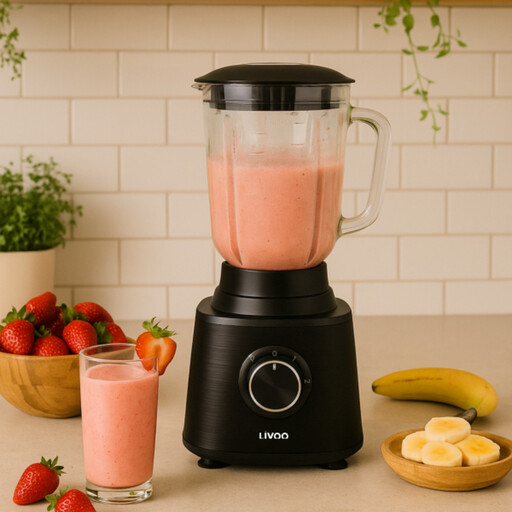 Image unavailable
Worth considering if you want one appliance to handle several tasks instead of keeping several dedicated appliances. The product title lists a capacity of 1,5 L and a power rating of 600 W; check that it comes with the attachments you need.
Measure the space available for the appliance and its parts, then check which spare parts are compatible with the DOP250N model.
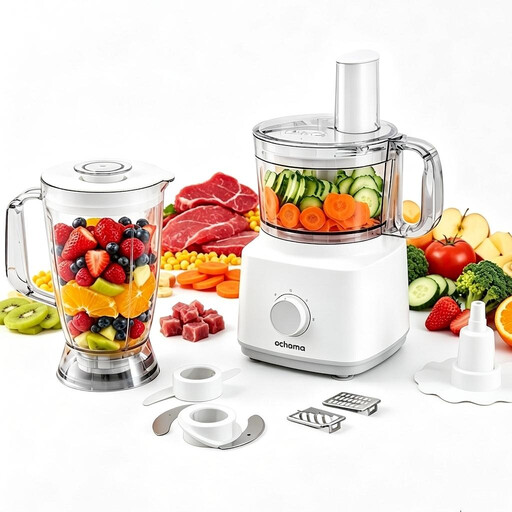 Image unavailable
Worth considering if you’d like one appliance to prepare vegetables and handle other tasks. The product title lists a 1,8 L bowl, a power rating of 750 W, a blender and discs for grating or slicing.
Check which attachments are included, how much space you’ll need to store them and which spare parts are compatible with the model you choose.
Only if the attachments supplied can handle tasks you regularly do with your other appliances. Que Choisir recommends taking stock of the equipment you already own. Then compare the tasks you usually do with the attachments included with the model you’re considering.
Choose a capacity that suits the quantities you actually prepare and the space you have to store the bowl. As a guide, according to the brands, Kenwood lists 1,3 L for the FDP23.140RD, Moulinex lists 2,2 L for the FP542111’s main bowl, and Magimix lists a total capacity of 2,6 L but a usable capacity of 1 L for the CS 3200 XL. These figures don’t all refer to the same measurement.
Look up the exact model number in the brand’s parts catalogue and check the items you might need, such as the bowl or lid. Moulinex and Bosch offer parts or accessories search tools, but having a catalogue doesn’t guarantee that parts are available for every model.