If you regularly prepare meals without cooking, choose a food processor based on the recipes you make often, the quantities you need to prepare and the space required for the base and attachments. A compact model is worth considering for a small kitchen; a larger bowl can handle bigger quantities, provided you check its usable capacity. If your separate appliances already cover the few functions you use, a food processor may simply mean more parts to store and clean.
Who is this type of food processor for?
The right appliance depends as much on what you already own as it does on the space available and the quantities you need to prepare.
People who often cook in a small space
If you regularly prepare small quantities of vegetables or sauces, think about where you’ll store the bowl, discs and blades. A food processor that’s easy to take out and clean will suit your routine better than a set of attachments you rarely use.
Households that prepare several portions
If you grate large quantities of vegetables or work with doughs and mixtures, check the capacity for each type of preparation, not just the bowl’s total volume. Also make sure the necessary attachments are included.
People who already own separate appliances
If you have a blender, chopper or hand mixer, make a list of the tasks you actually do in succession when preparing a meal. As UFC-Que Choisir recommends, taking stock of the appliances you already own can help you decide whether a food processor would serve an additional purpose.
Which features should you compare?
First decide between a compact food processor, a larger bowl or keeping your separate appliances. Then compare the functions that are genuinely useful for your recipes.
Compact food processor
Worth considering: if you mainly prepare small quantities and are short on worktop or cupboard space.
Bear in mind: a compact size doesn’t mean you can skip checking the permitted quantities or where you’ll store all the attachments.
Food processor with a larger bowl
Worth considering: if you often prepare several portions or process large quantities of vegetables and dough.
Bear in mind: the bowl’s total volume may not reflect its usable capacity, and you’ll need space to store the whole appliance.
Separate appliances
Worth keeping: if your current appliances already cover the one or two functions you typically use.
Bear in mind: using several appliances can mean more containers and extra handling when you move between different preparations.
| Feature | What to check | What I need |
|---|
| Regular preparations |
Check which blades and discs are included for chopping, grating or slicing. Separately check whether a blender, dough tool or whisk is included if your recipes call for one. |
I often chop vegetables and make sauces, so attachments for these tasks matter more to me than the number of functions advertised. |
| Quantities |
Look at the total volume, usable capacity for liquids and maximum dough quantity separately. Compare the figures for the type of preparation you make most often. |
When I cook for several people, I want to know how much I can prepare in one go, rather than relying on the volume stated for the bowl alone. |
| Size |
Measure the space for the base and bowl. Check whether the attachments fit inside the bowl or come with a storage basket or bag. |
My worktop space is limited. I also need somewhere to store the discs and a food processor that’s easy to take out when I need it. |
| Cleaning and spare parts |
Check the instructions for cleaning each part. Search for bowls, blades or discs using the exact model number. |
As I prepare food regularly, I’d rather know how to clean the appliance and be able to identify parts that are compatible with it. |
What mistakes should you avoid?
-
Choosing based on the number of functions
An advertised function doesn’t necessarily mean that the necessary attachment is included with every model. UFC-Que Choisir explains that it only tests optional attachments when they’re included.
Start with the recipes you usually make, then check exactly what’s in the box: discs, blade, dough tool, whisk or blender, depending on what you need.
-
Assuming the total volume is the usable capacity
A manufacturer may list the bowl’s volume, its usable capacity for liquids and the maximum quantity of dough separately. These figures relate to different uses.
Before choosing a model based on its bowl, compare the limits for the sauces, vegetables or doughs you prepare.
-
Forgetting how much space the attachments take up
Discs, blades and extra bowls also need a place in your kitchen. UFC-Que Choisir recommends considering the appliance’s size before you buy.
Measure the space you have and check whether the model you’re considering comes with a storage solution inside the bowl, such as a basket, or a storage bag.
-
Assuming every part is cleaned in the same way
Cleaning instructions and spare parts depend on the exact model. A general spare parts catalogue doesn’t guarantee that every component is available for every version.
Read the instructions and search for the parts you need using the food processor’s full model number before making your decision.
A guide to some of the brands
These examples relate to specific models. Capacities, attachments and storage options can vary within the same brand.
Magimix
The CS 4200XL is an option to consider if you prepare several portions.
- Magimix lists a total bowl volume of 3 L for the CS 4200XL, with a usable capacity of 1.3 L, and says spare parts are available for 30 years.
- Compare the usable capacity with your recipes and check how much space you’ll need for the food processor and its attachments.
Kenwood
The MultiPro Express FDP65.450WH comes with a bowl and a storage solution for its attachments.
- Kenwood lists a total bowl volume of 3 L for this model, a usable capacity of 1.5 L for liquids and a storage bag.
- Check what’s included in the configuration you choose and the cleaning instructions for each part.
Moulinex
The Double Force Compact FP542111 offers a way to keep its attachments together when it’s stored.
- Moulinex’s product details describe a basket that fits inside the bowl, with the attachments stored in it.
- Check that the attachments suit your recipes and search for spare parts using the model’s exact reference.
Bosch
The MultiTalent 3 MCM3531M lets you compare the bowl volume with the stated dough capacity separately.
- Bosch lists a 2.3 L bowl for the MCM3531M, a dough capacity of up to 800 g and storage for several attachments inside the bowl.
- If being able to replace a part matters to you, check its availability for the MCM3531M specifically, not just for the MultiTalent 3 range.
Food processors on Joybuy
These two food processors are options to consider for preparing ingredients without cooking, such as chopping, slicing or mixing, depending on the attachments in the configuration you choose. Compare their functions with your recipes, then check the usable capacities and how much space they’ll take up at home.
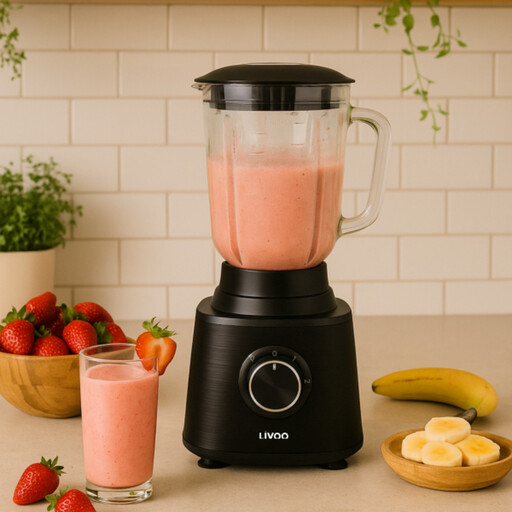 Image unavailable
Livoo DOP250N, 1.5 L, 600 W, black
If you regularly prepare modest quantities, compare the stated 1.5 L capacity with the amount you can actually use for your recipes. Check which attachments are included, the dimensions and how they’re stored if you mainly want to grate or slice vegetables in a small kitchen.
View on Joybuy
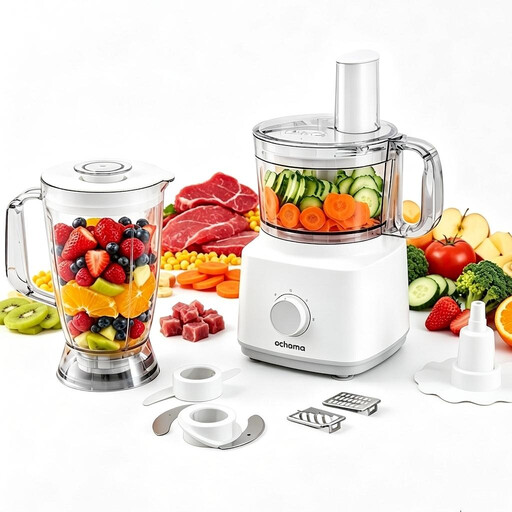 Image unavailable
ochama Food Processor, 750 W, 1.8 L
If you switch between chopping vegetables and blending ingredients, this model lists a blender, chopper and slicing and grating discs. Its stated capacity is 1.8 L. Check the usable capacity for each function, exactly what’s included in the configuration and how much space you’ll need to store the parts.
View on Joybuy
Frequently asked questions
Can a food processor be used to prepare food without cooking it?
Yes. Here, the focus is on preparation tasks such as chopping, grating, slicing or blending, without a cooking function. Check which attachments are included if you also want to knead or whisk.
How can I tell which attachments will be useful for my recipes?
First check that they’re included with the exact configuration of the food processor. Then look for tests of those same attachments if their performance matters to you. UFC-Que Choisir explains that it only tests optional attachments when they’re supplied.
Are all the parts dishwasher-safe?
No. Instructions vary by model and part. Check the instructions for the model you’re considering to see what applies to the bowl, blades, attachments and motor base before relying on this cleaning method.
How can I check spare parts before buying?
Note down the food processor’s full model number, then search the manufacturer’s catalogue for the parts you need, such as the bowl, discs or blades. A catalogue covering the brand doesn’t guarantee that every part is available for every version.


