Households that make a variety of dishes
You often chop, grate, slice, blend or knead. Your priority is to have the accessories you need on one base, without assuming that every advertised function comes in every pack.


If you regularly chop, grate, slice, blend and knead, but don’t want to cook in the same appliance, choose a food processor with accessories suited to the dishes you make. Then select the capacity based on the quantities you usually prepare and the space available, checking the limits for dough and liquids. If built-in cooking is essential, consider a cooking food processor instead; if you mainly need it for one task, compare a dedicated appliance too.
You often chop, grate, slice, blend or knead. Your priority is to have the accessories you need on one base, without assuming that every advertised function comes in every pack.
You’re looking for an appliance whose base, bowl and accessories will genuinely fit, whether on your worktop or in your available storage space.
You cook family meals, make dough or prepare several portions at a time. How much the food processor can handle for each task matters more than the bowl’s advertised volume alone.
First decide whether you only want to prepare food or cook it in the appliance too. Then compare the quantities you usually make, the accessories included in the pack, and the space you’ll need to use and store the food processor.
| Criterion | What to check | Who is it for? |
|---|---|---|
| Functions and accessories | Compare the tasks you do regularly with the contents of the exact pack. Distinguish between accessories included and those that are simply compatible. | When I often switch between chopping, grating and kneading, I want the right tools to be available for each task. Around 33% of consumers would prioritise this useful versatility. |
| Bowl capacity | Check the separate limits for dough, liquids and small quantities, rather than relying on the stated capacity alone. | If I want to prepare several portions without making multiple batches, the amount the appliance can actually handle becomes crucial; around 27% of consumers would put this need first. |
| Space and cleaning | Measure the appliance when assembled and check how much storage space it needs. Check the manual to see which parts can be removed and are dishwasher-safe; for noise levels, look for a test of the exact model. | I want to be able to get the food processor out, clean it and put it away without making every meal more complicated. Space and ease of use would be priorities for around 27% of consumers. |
| Cooking or a dedicated appliance | Decide whether cooking in the bowl is something you need to do regularly. If one task is your main priority, compare the relevant specialist appliance too. | If I mostly blend, or genuinely want to cook and prepare food in the same appliance, I need to choose the right category before comparing bowls; around 13% of consumers would prioritise this decision. |
Two packs in the same range may be suited to different tasks. A range photo or the words ‘food processor’ don’t necessarily tell you what comes with the specific model you’ve chosen.
Match the list of box contents to the tasks you do regularly: chopping, grating, slicing, kneading or blending.
If you need a disc, mini bowl or dough accessory that isn’t included, you’ll have to buy it separately.
A large bowl isn’t necessarily suitable for sauces or small portions; conversely, a compact bowl may mean making several batches for family meals.
Check the limits for dough and liquids, as well as what the appliance can handle in small quantities, rather than comparing the stated capacity in litres alone.
A cooking food processor adds cooking to food preparation. Que Choisir distinguishes this need from that of a standard food processor for those who only want to prepare food.
Think about which recipes you’d genuinely want to cook in the bowl. If that’s rare, focus your comparison on the accessories, capacity and storage.
Power in watts doesn’t measure noise levels. Cleaning also depends on which parts need to be removed and the instructions for each accessory.
Check the manual for cleaning guidance and, if noise matters to you, look for a test of the exact model.
Magimix offers food processors in several sizes, from the Mini Plus to the CS 3200 XL, CS 4200 XL and CS 5200 XL models.
Moulinex offers compact food processors, as well as models with different sets of accessories.
Kenwood’s MultiPro range includes compact formats and models designed with family meals in mind.
Bosch distinguishes between its MultiTalent food processors and MUM stand mixers: they’re not necessarily designed for the same tasks.
These food processors suit different food-preparation needs: check the accessories in the pack if you want to tackle a variety of tasks, and the bowl limits if you cook in large quantities. The Robby model is primarily worth considering for kneading and bowl-based preparation; don’t assume it replaces a food processor equipped with grating and slicing discs.
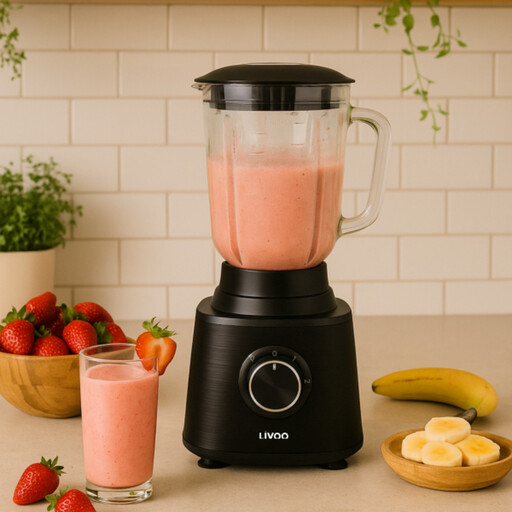 Image unavailable
Worth considering if you want to bring several food-preparation tasks together in one appliance, without a built-in cooking function.
The product name lists a 1.5 L capacity and 600 W of power. Before choosing this model for your usual recipes, check the limits for different ingredients, its dimensions and the accessories in the pack.
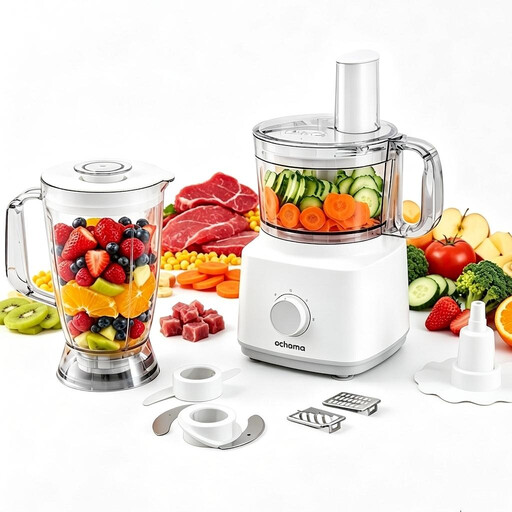 Image unavailable
Worth considering if you want one appliance for several chopping and blending tasks.
The product name mentions a 1.8 L bowl, a blender, a meat mincer and chopping discs. Check which accessories are included in the pack, as well as the filling limits and how much space you’ll need to store everything.
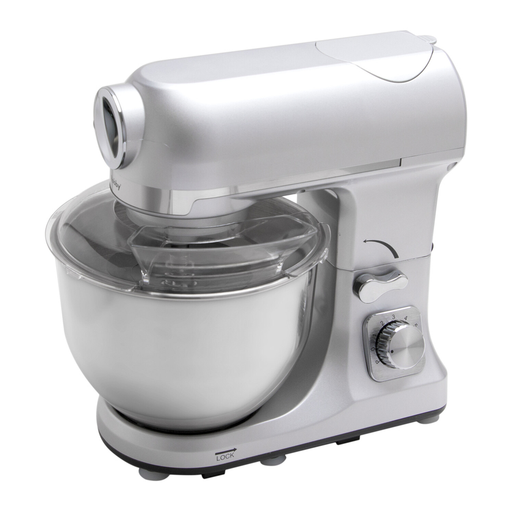 Image unavailable
Worth considering mainly if kneading and preparing large quantities are your priorities, rather than grating or slicing.
The product name lists 1,000 W of power and also mentions a meat mincer. Before relying on these functions, check the load limits and the exact pack contents, particularly for the mincer and dough accessories.
Not if you also need to cook in the appliance: a standard food processor prepares food, while a cooking food processor adds a cooking function. If you don’t need that, choose according to the preparation tasks, accessories and capacity you actually need.
Start with the quantities you prepare most often, then check the limits for dough, liquids and small portions separately. The bowl’s stated capacity in litres isn’t enough to tell you how much you can use for each recipe.
Check that the specific pack includes the tools for the dishes you make regularly: a blade, grating or slicing discs, a dough tool, whisk or blender, depending on your needs. An accessory listed as compatible isn’t necessarily included.
No, the stated electrical power doesn’t tell you how loud an appliance is. If noise affects your choice, look for a test of the exact model; Que Choisir includes noise levels in its food processor testing process.
If a food processor sold by a business to an individual in France doesn’t match its description, this may be covered by the legal guarantee of conformity: report the issue to the seller. The French Ministry of the Economy states that this compulsory guarantee applies to new, second-hand and refurbished goods. It is different from simply returning an item because you’ve changed your mind.