
Livraison le jour même ou le lendemain

Qualité garantie

Débloquez vos offres de bienvenue: Livraison GRATUITE | Jusqu'à -80 % | 30 jours d'essai gratuits à JoyPlus
Téléchargez l'application
The food processor promises to reinvent your kitchen: a single appliance to chop, blend, knead, and mix. However, the path from dream to reality is often fraught with obstacles. Faced with marketing hype, disappointment is common, and many appliances end up gathering dust in the back of a cupboard.
To help you make an informed decision, our guide breaks down the pitfalls to avoid and the essential technical criteria. Our goal? To help you choose an appliance that is genuinely suited to your needs—a reliable companion for years to come.
The market is flooded with models, but not all are created equal. Here are the three most common mistakes that turn a purchase into a regret.
To make an educated choice, focus on the technical specifications that truly make a difference in performance and longevity.
Power, measured in watts (W), is the primary indicator of your machine's raw strength.
The durability and practicality of your machine largely depend on the materials it's made from.
Rather than searching for an elusive one-size-fits-all model, it's better to choose an appliance that excels in the area that matters most to you. Here are our recommendations, profile by profile.
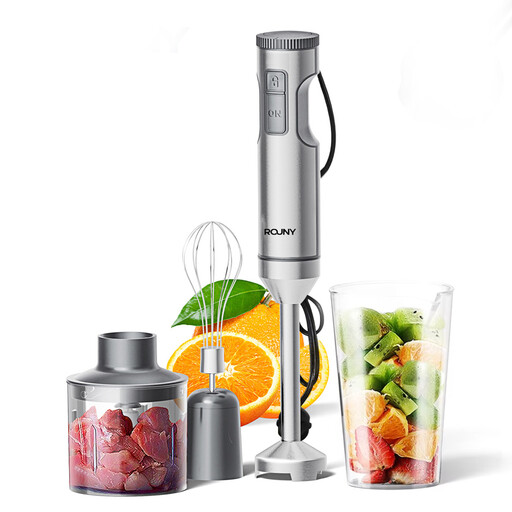
Why this pick? Ideal for everyday soups, purées, smoothies, or sauces. Its compact size and dedicated attachments make it far more practical than a bulky food processor for these recurring tasks.
This model doesn't try to knead bread dough. It focuses on what an immersion blender does best: blending, chopping, and whisking with high-performance, purpose-built attachments. This avoids the disappointment of a machine that's a jack-of-all-trades but master of none.
Its high power (up to 1200W) and variable speed control offer perfect mastery over textures. The stainless steel shaft and blade are a guarantee of durability.

Why this pick? Built for those who love getting hands-on with dough (for bread, cakes, and more). It delivers the power and stability essential for intensive kneading and mixing tasks.
It focuses on its primary mission: kneading and mixing. Its 1000W motor and planetary mixing action are specifically designed for heavy doughs, an area where all-in-one machines typically fail.
Powerful 1000W motor for effective kneading and a large 5.0L stainless steel bowl, perfect for family-sized batches.
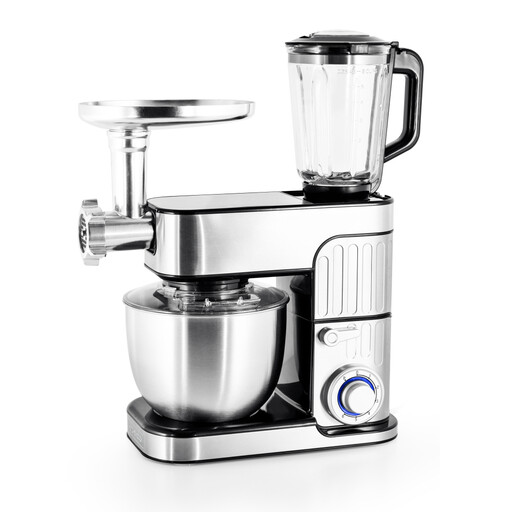
Why this pick? For those seeking a true all-in-one kitchen assistant. It combines the functions of a stand mixer, a blender, and a meat grinder, all within a build that exudes durability.
Unlike entry-level appliances, its attachments (chopper, blender) are crafted from premium materials (stainless steel, glass), and its 1300W motor is engineered to handle all its functions without compromising on performance.
Its all-stainless-steel construction is a mark of longevity. Its very powerful 1300W motor and complete set of quality attachments (stainless steel chopper, glass blender) make it a true pro.
We've curated a full range of products that meet our selection criteria and current safety standards.
It all depends on how you plan to use it.
Not always, and this is a classic trap. A stand mixer is optimized for kneading, whisking, and mixing. While some high-end models offer a very capable blender attachment, this isn't the case for entry-level or mid-range models. Their blender attachment will often lack the power to achieve the silky-smooth texture you'd get from a dedicated smoothie blender. It is therefore crucial to check the design and the power actually allocated to this function.
Proper maintenance is the key to longevity. The first rule: clean attachments immediately after use to prevent food from drying on them. Always check which parts are dishwasher-safe. The motor block should never be submerged; a simple wipe with a damp cloth is all it needs. Finally, store the attachments carefully, especially the sharp blades of the electric chopper, in a safe place out of the reach of children.