Choose a food processor if you regularly repeat tasks such as grating, slicing, chopping, blending or kneading, and if the included accessories genuinely match the recipes you make. A compact model is suitable for smaller quantities and kitchens with limited space; for family meals or dough preparation on a regular basis, focus on usable capacity, accessories, storage, cleaning and noise levels. If you only use one or two functions, your existing appliances or a dedicated accessory may be all you need.
Which households can benefit from a food processor?
Households that regularly prepare vegetables, sauces and dough
This type of appliance is a good fit when grating, slicing, chopping, blending and kneading are tasks you perform several times a week. UFC-Que Choisir recommends starting with the preparations you actually make regularly before choosing an appliance.
Small kitchens with limited storage
A compact model can work well if the base and accessories are easy to store. However, make sure the bowl and dough limits match the quantities you usually prepare.
Households that cook family-sized quantities
For preparing large quantities of vegetables or dough, prioritise usable capacity, the limits for each recipe and slicing accessories rather than simply counting the number of functions.
Priorities before buying
Start with the preparations you make most often, then check the accessories supplied, the quantities the appliance can actually handle and the space it requires. UFC-Que Choisir’s guides and testing protocols also highlight the importance of ease of use, cleaning and noise levels.
| Priority |
What to check |
Your needs |
| Usefulness compared with your existing equipment |
List the accessories included; compare them with the appliances you already own; confirm which functions are associated with each accessory. |
I want to avoid buying a redundant appliance if I already have a blender, hand mixer or other suitable equipment. |
| Capacity and quantities |
Compare the bowl’s volume and usable capacity; check the dough limits; see whether a mini bowl or mini chopper is included. |
I want to prepare my usual quantities without making several batches or taking up valuable kitchen space with an oversized bowl. |
| Storage |
Measure the available space; check the height beneath cupboards; see whether the discs and accessories can be stored in the bowl or in a storage box. |
The food processor should be easy to take out and put away without turning the worktop into a storage area. |
| Maintenance and regular use |
Read the cleaning instructions; check which parts are dishwasher-safe; review the warranty terms and the availability of spare parts. |
I want an appliance I will not avoid using because it is difficult to clean, too noisy or too demanding to maintain. |
Mistakes to avoid before buying
-
Choosing based on the number of functions
A blender, citrus press or juicer is only useful if the corresponding accessory is included and genuinely useful for your recipes. UFC-Que Choisir points out that the appliances you already own should be considered before buying.
List three to five preparations you make regularly and, for each model, check the accessory supplied, how it is stored and how it is cleaned.
-
Confusing total volume with genuinely usable capacity
Usable volume varies depending on the preparation: a large bowl is not always practical for a small quantity, and total volume alone tells you little about its capacity for dough or mixtures.
Compare the usable capacity, dough limits and whether a mini bowl or mini chopper is included with the quantities you usually prepare.
-
Underestimating the space needed for accessories
A food processor may look compact when only the base is visible, but the bowls, discs and blades also need storage space.
Measure the space available and prioritise storage in the bowl or in a box if that arrangement suits your kitchen.
-
Overlooking noise, cleaning and repairability
UFC-Que Choisir’s testing protocol considers ease of use, build quality and noise levels because these factors affect everyday use.
Read the instructions, check the warranty terms and spare-parts availability and, where possible, look for an independent test of the exact model rather than judging these factors solely by its power rating.
A guide to food processor brands
Magimix
The CS range is designed for multifunctional food preparation at home, with models aimed at households of different sizes.
- For the CS 4200XL, Magimix states a total bowl capacity of 3 L, a usable capacity of 1.3 L, a mini bowl and four discs.
- Usable capacity should be compared with your recipes; it is not the same as the bowl’s total volume.
Moulinex
The range includes compact formats and more comprehensively equipped Double Force configurations for a wider variety of preparations.
- For the Double Force FP821811, Moulinex states a 3 L bowl, a 2 L blender, a mini chopper, a dough tool, reversible discs and a storage box.
- Confirm that every accessory included with the exact model is useful to you, as a more comprehensive set also requires more storage space.
Bosch
The MultiTalent 3 family brings together compact food processors designed for everyday preparations.
- For the MCM3100W, Bosch states a 2.3 L bowl, up to 800 g of dough and accessories that can be stored in the bowl.
- The available functions depend on the accessories included with the specific model.
Kenwood
The MultiPro Go range is aimed at very small kitchens, with compact storage for basic food preparation tasks.
- For the FDP22.140GY, Kenwood states a 1.3 L bowl, a height of 30 cm and storage in the bowl.
- The compact format means you should check mixing and kneading quantities before treating it like a large-capacity bowl.
Joybuy products for ingredient preparation
Joybuy option suited to regularly preparing vegetables, sauces, mixtures and dough in modest quantities.
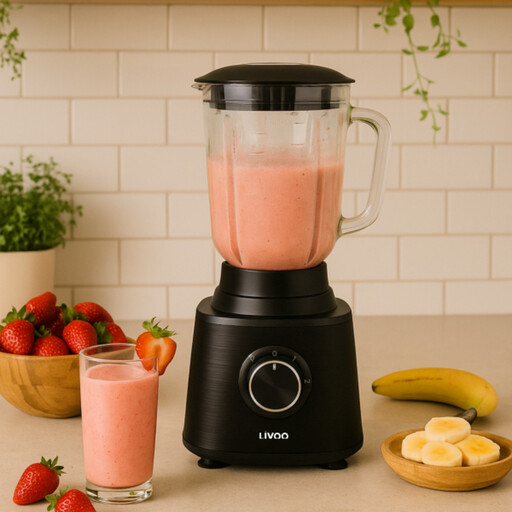 Image unavailable
Livoo DOP250N food processor, 1.5 L, 600 W
For grating, slicing, chopping, emulsifying, blending and kneading when regularly preparing small to medium quantities.
1.5 L bowl, 1.5 L glass blender and stated power of 600 W. Check your dough quantities, the space required, accessory storage and noise levels before buying.
Joybuy
Frequently asked questions
Does a food processor automatically replace all small kitchen appliances?
No. It can handle chopping, grating, slicing, blending, emulsifying and sometimes kneading, but this depends on the accessories actually supplied. Make an inventory of your appliances and the preparations you make regularly before buying.
What bowl capacity should you choose?
Start with the quantities you usually prepare and check the capacity suitable for your recipe, rather than looking only at the stated total volume. The Magimix CS 4200XL, for example, states 3 L in total but a usable capacity of 1.3 L, while Bosch states 2.3 L and up to 800 g of dough for the MCM3100W.
How can you tell whether the included accessories will really be useful?
Match each accessory to a preparation you make regularly: discs for raw vegetables, a blade for sauces, a dough tool for dough or a mini chopper for small quantities. Do not assume a function is available if the accessory is optional or not included with the model being sold.
How should you clean and maintain a food processor?
Unplug the appliance before cleaning or carrying out maintenance. UFC-Que Choisir recommends washing the bowl and accessories with a sponge and washing-up liquid, then rinsing and drying them; the motor unit must not be immersed. Check the instructions to see which parts, if any, are dishwasher-safe.


