Households that prepare ingredients regularly
If you grate, slice, chop or blend several times a week, compare how long preparation takes and how many utensils you use with the parts you’ll need to assemble and clean on a food processor.


A food processor is worth considering if you regularly grate, slice, chop or blend, and the included attachments cover the jobs you need it for. If your separate appliances already meet your needs, or you only ever use one function, a new appliance may simply mean more parts to store and wash. Check your available space and the bowl capacity too: the number of functions listed isn’t enough to make your decision.
If you grate, slice, chop or blend several times a week, compare how long preparation takes and how many utensils you use with the parts you’ll need to assemble and clean on a food processor.
If you’ll need to clear the appliance from your worktop after every use, its size and the space its attachments take up matter just as much as its functions.
A blender or chopper that you use without any trouble may be a better fit than adding another food processor. Think about which jobs you do often that your current appliances don’t handle conveniently.
Start with the jobs you actually do, then check whether the attachments included with the model you’re considering suit your available space and cleaning routine.
| What to consider | What to check | My needs |
|---|---|---|
| Uses and attachments | List the jobs you do regularly, then check which attachments are included with the exact model. Compare this with the appliances you already own. | I often grate, slice or chop: having these jobs covered by one appliance appeals to me, provided the necessary tools are included. For just one job, a dedicated appliance may be enough. |
| Worktop space and storage | Measure the space you have in mind. Check the appliance’s dimensions and how the bowl, discs and other parts can be stored. | I want to keep my worktop clear, so I need to be able to put the appliance and its attachments away after use. |
| Capacity | Compare the bowl capacity with the quantities you usually prepare. If you knead dough, check the maximum quantity allowed for the model you’re considering too. | I want a bowl that suits the amount I prepare in one go, without choosing an appliance that takes up more space than necessary. |
| Cleaning | Check the model’s manual to see which parts are dishwasher-safe and which must be washed by hand. Also count how many parts need to be taken apart. | After preparing food regularly, I don’t want washing up to take longer than the time saved on preparation. |
A function associated with a product range doesn’t tell you which discs or tools come with the specific model being sold.
Make a note of the jobs you do most often, then check which attachments are included for each one.
A food processor may fit in a cupboard, but that doesn’t mean its discs, bowl and blades will be easy to store there too.
Measure the full storage space you’ll need and check whether the attachments supplied with your chosen model can be stored inside the bowl.
A dishwasher-safe claim may only apply to certain parts. How long cleaning takes depends on what you actually use.
Check the manual for the exact model before planning to wash the bowl, discs and blades.
A food processor is designed to prepare ingredients; it won’t meet your needs if you want cooking functions built in. If you’re only interested in kneading, you may not use its other attachments.
If you want to cook in the appliance, consider a cooking food processor instead. If you only need to knead, compare dedicated stand mixers too.
These models illustrate different configurations. The features mentioned apply to the specific models listed, not every appliance from each brand.
The MultiTalent 3 MCM3200W is worth looking at if you want to balance capacity with storage.
The MultiPro Go Blend FDP23.380GY is worth considering if storage space is your main concern.
The Easy Force FP244110 and DoubleForce Compact show why it’s important to compare specific models rather than just brands.
The Compact System 3200 XL is worth considering if you switch between different types of food preparation.
These products offer two different options: a food processor designed for several preparation tasks, and a mini chopper for more specific uses. Compare them based on the jobs you do regularly, without assuming they come with the same attachments.
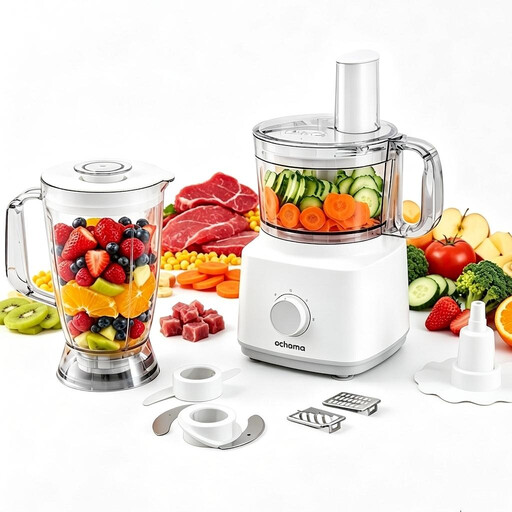 Image unavailable
Worth considering if you’d rather use one appliance for several food preparation tasks than get out different appliances. Its product title mentions chopping, blending, slicing and grating; check which corresponding attachments are included. Also check its dimensions, how the parts can be stored and their cleaning instructions before making room for it in your kitchen.
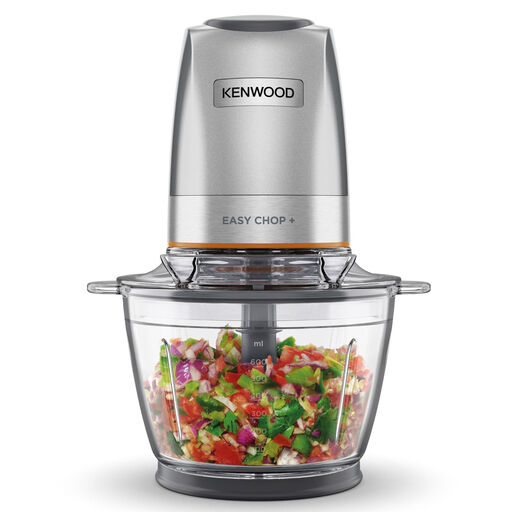 Image unavailable
This mini chopper with a blender function is better suited to specific food preparation tasks, particularly if chopping is what you need it for. Don’t choose it as a substitute for a food processor without checking whether it can do all the jobs you need, especially grating, slicing or kneading. Check the manual for instructions on cleaning the different parts too.
Not if you want built-in cooking functions. UFC-Que Choisir distinguishes between food processors, which are designed to prepare ingredients, and cooking food processors. Choose according to whether you only want to prepare ingredients or cook them in the appliance too.
Check the list of items supplied with the full model reference. The advertised number of functions or the product range name doesn’t guarantee that a particular disc, blender or kneading tool is in the box.
Don’t assume they are: a dishwasher-safe claim may only apply to certain parts. Check your model’s manual for instructions on cleaning the bowl, discs and blades.
Choose a bowl capacity that suits the amount you prepare in one go. If you’re making dough, check the model’s stated limit too. For reference, Bosch lists a 2.3 L bowl for the MCM3200W, while Moulinex lists a 2.2 L main bowl for the DoubleForce Compact. Bowl capacity doesn’t replace checking the limits for each type of preparation.