Home cooks who prepare a variety of dishes
You regularly grate, slice, chop and blend, but don’t need an appliance that cooks. A food processor is worth considering if its attachments cover the tasks you actually want to do.


Choose a food processor if you regularly grate, slice, chop and blend. Check that it comes with the attachments you need and that you have somewhere to store them. If you mainly knead and whisk, a stand mixer may be a better fit; if most of your recipes involve blending, a blender may be all you need. In every case, compare the usable capacity with the quantities you prepare and measure the space you have available.
You regularly grate, slice, chop and blend, but don’t need an appliance that cooks. A food processor is worth considering if its attachments cover the tasks you actually want to do.
You mostly knead, beat and whisk. A stand mixer could suit these priorities; if you also want to chop or blend, check separately that it comes with the attachments you need.
You have limited space or tend to make the same type of recipe. The appliance’s size, how its attachments are stored and the functions you’ll genuinely use matter more than a long list of possible uses.
Start with the recipes you make most often, then check the attachments, capacity and space requirements for the appliance you’re considering.
Consider one if: grating, slicing, chopping and blending are regular tasks in your kitchen.
Bear in mind: several bowls or attachments can take up space and need cleaning. Not every advertised function necessarily comes with the appliance.
Consider one if: kneading, beating and whisking are your main tasks, with other uses only if the pack allows for them.
Bear in mind: chopping or blending attachments may be optional, depending on the version. Kenwood France’s product pages show that what’s included varies from model to model.
Consider one if: you mainly make drinks or another specific type of recipe.
Bear in mind: a blender alone can’t replace grating and slicing discs or kneading tools.
| What matters to you | What to check | Who it’s for |
|---|---|---|
| A variety of recipes | List the tasks you do regularly, then check which blades and discs are actually included with the model you’ve chosen. | If I grate vegetables and chop ingredients as often as I blend, I want one appliance that can do all these jobs. Around 36% of consumers would prioritise this versatility. |
| Doughs and whisked mixtures | Check which tools are included and the stated dough capacity, which is different from the bowl’s volume. | When I mainly make bread or cakes, I prioritise kneading and whisking over chopping discs. Around 29% of consumers would have this priority. |
| Space and ease of use | Measure the space needed to position and open the appliance. Check how the attachments are stored and, if noise matters, look for a test of the exact model. | In a small kitchen, I want to be able to get the appliance out and put its parts away without cluttering the worktop. Around 21% of consumers would put space and ease of use at the heart of their decision. |
| Limited use | Identify the recipe you make most and your usual portion sizes before comparing a specialist appliance with a food processor. | If I mainly make blended drinks, I don’t want to store chopping attachments I’ll hardly use. For around 14% of consumers, this specific use would be the main deciding factor. |
An attachment available for a product range may not be included in the pack on sale. Stand mixer product pages from Kenwood France, for example, show that equipment can vary between models.
Compare the list of included parts with the recipes you want to make, rather than relying on the range name alone.
If you buy the attachments you want later, you’ll also need to find somewhere to store them.
The total volume doesn’t tell you how much you can actually use. For example, Magimix lists a 2.6 L bowl and a usable capacity of 1 L for its CS 3200XL. It’s worth considering smaller preparations too.
Think about your usual portion sizes and check the usable capacity, as well as whether a small bowl or mini chopper is included.
Discs and blades need to be stored, and the bowl must be removable or openable where you plan to use the appliance. UFC-Que Choisir also includes noise levels in its testing criteria.
Measure the available space and allow room for the attachments. If noise is a deciding factor, look for a test of the exact model that sets out the conditions.
According to the Directorate-General for Competition Policy, Consumer Affairs and Fraud Control, France’s legal guarantee of conformity applies to new, second-hand and refurbished goods sold by a business to an individual. A commercial guarantee is separate.
Keep your proof of purchase and the product description, and read the terms of any commercial guarantee offered separately.
These appliances suit three different approaches to food prep without cooking: a food processor for a range of tasks, stand mixers for doughs and whisked mixtures, and a blender for blending-focused use. Check which attachments come with the model and pack before relying on it for any additional functions.
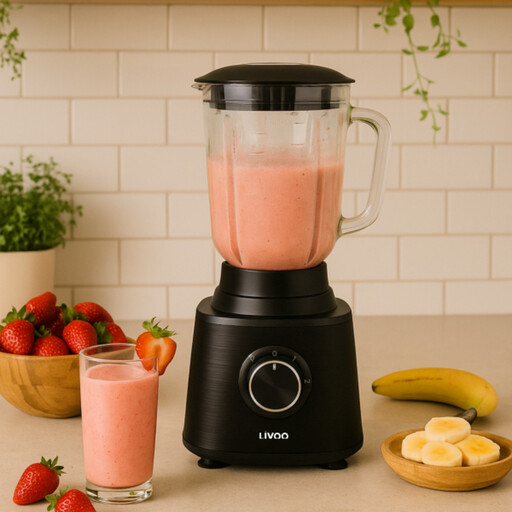 Image unavailable
Worth considering if you’d like one food processor for a range of tasks. Check that the included attachments cover the jobs you do regularly and that the bowl’s usable capacity suits your portion sizes.
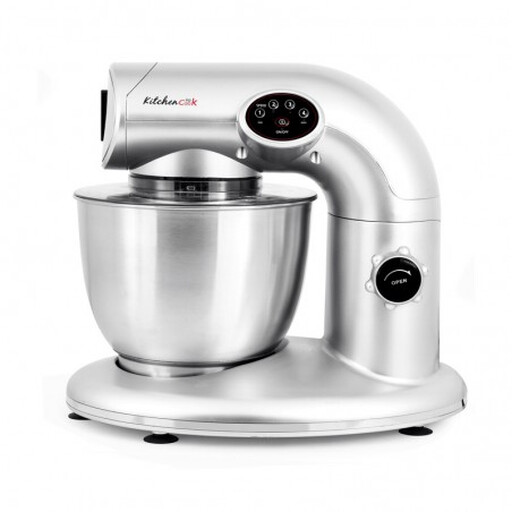 Image unavailable
Worth considering if baking is your priority. Before buying, confirm exactly what’s included if you want to use the blender, chopper or dough tools. Check the cleaning instructions too.
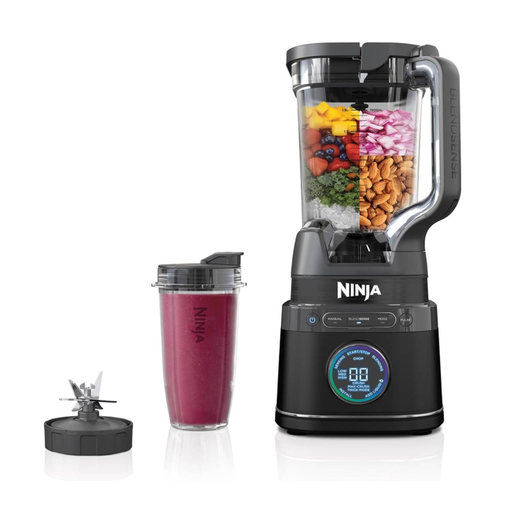 Image unavailable
Worth considering if you mainly make drinks and other blended recipes. The title lists a set with a jug and a personal cup. Check which parts are included, and don’t assume a blender can grate or knead.
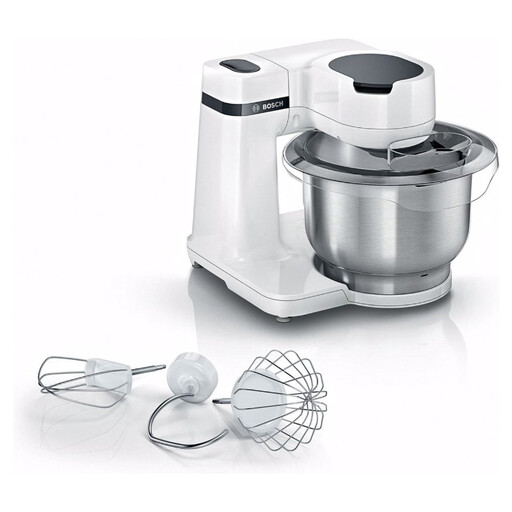 Image unavailable
Worth considering for making doughs and whisked mixtures. The 3,8 L volume in the title doesn’t tell you the dough capacity, so check that separately. If you also want to chop ingredients, check which attachments are included.
Choose based on the tasks you do regularly. If you also need to grate and slice, look at a food processor and check which discs are included. If you mainly make drinks and other blended foods, a blender may do the job. Don’t assume it can knead or slice ingredients.
Compare the usable capacity with the quantities you usually prepare, rather than choosing based on the stated total volume alone. If you knead dough, check the dough capacity separately; if you often make small quantities, see whether a small bowl is included.
Unplug the appliance before cleaning the motor unit, and don’t immerse it in water, following the advice from UFC-Que Choisir. Follow the instructions for the bowl and attachments, handle blades carefully and use the pusher rather than your fingers in the feed tube.
For an appliance sold by a business to an individual in France, the legal guarantee of conformity applies to new, second-hand and refurbished goods, according to the Directorate-General for Competition Policy, Consumer Affairs and Fraud Control. It is separate from a commercial guarantee. For an old electrical appliance, the Ministry for Ecological Transition lists collection points, recycling centres and retailers among the available options. The ‘one-for-one’ take-back scheme applies when you buy an appliance of the same type.