
Livraison le jour même ou le lendemain

Qualité garantie

Débloquez vos offres de bienvenue: Livraison GRATUITE | Jusqu'à -80 % | 30 jours d'essai gratuits à JoyPlus
Téléchargez l'application
Ah, the unmistakable taste of real homemade mash, a sun-ripened tomato coulis, or an orchard-fresh fruit compote... To rediscover these authentic flavours, one utensil has stood the test of time: the food mill. Simple, yet incredibly effective. However, behind the marketing promises, not all models are created equal, and disappointment is often just around the corner.
All too often, buying a food mill ends in frustration. Here are the three classic pitfalls to avoid:
To avoid banishing your new purchase to the back of a cupboard, ignore the advertising slogans and focus on concrete technical criteria.
These three points are decisive. They determine the durability, ease of use, and versatility of your future manual food mill.
The material is the primary indicator of quality. Stainless steel stands out as the benchmark, and for good reason:
A 100% stainless steel model, including the crank and discs, is a long-term investment. It's your guarantee against having to replace it after just one year.
A good manual food mill should make your life easier, not more complicated. Stability is therefore non-negotiable. Look for a model equipped with non-slip feet or sturdy support legs that can anchor onto containers of all sizes without wobbling.
The ergonomics of the crank handle also matter. A comfortable handle allows you to mill without getting tired, even with a full bowl. Bonus: foldable legs are a real plus for easy storage in cupboards.
The versatility of your mill depends entirely on its discs. A good model always comes with at least two interchangeable discs to create a variety of results:
Check that the discs are also made of stainless steel to avoid rust, and that they can be clipped on and off effortlessly.
We have scrutinised several models based on these criteria to help you find the utensil that truly meets your needs.
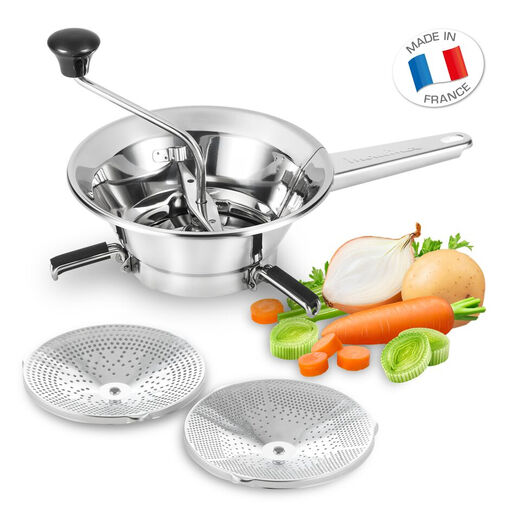
Why it stands out: This is the perfect model for those who want to rediscover the authentic taste of grandma's recipes. Its simple and effective design gets straight to the point: making no-fuss purées, soups, compotes, and coulis in the purest tradition.
Its 100% stainless steel construction protects it from rust and stains. Its non-slip, foldable feet ensure perfect stability on containers up to 24 cm in diameter. No more food mill dancing on the mixing bowl!
It comes with two stainless steel discs (fine and medium), allowing you to choose the texture with precision. Fully disassemblable, it's dishwasher-safe for ultra-simple cleaning.
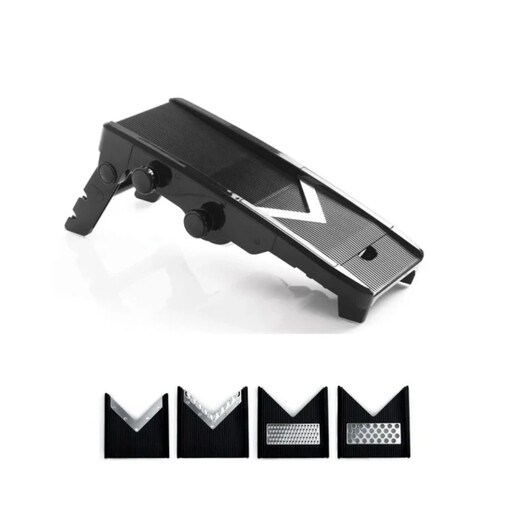
Why it stands out: This one doesn't mill, it slices! It's the dream tool for anyone who wants clean, uniform cuts in record time. Perfect for preparing vegetables for salads, gratins, and stir-fries.
Its stainless steel V-blade ensures a surgical-sharp cut without ever shredding delicate vegetables. The safety pusher effectively protects your fingers, a major flaw in many entry-level mandolines.
Its adjustable cutting thickness (from 1 to 9 mm) and 6 interchangeable blades offer incredible versatility (slices, juliennes, graters...). A true Swiss Army knife for slicing.
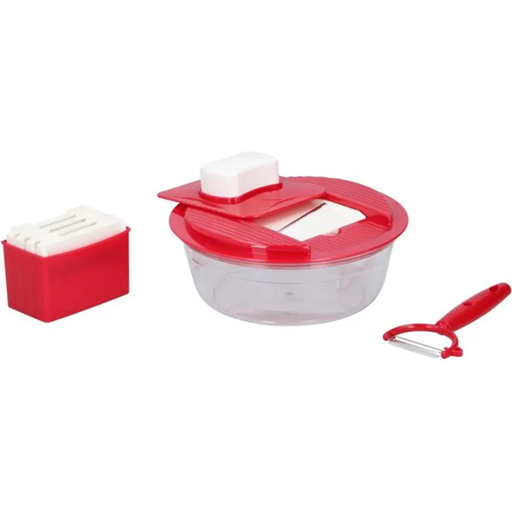
Why it stands out: This is the all-in-one solution for those who want to grate cheese, slice carrots, or julienne courgettes without needing multiple utensils. The perfect asset for a tidy kitchen.
No more cluttered drawers full of graters! This single set prevents clutter. Its stainless steel blades ensure a clean cut and good longevity, unlike plastic graters that dull in a few months.
Its 7 interchangeable blades cover all needs (fine grater, coarse grater, slicer, julienne...). Thanks to its clever design, all the elements nest together for ultra-compact storage.
Explore our full selection of products that meet our quality criteria and current safety standards.
Assembly is a breeze: insert your chosen disc into the bottom of the bowl, place the shaft with its blade, then attach the crank handle. For cleaning, the A40102 model is fully disassemblable. All its stainless steel components are dishwasher-safe, ensuring perfect hygiene and effortless maintenance.
Not at all! With the fine disc, it's ideal for making fruit or tomato coulis, as it holds back skins and seeds. With a coarser disc, it's perfect for chunky compotes, textured soups, or even for flaking fish for terrines.
The two serve completely different functions. The food mill crushes and filters food through a disc. It separates unwanted parts (skins, seeds, fibres...) for a perfectly smooth texture. An immersion blender, on the other hand, simply blitzes everything. It's faster, but it doesn't filter anything and tends to make potato purées gluey by releasing too much starch. For a creamy, traditional mash, the food mill remains unmatched.