
Livraison le jour même ou le lendemain

Qualité garantie

Débloquez vos offres de bienvenue: Livraison GRATUITE | Jusqu'à -80 % | 30 jours d'essai gratuits à JoyPlus
Téléchargez l'application
Choosing food for cats and kittens isn’t just about looking at the picture on the packet or being won over by a promise like “rich in chicken”. Age, neutering, ingredients and the actual portion size all play a part in whether a product is right for your pet.
Cat owners often come up against three common pitfalls:
Here are the points to check before you fill your basket with kibble, treats or accessories.
A complete food is designed to cover your cat’s daily ration when fed according to the manufacturer’s guidelines. Cat treats, on the other hand, are complementary foods: they’re for rewarding your pet or adding a little something special, but they can’t replace their main meals.
For treats, remember to check:
The Catisfactions Chicken treats, for example, recommend up to 12 treats per day for an adult cat. Their ingredients list includes cereals and 4% chicken – far more informative than just the “with chicken” claim on the front of the packet.
A growing kitten doesn’t have the same nutritional needs as an adult. Kitten kibble should therefore be chosen according to the weaning stage and the age stated on the packaging. The Purina One Bifensis Kitten Chicken recipe is presented as a complete food for kittens from weaning up to 12 months, as well as for pregnant or nursing queens. It contains 17% chicken and has 41% crude protein and 20% fat in its analytical constituents.
For a neutered adult cat, the portion size and energy density need particular attention. WHISKAS Croq Chicken dry cat food for neutered cats is aimed at adult cats aged at least 1 year. The product page recommends between 30 and 75 g per day depending on the cat’s weight, with a gradual transition over 7 to 10 days.
If your cat is overweight, has digestive issues or any specific health problem, these guidelines are no substitute for veterinary advice.
Dry cat food is convenient for everyday use, but it needs to be stored in a cool, dry place, away from air and moisture. After opening, some manufacturers recommend using the product within four weeks to preserve its taste and texture.
A small bag is ideal for trying out a recipe or for a cat that doesn’t eat much. A larger size can reduce how often you need to reorder, provided the contents are used up before they lose their freshness. For treats, resealable pouches and pre-portioned packs make storage easier while limiting exposure to air.
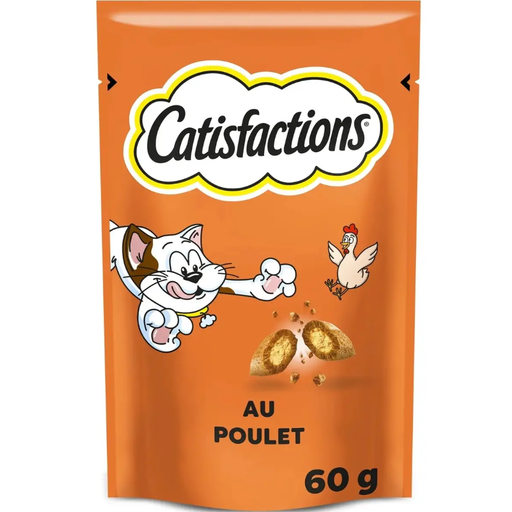
Why this choice suits this profile: At 60 g, this small size lets you try a reward without ending up with a stockpile you don’t need – especially handy when your cat’s tastes are still unknown.
The product page clearly states it’s a complementary food for adult cats and gives a maximum daily amount.
60 g size, crunchy texture with a soft centre, and 28% crude protein according to the product page.
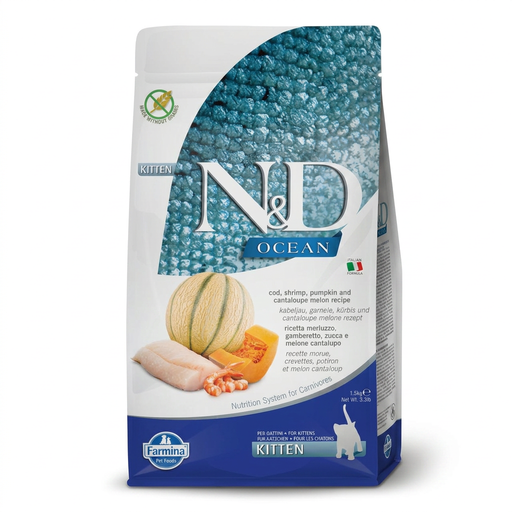
Why this choice suits this profile: Its 1.5 kg bag is ideal for households looking for a recipe specifically formulated for kittens, in a more generous pack size.
Its name clearly states it’s a cod recipe for kittens, not a generic adult cat product.
1.5 kg bag and a recipe from the N&D Ocean range designed for kittens.
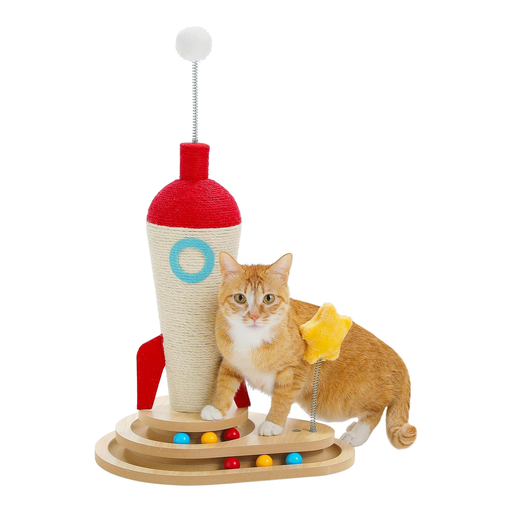
Why this choice suits this profile: This piece of furniture combines play and scratching – a great combination for indoor cats that need several activities within paw’s reach.
Its wooden base and scratching post create a proper dedicated space, rather than just a toy sitting on the floor.
Stated dimensions of 40 × 30 × 63 cm, natural sisal, ball track and feather toy.
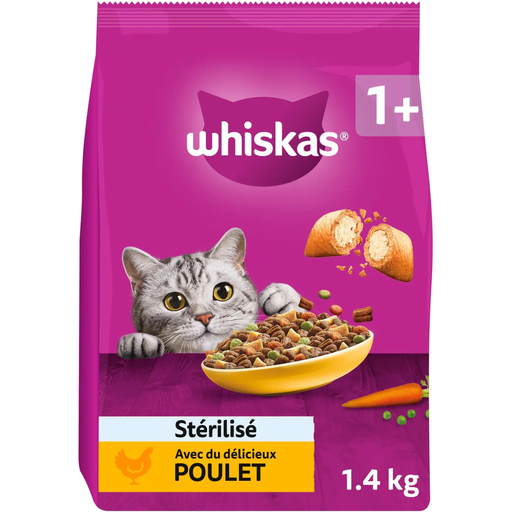
Why this choice suits this profile: This recipe is designed for neutered cats aged at least 1 year and provides feeding guidelines based on weight.
The target age and neutered status are clearly stated, with a recommended transition period of 7 to 10 days.
1.4 kg bag, 30% crude protein, 11.5% fat and dual-texture kibble according to the product page.
We’ve put together a full selection, updated in real time, of products that meet these exacting criteria as well as European safety standards.
The ingredients in salmon cat treats can vary considerably from one recipe to another. The Catisfactions Salmon treats state 4% salmon, with a limit of six pieces per day for kittens and 20 for adults, according to the product page. These bites remain complementary foods, so they need to fit into your cat’s overall dietary balance.
A catnip toy or one containing silver vine should be checked regularly. Remove it as soon as a seam starts to come undone, the stuffing becomes visible, or any part looks like it could come off. This is especially important with a kitten.
A scratching post also needs to be stable, tall enough and placed somewhere your cat actually spends time. The material matters, of course, but location and sturdiness are often the real factors that determine whether it gets used day in, day out.
Follow the feeding table on the packaging, taking into account the kitten’s age, weight and activity level. The Purina One Kitten recipe recommends, as a guide, 50 to 65 g per day between 6 and 12 weeks, then 65 to 75 g between 12 and 26 weeks. These amounts should be adjusted as your kitten grows and develops.
No. Treats are complementary foods. They can be used for training or during playtime, but they don’t replace a complete food. Fresh water should also always be available.
Reseal the bag after each use and store it in a cool, dry place. If the label recommends using the product within four weeks, stick to that timeframe. If the smell, texture or appearance changes, it’s best not to give it to your cat.