
Livraison le jour même ou le lendemain

Qualité garantie

Débloquez vos offres de bienvenue: Livraison GRATUITE | Jusqu'à -80 % | 30 jours d'essai gratuits à JoyPlus
Téléchargez l'application
Finding the perfect food container can feel like an uphill battle. Between packed lunches, kids' snacks, and storing leftovers, we expect it to be practical, airtight, and durable. Yet, faced with an overwhelming number of options, it's hard to know where to start. Worse still, many models fail to live up to their promises over time and quickly end up at the back of a cupboard.
As product recommendation experts at Joybuy, our mission is to help you make sense of it all. Let's break down the pitfalls to avoid and the criteria that really matter so you can make an informed choice that's right for your needs.
Before diving into specific models, it's crucial to know the common flaws that turn a promising purchase into a disappointment.
To avoid these traps, focus on three fundamental parameters that define the quality and utility of a lunch box.
The choice of material has a direct impact on the use, durability, and maintenance of your container.
meal prep.A truly airtightcontainer relies on a winning combination?: a quality silicone gasket and an effective locking system. Models with a 4-clip locking system are generally far more reliable than simple snap-on lids. Pro tip: a good gasket should be removable for deep cleaning, which prevents mould growth.
Your lunch box should simplify your life, not complicate it. Always check the pictograms indicating its compatibility?:
meal prep).Also, consider modularity: containers of different sizes designed to stack perfectly are a real bonus for optimising space in the fridge and cupboards.
To help you see how these criteria apply in practice, here are a few options that meet specific needs.
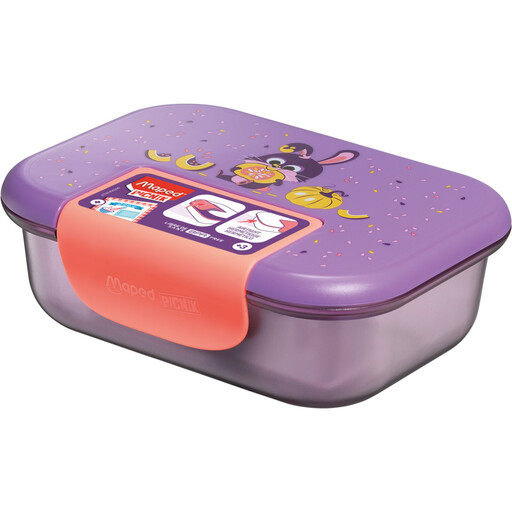
Key features : Designed for young children, this box combines the robustness of stainless steel with thoughtful details. Its opening clip is easy for little hands to manage, and its attached lid prevents it from getting lost at school (or in the playground).
No more headaches over a lost lid! This model solves one of the most common problems for parents thanks to its lid that stays attached to the base. Simple, but incredibly effective.
Durability and hygiene. The stainless steel withstands daily bumps and doesn't retain any odours. A quick run through the dishwasher, and it's good as new.
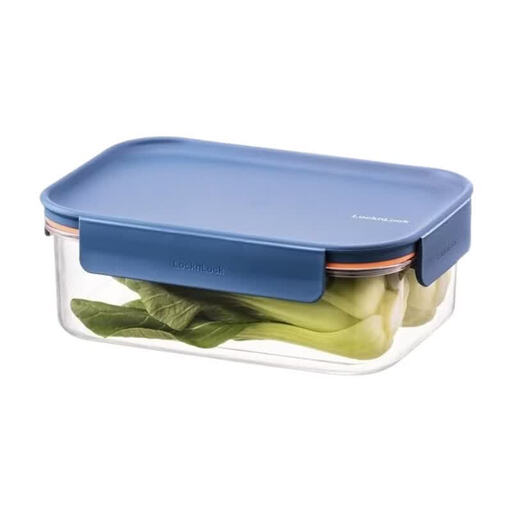
Key features : This Tritan container is the ultimate organisational tool. Its modular design allows you to stack multiple containers securely to optimise fridge space. Ultra-versatile, it goes from the freezer to the microwave and then the dishwasher, making it a `meal prep` must-have.
Say goodbye to salad dressing leaks in your bag! Its 4-clip locking system, paired with an effective silicone gasket, guarantees a foolproof seal, even for soups and saucy dishes.
Versatility and organisation. Its transparent Tritan body doesn't stain and lets you identify the contents at a glance. Its stackable design is the promise of a finally well-organised kitchen.

Key features : This borosilicate glass container is the ultimate healthy and versatile solution. It goes from the freezer to a conventional oven (without the lid) and then to the microwave, allowing you to cook, store, and reheat all in the same dish.
Forget about yellowed or odour-infused plastic containers. Glass is non-porous: it doesn't stain, absorb anything, and stays pristine, wash after wash.
Neutrality and thermal resistance. Borosilicate glass offers complete peace of mind. Food is stored and reheated without any alteration in taste and with no health risks.
Discover our full selection of products that meet our quality criteria and the strictest safety standards.
How do I remove stubborn odours from a plastic container?? The best-known trick is to fill it with a mixture of warm water and baking soda (a tablespoon is enough). Let it sit for several hours, or even overnight, before rinsing. Another technique for stubborn odours: crumple up some newspaper, place it in the dry container, and close it for 24 hours. The paper will absorb the odours.
Is glass really healthier than plastic?? Glass is an "inert" material, which guarantees that no chemical components will migrate into your food. It offers absolute safety. However, high-quality plastics that are certified BPA-free and compliant with European standards are now considered perfectly safe for food use. The final choice will largely depend on your priorities: the lightness and impact resistance of plastic versus the neutrality and durability of glass.
Are all food containers freezer-safe?? No, it's crucial to check for the corresponding pictogram. Low-quality plastics can become brittle and crack in the cold. Pro tip: if you're freezing a liquid (soup, sauce, etc.), only fill the container three-quarters full to leave room for the ice to expand. In general, borosilicate glass, stainless steel, and plastics like PP or Tritan handle freezing very well.