
Livraison le jour même ou le lendemain

Qualité garantie

Débloquez vos offres de bienvenue: Livraison GRATUITE | Jusqu'à -80 % | 30 jours d'essai gratuits à JoyPlus
Téléchargez l'application
A folding utility knife shouldn’t just be for cutting cardboard. On a construction site, during renovations or in a workshop, it needs to stay compact, easy to carry and stable enough to work on carpet, PVC, insulation, plasterboard or packaging.
A cheap buy can quickly turn into a recurring expense. A fiddly mechanism, a blade that wobbles or no storage for refills – these flaws soon become apparent in daily use. Here are the points to check before choosing a folding craft knife.
A compact DIY knife isn’t necessarily safe. The first thing to check is whether it has reliable locking when the blade is deployed. Without proper retention, the blade can fold or shift during cutting.
The model should also allow you to fully retract the blade after use. This is an essential precaution to prevent accidents in a pocket, tool box or carry bag.
A multi-function knife can be very handy, but no extra feature can replace a suitable blade. A painter’s tool with a scraper, nail puller and hammer tip is designed for preparation work. A carpet knife, on the other hand, needs to deliver precise cuts in soft or thick materials.
So it’s important to distinguish cutting tasks from scraping, filling or light maintenance jobs.
A blunt blade requires more pressure and is more likely to slip. For regular use, it’s better to choose a knife with spare blades included or one that’s compatible with a standard format.
The mention SK5 blade refers to a carbon steel commonly used for trapezoidal blades. It tells you about the material, but you still need to check compatibility with the blade holder, the quality of the retention and how easy it is to replace.
For work on a job site, go for a lockback, a sliding lock or a liner lock. The mechanism must hold the blade firmly in the open position and be easy to identify. One-handed opening can be useful, provided it remains perfectly controllable, especially when wearing protective gloves.
Before each cut, check that the blade is properly engaged. Don’t use the knife as a lever and don’t ask it to cut material thicker than it was designed for.
A quick-change cutter lets you replace the blade without a screwdriver or tedious disassembly. A real time-saver during installation work or repetitive cutting.
Also check how the blades are stored. An integrated compartment protects the refills and stops them from rattling around loose in the tool box. However, this storage must stay closed and out of reach of children.
A handle made of stainless steel, aluminium or a combination of materials won’t feel the same in the hand. Weight is also worth considering: between 130 and 200 g, the tool remains easy to carry, while a heavier model can tire your hand during prolonged use.
A knife with a belt clip makes the tool easy to access on a ladder, in a workshop or when working on the move. The clip must hold the knife securely without hindering its opening or removal.
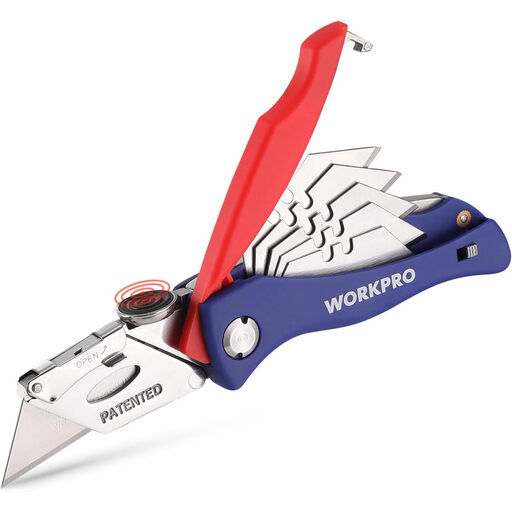
Why this model suits this profile: This folding carpet knife is ideal for small cutting jobs, home renovation work and users who want spare blades included from the start. Its stated weight is 148 g.
The quick-change mechanism and integrated compartment hold five extra SK5 blades. That means you won’t need to buy refills straight away.
Stainless steel handle, lockback locking mechanism, belt clip and five SK5 carbon steel blades included.
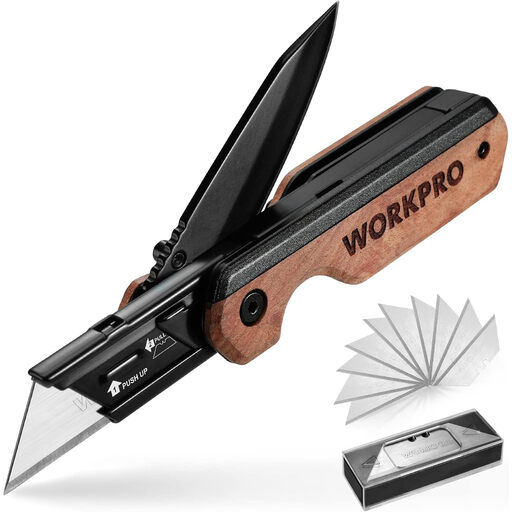
Why this model suits this profile: Its 2-in-1 design combines a folding knife blade with a utility cutting function. So it can move from the workshop to the garden or accompany outdoor activities.
The liner lock holds the main blade securely in the open position, while the quick-change system means you don’t have to fully disassemble the tool to replace the utility blade.
Mahogany wood and aluminium handle, belt clip, quick-change utility blade and ten extra SK5 blades.
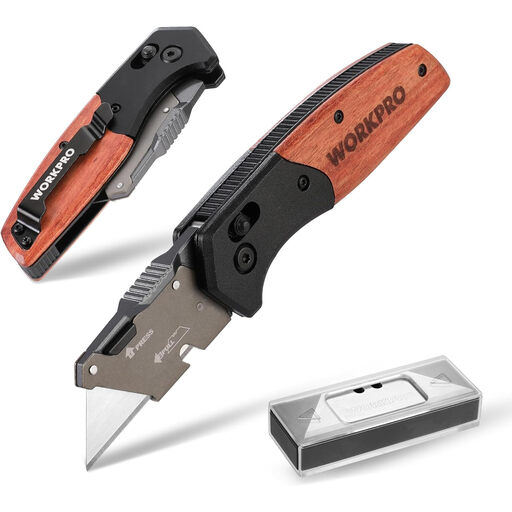
Why this model suits this profile: With its ten spare blades, stated weight of 130 g and folded length of 116 mm, this knife is well suited to repeated jobs on cardboard, carpet, drywall or packaging.
The sliding lock and tool-free replacement address the two classic problems of heavy-duty use: an unstable blade and time-consuming changes.
Handle combining aluminium and wood, ten SK5 blades included, belt clip and sliding lock.
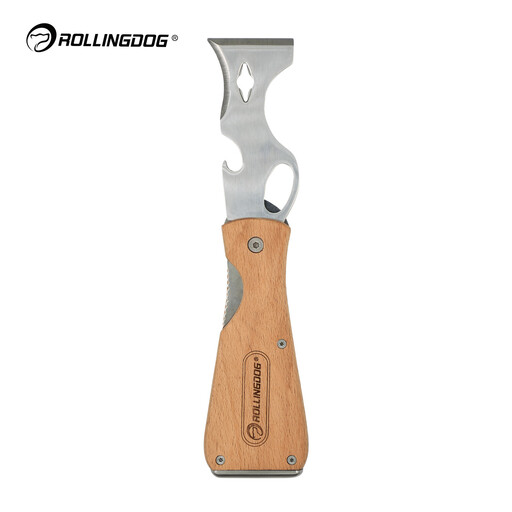
Why this model suits this profile: This multi-function tool is designed for filling, patching and wall preparation work, rather than cutting thick materials.
Its functions are clearly aimed at scraping, applying and finishing. It doesn’t present itself as a cutting tool that can do everything.
420 stainless steel blade, beechwood handle, scraper, filling knife, nail puller, tin opener, hammer tip and belt clip.
We’ve put together a comprehensive selection, updated in real time, of products that meet these strict criteria as well as European safety requirements.
For cardboard, carpet, thin PVC or certain insulation materials, a compatible trapezoidal blade should work. An SK5 blade is a common option, but compatibility with the blade holder and locking system remains the priority. Whatever the material, always follow the manufacturer’s recommendations.
Its lifespan depends on the material being cut, the length of the cut, the pressure applied and how clean the surface is. There’s no universal duration. A blade that snags or produces an uneven cut should be replaced, even if it still looks intact.
Not always. A multi-function knife is fine for varied, light tasks, whereas a job-site knife with a replaceable blade will be better suited to repeated cutting. For filling and scraping, a multi-function painter’s tool will be more appropriate than a simple cutter.