
Livraison le jour même ou le lendemain

Qualité garantie

Débloquez vos offres de bienvenue: Livraison GRATUITE | Jusqu'à -80 % | 30 jours d'essai gratuits à JoyPlus
Téléchargez l'application
A folding utility knife can be a trusty companion for a plasterer, electrician, painter or DIY enthusiast on many job sites. But you need to choose a model that remains comfortable and safe to use over time. Some become awkward to handle after just a few weeks, especially if you've been guided solely by price or looks.
Before placing an order, three common pitfalls keep cropping up:
So the best choice doesn't depend on how many features are listed on the packaging, but on how well the tool matches the materials you need to cut and how often you'll use it.
For professional use, it's best to go for a mechanism that's easy to identify: back lock, sliding lock or liner lock. It must hold the blade firmly during cutting, then allow you to stow it safely once the job is done.
A professional cutter with tool-free blade changes can save you valuable time on site. Just make sure the procedure is clearly explained and that the blade locks securely before each use.
Trapezoid blades are very common for cutting cardboard, carpet, films, insulation, certain PVCs and thin boards. SK5 replacement blades are made from a carbon steel widely used for cutting work. Their lifespan depends on their sharpness, the thickness of the material and the pressure applied.
A dull blade shouldn't stay in service for too long: it forces you to push harder and increases the risk of slipping. For a carpet knife or cutting tool used daily, having a stock of compatible blades is a real bonus.
When folded, the knife should be able to fit in a toolbox or suitable pocket, or even be worn on a belt using a clip, without leaving the cutting edge exposed. The stated dimensions let you compare models: some focus on a very compact format, while others have a longer, more comfortable handle.
For a site knife, also look at the handle material, its grip and how easy the lock is to access when wearing gloves. A lightweight tool is easier to carry, but a slightly more robust model will often be better for repeated cutting. In any case, only use it for the materials specified by the manufacturer.
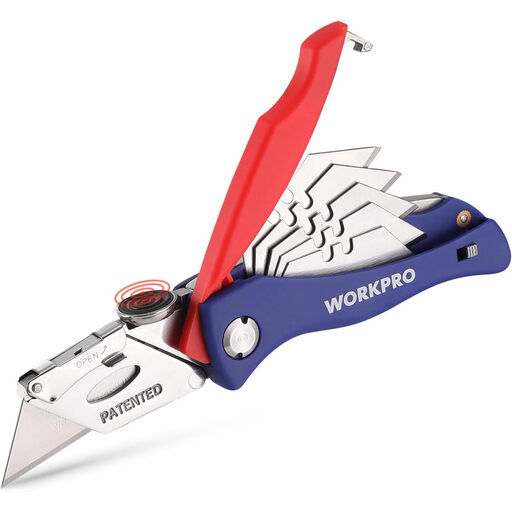
Why this choice suits this profile: This folding cutter is ideal for household tasks and occasional cutting of carpet, cardboard, insulation or PVC. The five extra blades mean you won't need to buy consumables straight away.
The quick-change mechanism and built-in storage reduce interruptions caused by a worn blade.
Stainless steel handle, safety lock, belt clip and five SK5 blades included.
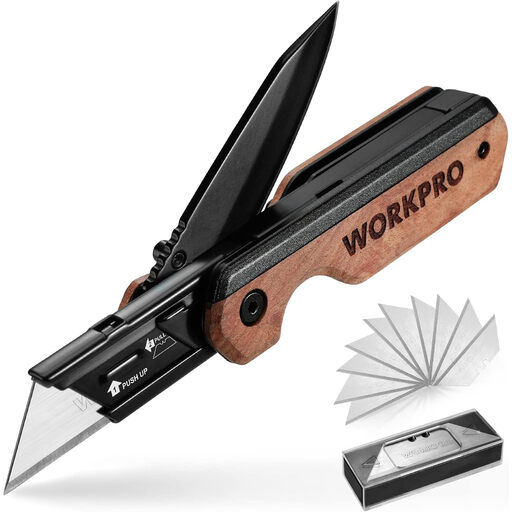
Why this choice suits this profile: This multi-function knife combines a folding blade and a utility blade holder in a compact format. A smart choice for those who want several cutting options in a single tool.
The liner lock and quick-change system address the two most common problems: an unstable blade or laborious replacement.
Mahogany wood and aluminium handle, belt clip, utility blade and ten extra SK5 trapezoid blades.
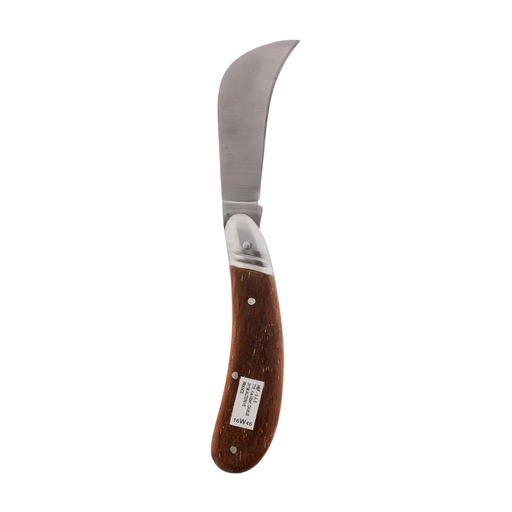
Why this choice suits this profile: This electrician's knife is designed for stripping, slicing and cutting de-energised cables. At 10 cm when closed, it fits easily into a toolbox.
Its functions are designed for cables and its folding format limits blade exposure during transport.
Hardened steel blade, 17.2 cm length when open and a stated two-year warranty against manufacturing defects.
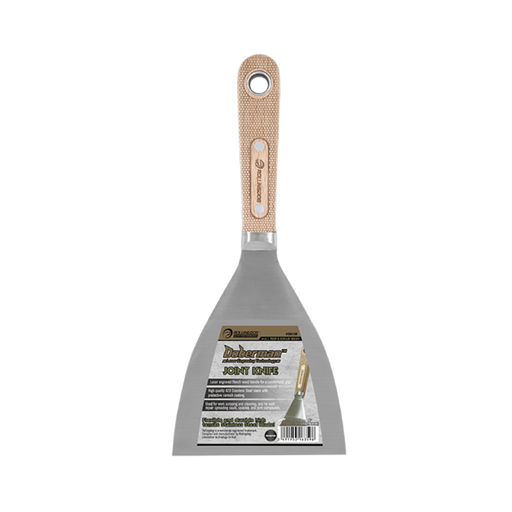
Why this choice suits this profile: This joint knife is aimed at plasterers, painters and homeowners working with joint compound, filler, plaster or small wall repairs.
Its 101.6 mm blade is designed for applying and smoothing filler, rather than for cutting work that could damage it.
420 stainless steel with protective coating and beechwood handle, suitable for jointing and repair work.
We've put together a comprehensive, real-time updated selection of products that meet these demanding criteria as well as European safety requirements.
Standard trapezoid blades fit many carpet knives and folding cutters. However, you should check compatibility in the product specification. SK5 blades are a common option for cardboard, carpet, thick paper and certain site materials.
There is no universal lifespan. Wear depends on the material, cutting length, pressure applied and frequency of use. Keep an eye on the sharpness of the edge and replace the blade as soon as it snags or requires unusual effort.
Not necessarily. A multi-function knife fitted with a utility blade should not be considered an electrician's knife. For cables, use a tool explicitly designed for stripping and cutting, with the power off, and follow the manufacturer's instructions.