
Livraison le jour même ou le lendemain

Qualité garantie

Débloquez vos offres de bienvenue: Livraison GRATUITE | Jusqu'à -80 % | 30 jours d'essai gratuits à JoyPlus
Téléchargez l'application
The folding trolley?: a magic bullet for carrying your groceries, camping gear, or gardening tools?? On paper, yes. But in reality, the market is saturated with models making enticing promises that often prove disappointing in practice. A frame that buckles under a modest load, wheels that get stuck in the sand on first contact, or fabric that tears after just one season... these mishaps are all too common.
As the Head of Product Recommendations at Joybuy, my role is to help you navigate the options. This guide breaks down the essential criteria and helps you avoid the most common pitfalls, so you can make a truly informed decision that’s perfectly suited to your needs.
Before we even dive into spec sheets, let's review the design flaws that too often turn a good deal into a hassle.
To ensure you make the right choice, carefully examine these three key points.
Don't be blinded by the maximum heavy load capacity displayed. A trolley that can carry 150?kg but has a volume of only 80 litres will be impractical for bulky but lightweight items, like the gear for a camping wagon.
The choice of wheels depends primarily on your main use case.
The longevity of your trolley depends directly on the quality of its skeleton.
Rather than an endless list, here are models that cater to specific user profiles and successfully avoid the pitfalls we've just discussed.
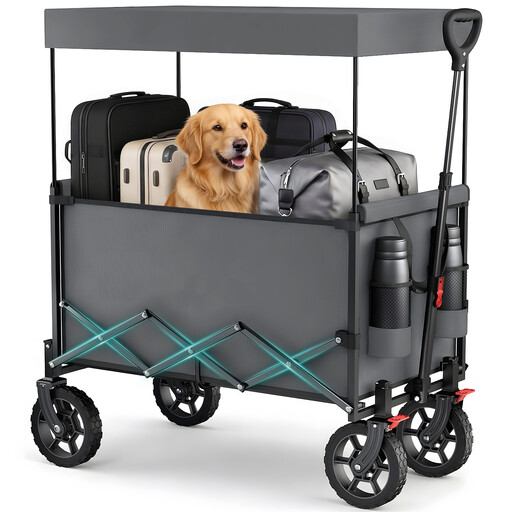
Why this model ? Perfect for long beach days or picnics, its removable canopy protects children, pets, or supplies from the sun and light rain. It's the practical detail that makes all the difference on family outings.
This model is equipped with genuine all-terrain tyres with brakes, designed to roll over sand without sinking, unlike basic plastic wheels.
The combination of a large capacity (150 L / 150 kg), a protective canopy, and removable wheels for easy cleaning.
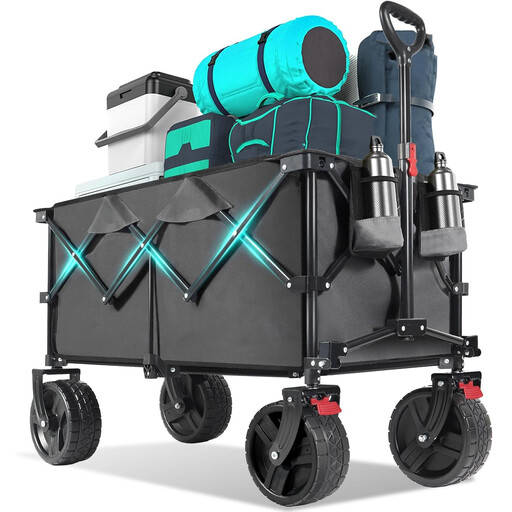
Why this model ? For those heading to a campsite or festival, transporting all your gear in a single trip is a real convenience. Its 200 kg capacity and 200 L volume allow you to carry everything, from the tent to the cooler, without breaking a sweat.
It's the antithesis of false durability, featuring a solid alloy steel frame, waterproof 600D Oxford fabric, and a true load capacity of 200 kg.
An exceptional heavy-duty capacity and volume, combined with wide wheels and brakes for perfect control on the challenging terrain of campsites or festivals.
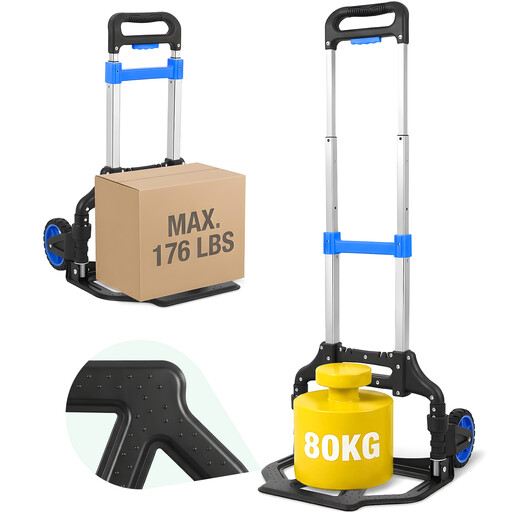
Why this model ? For carrying water packs, parcels, or crates in the city, a hand truck-style trolley is often more suitable. Its feather-light weight (3.5 kg) and ultra-slim fold (5.7 cm thick) make it ideal for storing in a cupboard or the boot of a city car.
It avoids the pitfall of fragile folding mechanisms with a simple and quick system. Its aluminium frame is an excellent compromise between lightness and strength for its intended use.
Extreme compactness and lightness. The 3-level adjustable telescopic handle ensures comfortable and ergonomic use for any user.
We have selected a full range of trolleys that meet our standards for quality and durability.
It all comes down to the wheels. A beach wagon absolutely must have very wide wheels to avoid getting bogged down in the sand. A garden cart also benefits from wide wheels for soil and grass, but its frame is often reinforced to carry denser loads (bags of soil, stones...). The materials should also be treated against corrosion, an essential feature for dealing with salty sea air.
Maintenance is simple, but it shouldn't be overlooked. After each use, especially outdoors, clean the wheels to remove mud, sand, or debris. Wipe down the fabric with a damp cloth if needed. The essential habit?: make sure the trolley is completely dry before folding it up and storing it away. This is the best way to prevent rust on the frame and mildew on the fabric.
Some models, particularly those with a canopy, are designed with this use in mind. Be careful, however: a trolley is not a stroller and does not meet the same safety standards. It is therefore imperative to always check the manufacturer's recommendations. If you are transporting a child, never exceed the maximum load capacity, ensure they remain properly seated, and never leave them unattended. For this purpose, the presence of brakes is absolutely non-negotiable.