
Livraison le jour même ou le lendemain

Qualité garantie

Débloquez vos offres de bienvenue: Livraison GRATUITE | Jusqu'à -80 % | 30 jours d'essai gratuits à JoyPlus
Téléchargez l'application
Whether for groceries, camping gear, gardening tools, or a full day's kit for the beach, the folding transport trolley has become an almost essential accessory. The problem? With a huge range of options, it's easy to be tempted by a model that quickly proves disappointing.
The wrong trolley is a recipe for frustration. Imagine wheels that get bogged down in the sand, a frame that buckles under a weight it's supposedly rated for, or a folding mechanism so complex you end up leaving it to gather dust in the garage. To help you avoid these setbacks, we've identified the common pitfalls and the criteria you should never overlook.
Before we even dive into the spec sheets, let's review the most common design flaws that can turn a good deal into a real headache.
To make the right choice, three parameters need to be examined closely. They will make all the difference in your trolley's performance and lifespan.
Don't be blinded by the maximum heavy load capacity advertised. Always put it into the context of your actual needs. For groceries or a few pieces of luggage, a folding hand truck that can handle 80?kg is more than enough. On the other hand, for a camping trolley that needs to carry a tent, chairs, and a cooler, aim for a capacity of at least 100-120?kg and a usable volume of over 150 litres. The frame material is also an excellent indicator: alloy steel is a guarantee of robustness for heavy loads, while aluminium offers an ideal lightweight/sturdy compromise for more moderate use.
This is arguably THE most important criterion—the one that determines whether your trolley will be an ally or a burden.
A modern folding wagon should collapse in on itself, most often by pulling a single tab located at the bottom of the basket. This is the type of design that allows it to be stored effortlessly in a car boot or a cupboard. Also, remember to check the fabric quality. A 600D polyester canvas is a safe bet: it's highly resistant to abrasion and tears and is often water-repellent, which can protect your belongings from a surprise shower.
To illustrate these criteria in practice, here are a few user profiles and the models we find most suitable.
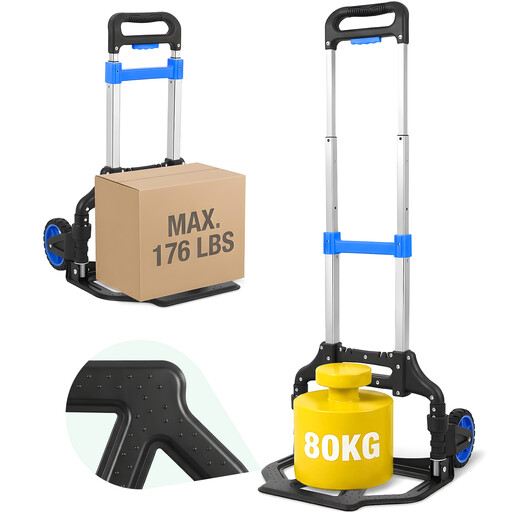
Why it's a great fit: With its feather-light weight and record-breaking compactness, this hand truck is perfect for occasional help: carrying water packs, parcels, or a small suitcase. It slides easily behind a car seat or into a cupboard.
It's honest about its limitations: this is not an all-terrain model. Its aluminium frame is optimised for lightness with a realistic 80 kg load, avoiding the trap of over-promising. Its folding mechanism is nearly instantaneous.
A feather-light weight of 3.5 kg and a thickness of just 5.7 cm when folded. Its 3-level adjustable telescopic handle adapts to users of all heights.
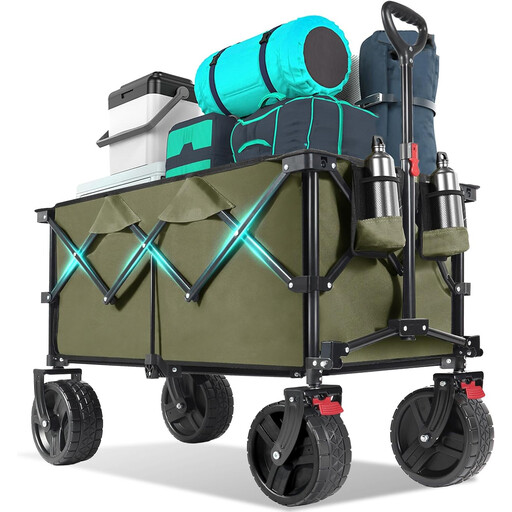
Why it's a great fit: Its large 200 L volume allows you to effortlessly transport towels, toys, a cooler, and a parasol. It's the ideal companion for beach days and festival weekends.
It tackles the main problem head-on: the wheels. Its 7-inch wide tyres are designed to roll over sand and grass without sinking. The alloy steel frame supports a high dynamic load.
The winning combination: a large volume (200 L), a 200 kg load capacity, and genuine all-terrain wheels with brakes, all in a foldable format.
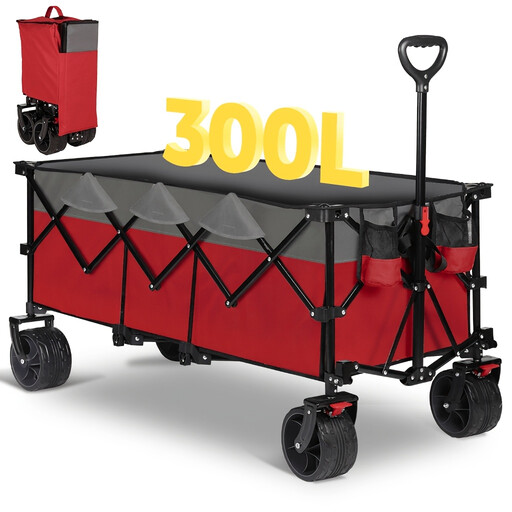
Why it's a great fit: Ideal for transporting long or bulky items like garden tools, bags of soil, or wood. Its length of over 1.2 m and 300 L volume make it a real workhorse.
No empty promises here. The load capacity (200 kg) and volume are designed for heavy-duty use. Its structure prioritises durability over ultra-light weight.
Its storage volume of 300 L is simply exceptional, as is its usable length of over 1.2 m—a rarity for a foldable model.
Explore our full selection of transport trolleys that meet our quality criteria and current safety standards.
A little maintenance goes a long way in extending your trolley's lifespan. After a trip to the beach or garden, a good rinse of the wheels will remove sand and dirt, which can damage the axles over time. Remember to wipe down the frame with a damp cloth to prevent corrosion, especially on a steel frame. Finally, make sure the canvas is completely dry before folding and storing it to prevent mould and mildew.
Yes, and that's actually one of its key strengths. The wide wheels designed to avoid sinking in sand are just as effective on grass, gravel paths, or slightly muddy ground because they distribute the load more evenly. Their only minor drawback is slightly reduced manoeuvrability in very tight spaces or on hard, smooth surfaces, where thinner wheels would be more agile.
It all depends on how you plan to use it. The 4-wheel trolley (or wagon) is perfect for carrying loose or irregularly shaped items: grocery bags, beach toys, camping gear, etc. It's very stable and requires no effort to balance. The folding hand truck, on the other hand, is optimised for stackable and stable loads like boxes, crates, or suitcases. It is generally more compact but requires the user to balance the load during transport.