
Livraison le jour même ou le lendemain

Qualité garantie

Débloquez vos offres de bienvenue: Livraison GRATUITE | Jusqu'à -80 % | 30 jours d'essai gratuits à JoyPlus
Téléchargez l'application
A folding trolley promises to end the chore of hauling groceries, camping gear, or moving boxes. Yet, buying one often turns into a headache, or worse, a disappointment. Too many users end up with a flimsy, hard-to-steer model that's destined for the landfill after just a few uses.
To help you avoid this common pitfall, we've broken down the traps to avoid and the essential criteria to check. Our goal is to help you find the trolley that truly meets your needs, cutting through the marketing noise.
Before you even start comparing models, learn to spot the design flaws that turn a good deal into a waste of money.
To avoid these pitfalls, focus on a few key technical specs. These are what will guarantee the longevity and usability of your future transport trolley.
The frame material is the first indicator of its durability.
Always ensure the advertised load capacity is consistent with the frame material and, most importantly, the type of wheels.
The choice of wheels is THE deciding factor.
The usable volume (expressed in litres for basket-style models) and the folding mechanism are the final points to check. A large volume is great, but not at the expense of compactness when folded. A good folding cart should fit discreetly in a car trunk or a closet. Prioritise folding systems that can be operated with one hand and include a reliable safety lock.
To put theory into practice, here is our selection of models that cater to specific uses while meeting our quality criteria.
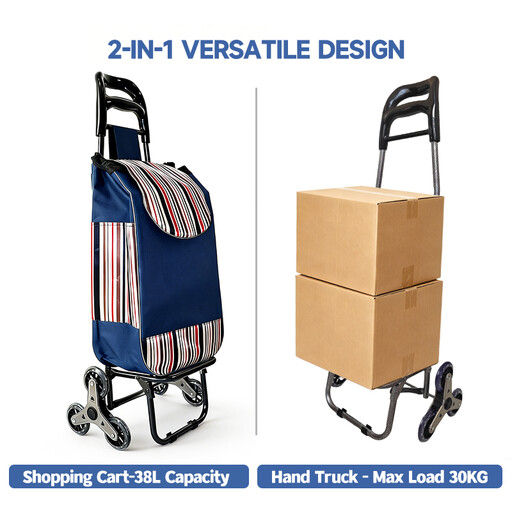
Why it stands out: Perfect for city shopping, it effortlessly handles curbs and stairs. A real lifesaver for those living in an apartment without an elevator.
With its stair-climbing wheel system and sturdy frame (aluminium alloy or carbon steel), it avoids the trap of flimsy casters that fail against city obstacles.
Its stair-climbing design and ultra-compact fold, ideal for small apartments.
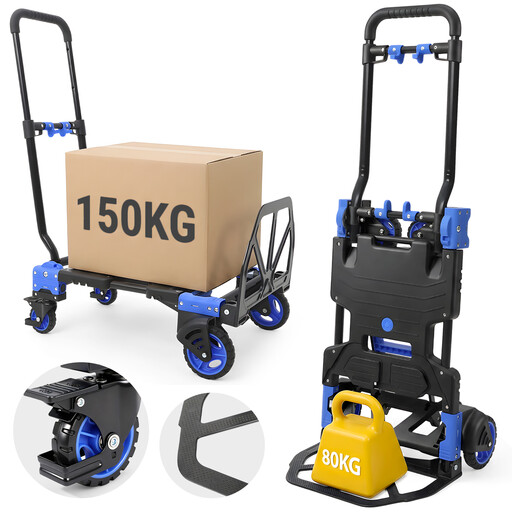
Why it stands out: Essential for moving, DIY projects, or semi-pro use. Its 2-in-1 design allows it to adapt to all types of items, from simple boxes to more bulky loads.
It solves the problem of overstated capacity with two distinct use modes and clearly defined limits (80 kg as a hand truck, 150 kg as a platform cart). Its reinforced aluminium frame is a guarantee of durability.
Its 2-in-1 versatility (hand truck and platform cart) and its high load capacity of up to 150 kg.
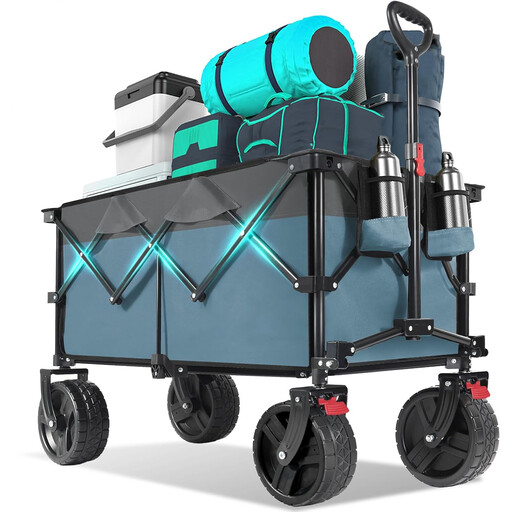
Why it stands out: The ideal companion for family outings, camping, or festivals. Its generous volume lets you haul all your gear (tent, cooler, chairs...) in a single trip, even over rough terrain.
With its wide all-terrain wheels, struggling on grass, sand, or mud is a thing of the past. Its steel frame and 600D Oxford fabric give it rock-solid durability.
Its XXL volume (200 L), its go-anywhere all-terrain wheels, and its 200 kg payload.
Explore our full selection of products that meet our quality standards.
It all comes down to design and intended use. The shopping trolley, or cart, is designed for groceries: it's a fabric bag on a lightweight, two-wheeled frame. The folding hand truck, on the other hand, is a metal platform with a foldable toe plate, designed for heavier and bulkier loads: boxes, drink cases, small appliances...
Minimal maintenance is required, but it's essential. After each use, clean the wheels to remove gravel, dirt, or other debris. Wipe down the frame with a damp cloth if it's dirty, and most importantly, make sure it's completely dry before storing it. Occasionally, check the folding mechanism's joints to ensure they are clean and operate smoothly without force.
Yes, and they are a game-changer for daily tasks. Their three-wheel star system allows them to "climb" stairs by rolling, which drastically reduces the effort compared to a classic cart that you have to lift. It's an invaluable aid for carrying groceries up to your apartment or getting over high curbs. Of course, their effectiveness has its limits, especially with very heavy loads or particularly high steps.