
Livraison le jour même ou le lendemain

Qualité garantie

Débloquez vos offres de bienvenue: Livraison GRATUITE | Jusqu'à -80 % | 30 jours d'essai gratuits à JoyPlus
Téléchargez l'application
Doing your shopping on foot, carrying laundry or moving parcels shouldn't mean you have to lug several heavy bags. A folding shopping trolley helps you cut down on effort while tucking away neatly in a cupboard, car boot or under the bed. The trick is to choose a model that genuinely fits your daily routine.
Marketing promises are sometimes worth a closer look. A large capacity doesn't necessarily guarantee a frame that can handle a heavy load. Likewise, wheels described as "all-terrain" can lack stability on uneven pavements. On the flip side, a very compact model might offer too short a base to hold water bottles or bulky bags.
A 60-litre bag looks spacious, but it's the maximum load that deserves your attention. A few bottles, tins or bottles of laundry detergent can quickly add up in weight. So check the limit stated by the manufacturer – you can't work it out from the bag's capacity alone.
A wheeled shopping trolley may be sold as foldable yet still be quite bulky when closed. Check its folded dimensions, the width of the frame and whether it has a carry handle. A simple mechanism with a clearly visible lock also makes the trolley more pleasant to use day to day.
Two wheels are usually enough for pulling a shopping bag on a flat surface. Four wheels offer more stability when the trolley is loaded and make it easier to move around a shop. For going up and down stairs, a dedicated mechanism can be useful, but it doesn't replace the need to balance the load properly or follow the manufacturer's recommendations.
For everyday use, compare the maximum load, the empty weight and the rigidity of the frame. A lightweight trolley is easier to lift on public transport or on stairs. A reinforced frame, on the other hand, will be better suited to heavy-duty use.
Aluminium generally offers a good balance between lightness and corrosion resistance. A robust trolley rated at 80 kg, like some folding sack trucks, is more suited to transporting parcels, crates or equipment than just grocery shopping. In any case, the load must stay within the specifications on the product page.
Look at the wheel diameter, the material they're made from and how they're attached. Wide wheels handle small obstacles more easily, but they can also make the trolley bulkier when stored. An ergonomic handle that's adjustable or slightly angled can also help you avoid uncomfortable positions when pulling.
Older people or those who struggle with carrying should prioritise an ergonomic shopping trolley, with a stable handle, easy-to-understand folding and a base that doesn't tip over when the bag is full. On stairs, only use a stair-climbing trolley on compatible steps and control every movement.
Start by measuring the space you have at home. A model destined for the hallway doesn't face the same constraints as one that needs to fit in a small car boot. Also check the shape of the bag, its closure system, the number of pockets and whether you can separate fragile items from heavy ones.
A folding transport trolley can also be used for carrying laundry, parcels or equipment. In that case, a rigid platform or a bare sack-truck-style frame will sometimes be more practical than a soft bag.
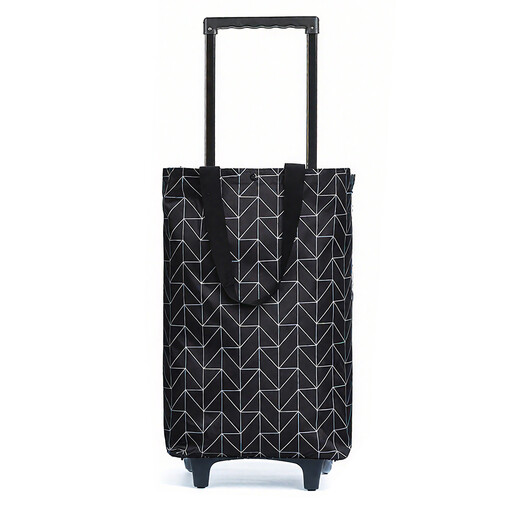
Why this choice suits this profile: Its telescopic handle format is well suited to first-time use, for small purchases or daily trips where space needs to be kept to a minimum.
Its foldable design reduces the risk of buying a model that's hard to store. However, check the permitted load before carrying heavy items in it.
Lightweight format as stated, foldable structure and pull handle.
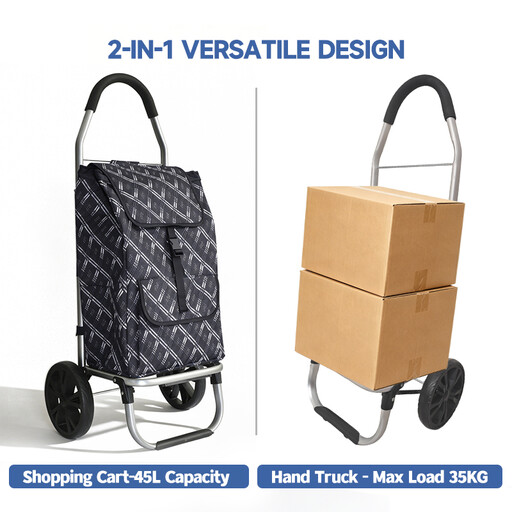
Why this choice suits this profile: This aluminium model targets users looking for a lightweight frame for regular shopping, with a structure that stores away easily after use.
The material and folding mechanism are clearly stated, which makes it easier to compare with models that have vaguer specifications.
Aluminium alloy frame as stated and foldable design for compact storage.
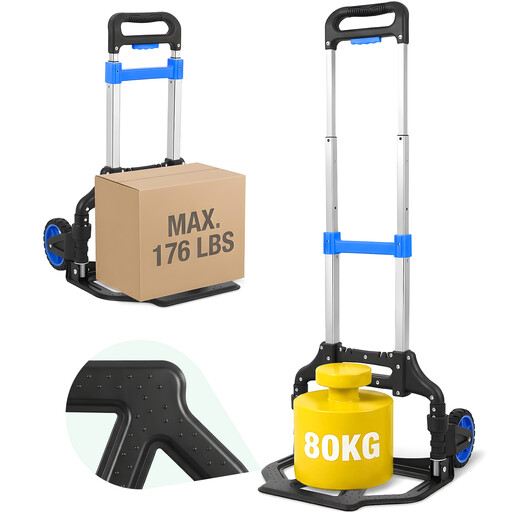
Why this choice suits this profile: It is designed for transporting parcels, crates or loads that don't need to be stored in a closed bag.
The stated load and net weight of 3.5 kg are specified. This avoids confusing a trolley intended for shopping with a multi-purpose transport tool.
Three stated handle heights, quick folding and TPR wheels mounted on bearings.
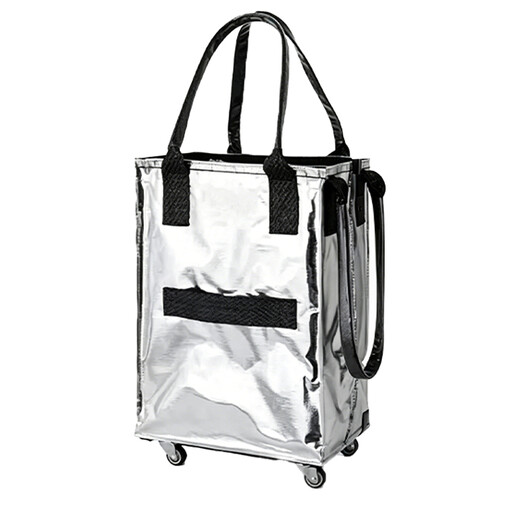
Why this choice suits this profile: Its woven bag of around 60 litres is suitable for markets, big shops and regular transport of groceries.
The stated capacity and maximum load of around 35 kg allow you to check that the quantity carried remains compatible with the actual weight of the load.
Thick woven bag, capacity of around 60 litres and stated capacity of 35 kg.
We've compiled a complete, real-time updated selection of products that meet these selection criteria as well as European safety requirements.
Start by removing crumbs and dust, then clean the frame with a slightly damp cloth. Dry the wheels before storing the trolley. On a folding model, regularly check that the joints lock properly and that no debris is obstructing the mechanism.
It depends on the load carried, how often you use it, the quality of the wheels and the storage conditions. Sticking to the maximum load, avoiding pulling the trolley abruptly on stairs and keeping it away from damp conditions will help preserve both the frame and the bag.
No. You need to consider the size of the steps, the weight of the load and the stability of the person using it. On a narrow or uneven staircase, a standard wheeled trolley may be easier to control. Never use a trolley on an escalator and always follow the warnings on the product page.