
Livraison le jour même ou le lendemain

Qualité garantie

Débloquez vos offres de bienvenue: Livraison GRATUITE | Jusqu'à -80 % | 30 jours d'essai gratuits à JoyPlus
Téléchargez l'application
A folding shopping trolley can make trips to the supermarket, the market or public transport much easier. But you need to choose a model that stays manoeuvrable when loaded, isn’t as bulky as a rigid trolley, and has a capacity that genuinely matches your needs.
To avoid unpleasant surprises, it’s best to look beyond the colour and the marketing promises. Here are the criteria to examine before buying a shopping trolley, along with a selection of models suited to different types of shoppers in the UK.
A 60 L bag might seem big enough for the weekly shop. But that figure tells you nothing about the strength of the seams, the stability of the frame, or how easy it is to pull the trolley once it’s full.
Even a large shopping trolley needs to stay manageable in narrow aisles, on uneven pavements and on stairs. Check the maximum load stated and match it to your habits, rather than always filling the bag to its limit.
‘Foldable’ doesn’t necessarily mean easy to slip into a cupboard or car boot. Some models are still quite bulky when folded, while others require you to remove the bag or fiddle with several fastenings.
Before you order, look at the folded dimensions, the closure system and whether there’s a carry handle. In a flat, a narrow hallway or a small hatchback, a simple mechanism can make all the difference.
Two, four or six wheels aren’t enough to predict how comfortable the trolley will be to use. The width of the frame, the diameter of the wheels and the position of the handle all affect stability and manoeuvrability.
A model that’s too narrow may tip over when carrying several bottles. Conversely, a very wide trolley can become awkward in market aisles or on a bus. The ideal is to find the right balance between stability, weight and bulk.
For everyday bits and pieces, a lightweight shopping trolley with a compact compartment can be perfectly adequate. For a family or less frequent shops, it’s better to go for a large-capacity shopping trolley.
Be sure to check:
The JORDAN&JUDY model states around 60 L capacity and a maximum load of 35 kg in its product title. However, take these figures with the usual pinch of salt: distribute the weight properly and don’t exceed the details on the product page.
A robust shopping trolley doesn’t have to be particularly heavy. Aluminium can lighten the frame while keeping a structure suited to regular use. Stainless steel may suit those who want a rigid build for heavy-duty use.
Compare the following:
A trolley that’s too heavy quickly becomes a pain on stairs. On the other hand, a very light model with small, fragile wheels may lack stability on cobbles or damaged pavements.
An ergonomic handle should let you pull the trolley without adopting an uncomfortable posture. Its height and shape matter especially for older people, tall users and anyone who regularly walks to do their shopping.
For a folding trolley with an ergonomic handle, also check:
No configuration means you can throw caution to the wind. On stairs, it’s better to lift the trolley than to let it bump down the steps on its wheels.
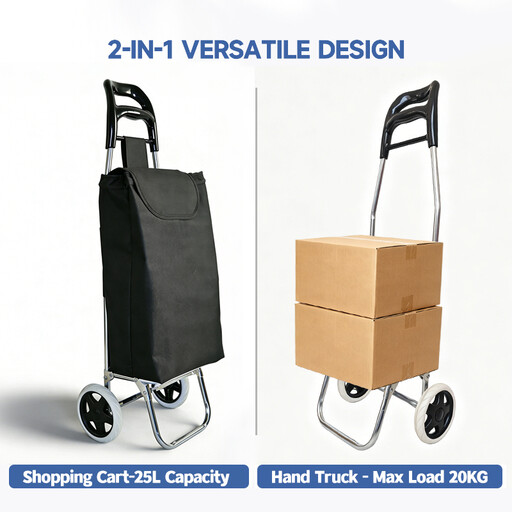
Why this choice suits this profile: Its folding design and ergonomic handle make it a good fit for anyone wanting a first supermarket trolley that’s easy to store and pull.
The folding reduces bulk between trips, while the handle described as ergonomic encourages you to focus on practical features rather than just the design.
Foldable format, stated large size and ergonomic handle. The maximum load should still be checked on the product page before purchase.
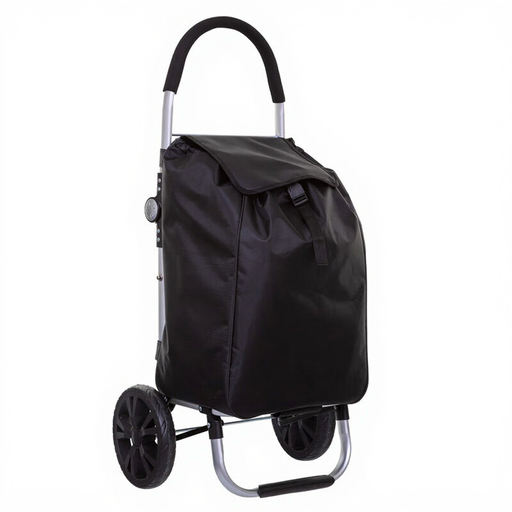
Why this choice suits this profile: This aluminium model is aimed at those who want a lightweight frame, a sturdy structure and compact storage.
The product page highlights the aluminium, folding and wheels designed for easy movement, rather than relying solely on a theoretical capacity.
Aluminium frame, stated rust resistance and folding mechanism for easy storage.
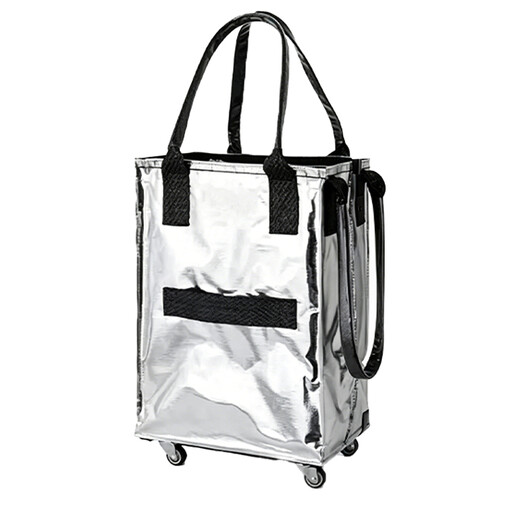
Why this choice suits this profile: With its stated volume, this model suits families and those who prefer to combine several shopping trips into one.
The title distinguishes the approximate 60 L volume from the stated maximum load of 35 kg. Two pieces of information to compare before filling the bag.
Thick woven bag, approximate 60 L capacity and stated maximum load of 35 kg.
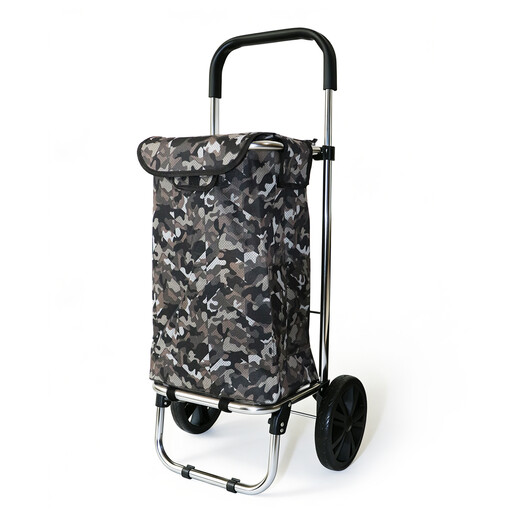
Why this choice suits this profile: Its stainless steel structure and foldable format can suit those who shop often and want a more rigid frame.
The stated material lets you assess the structure, not just the carry bag. However, the capacity and load should still be confirmed on the product page.
Stated stainless steel structure, ergonomic handle and folding design.
We’ve put together a comprehensive, real-time updated selection of products that meet these strict criteria, as well as European safety requirements.
For a single person, a compact bag is usually enough for everyday items. A family or someone who regularly buys bottles, tins and bulky products may prefer a 60 L shopping trolley. However, do check the maximum load and the strength of the base.
Regularly remove crumbs and clean the bag following the manufacturer’s instructions. For the metal frame, a slightly damp cloth is usually sufficient, as long as you dry it thoroughly afterwards. Avoid storing the trolley while it’s still damp to prevent unpleasant odours and corrosion on unprotected parts.
The lifespan depends on the weight carried, how often you use it, the type of floor and storage conditions. Stick to the stated load, avoid yanking the trolley down stairs, and regularly inspect the wheels, seams and folding mechanism joints. That way, you’ll spot a loose or worn part sooner.