
Livraison le jour même ou le lendemain

Qualité garantie

Débloquez vos offres de bienvenue: Livraison GRATUITE | Jusqu'à -80 % | 30 jours d'essai gratuits à JoyPlus
Téléchargez l'application
A large-capacity folding shopping trolley can make life easier at the supermarket, market or on a picnic. However, you need to choose a model that can handle the load, get over any steps and be stored easily at home. A bulky trolley when empty can become difficult to pull once loaded, while a compact model may lack stability.
Before placing your order, here are the main pitfalls to avoid and the criteria that really matter when comparing a wheeled shopping trolley.
A 56- or 60-litre bag provides useful space, but that does not mean it can carry several dozen kilos. Capacity refers to the internal space, while the maximum load depends on the frame, stitching, base of the bag, wheels and handle.
For your usual shopping trips, check these separately:
The JORDAN&JUDY model, advertised with a capacity of around 60 litres and a maximum load of 35 kg, may be suitable for large shops. As always, it is best to follow the product listing’s instructions and distribute the weight evenly.
A one-wheel shopping trolley is generally compact and easy to steer, but it requires more balance when loaded. A three-wheel model can help you get over certain obstacles or kerbs, but it may sometimes be bulkier and less natural to turn.
Before choosing a configuration, think about your everyday needs:
The number of wheels alone is therefore not enough to judge manoeuvrability. Their diameter, spacing and the quality of the construction also play a decisive role.
A trolley can be spacious and still take up a lot of room when stored. Measure the space available in a cupboard, hallway or boot before buying. Also check whether the bag needs to be removed before folding the trolley, or whether just a few simple movements are enough.
The ergonomic handle deserves particular attention, especially for older people and users who shop several times a week. A comfortable grip at the right height helps prevent you from pulling with a bent wrist or raised shoulder. Ideally, test the movement with a moderate load before entrusting the trolley with a fully packed bag.
A 56 L supermarket trolley is a good compromise for weekly shopping, groceries and a few bulky items. For small daily shops, a smaller format will often be lighter to lift and easier to store.
A large capacity is useful if it saves you from making several trips. It becomes less practical if you need to climb several flights of stairs without a lift or carry the trolley over a long distance.
A sturdy folding trolley relies on a durable bag and a sufficiently rigid frame. Pay particular attention to:
Stainless-steel models may appeal to you for their metal construction and robust appearance, while a lighter frame will be more comfortable to carry. In all cases, no material allows you to exceed the stated maximum load.
The 2-in-1 backpack and trolley bag lets you switch between pulling and carrying. This option may appeal to campers, people who regularly use stairs or anyone who wants to use the bag without its frame.
For everyday use, choose an intuitive conversion system and a genuinely compact folding design. A trolley that is easy to store is more likely to be taken out of the cupboard than a model that is complicated to handle after every shopping trip.
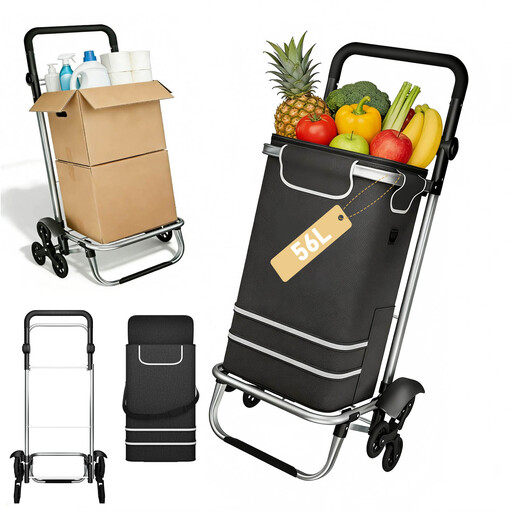
Why this choice suits this profile : Its versatile format is suitable for shopping, camping and picnics, with a transport option to suit every situation.
The 56 L capacity is clearly stated, making it easy to compare with the amount of space you actually need.
Folding design, stated capacity of 56 L, and 2-in-1 backpack and trolley function.
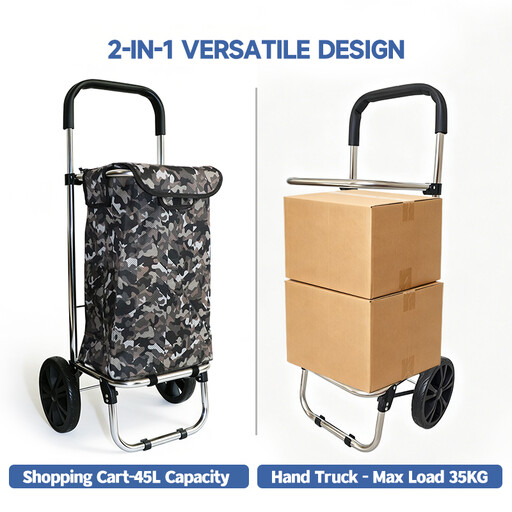
Why this choice suits this profile : It is designed for users who value a metal frame, easy storage and a handle designed for pulling.
The description highlights stainless steel and the folding design, two points to check before being won over by the appearance or capacity alone.
Stated stainless-steel construction, ergonomic handle and folding design.
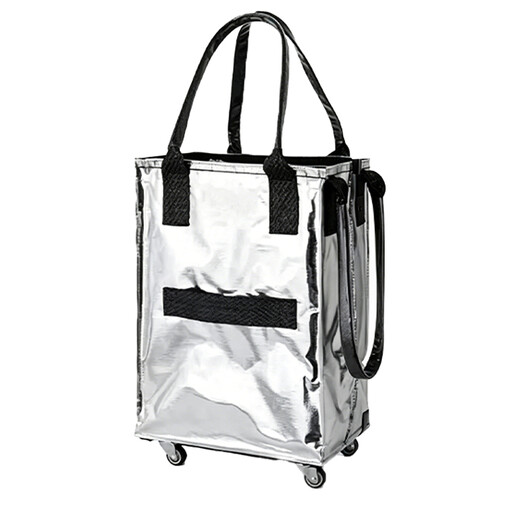
Why this choice suits this profile : Its stated capacity of around 60 L and maximum load of 35 kg meet the needs of regular, substantial shopping trips.
The capacity and maximum load are stated separately, helping you avoid confusing large capacity with unlimited strength.
Advertised thick woven bag, capacity of around 60 L and stated maximum load of 35 kg.
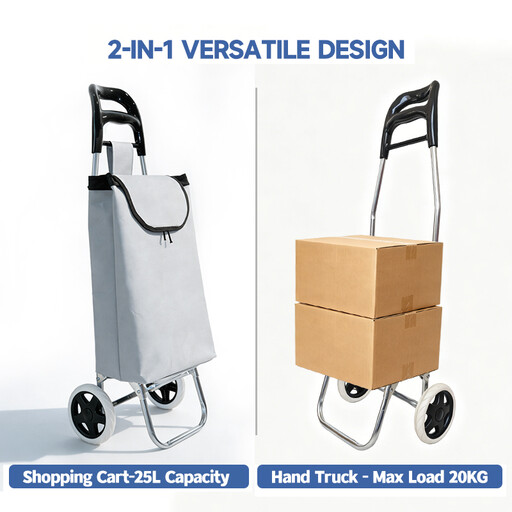
Why this choice suits this profile : Its ergonomic handle and large format may suit frequent shopping trips, provided the height and weight remain appropriate for the user.
The handle and folding mechanism are highlighted in the listing, so check these features before focusing on capacity alone.
Advertised ergonomic handle, large format and folding design for easier storage.
Even a trolley designed to carry heavy loads requires a few precautions:
These habits help limit premature wear and maintain smooth pulling over time.
A model with 56 to 60 litres will generally suit a large food shop. For daily purchases, a smaller capacity will often be sufficient and easier to carry. Also keep an eye on the total weight: a large bag is only useful if you can pull it easily once full.
It can be useful on certain pavements or for getting over small obstacles. However, its manoeuvrability depends on the wheel diameter, frame stability and load being carried. On a mostly flat route, a simpler model may be easier to steer.
Choose an ergonomic handle, a simple folding mechanism, a comfortable height and a reasonable empty weight. If stairs are involved, a 2-in-1 backpack and trolley configuration can offer greater flexibility. Check the specifications in the product listing and make sure they match the user’s physical capabilities.