
Livraison le jour même ou le lendemain

Qualité garantie

Débloquez vos offres de bienvenue: Livraison GRATUITE | Jusqu'à -80 % | 30 jours d'essai gratuits à JoyPlus
Téléchargez l'application
A folding outdoor chair can accompany you on camping trips, garden meals, afternoons on the patio, days at the beach or festivals. The trouble is, some models quickly become uncomfortable, unstable or awkward to carry. The price tag alone isn’t enough to separate the good from the bad.
Before you place an order, focus on the frame, the weight, the folded dimensions and the intended conditions of use. Here are the main pitfalls to avoid, followed by a selection tailored to different needs.
A lightweight portable chair is ideal for hiking or walking trips. However, a very compact frame can mean a narrow seat, a short backrest or limited lateral support. For eating, spending the evening in the garden or attending a festival, an extra few hundred grammes can make a real difference to stability and comfort.
The stated capacity usually refers to a maximum static load, measured when the chair is set up on a flat, stable surface. It doesn’t mean the seat can handle sudden movements, rocking or a concentrated load on one armrest.
So check the limit for each individual seat, not just the one given for the whole package. Always follow the instructions and never use an outdoor folding armchair on sloping or uneven ground.
A breathable textile or one described as weather-resistant isn’t necessarily designed to stay outside all year round. Rain, sunlight, sand and moisture can accelerate wear on seams, padding and metal parts.
After each outing, wipe down the frame, let the fabric air dry, then store the chair in a dry place. Avoid machine washing unless the instructions explicitly allow it.
An aluminium folding chair generally combines lightness with corrosion resistance. However, stability also depends on the tube diameter, the leg design and the strength of the joints. For regular use in the garden, at camp or during outdoor meals, a reinforced chassis can be a wise choice.
Polyester and Oxford fabric are very common. Look at the seat width, the tension of the fabric and whether there is any padding. For a beach chair, choose a frame that’s easy to rinse and dry – sand quickly finds its way into the mechanisms.
For hiking, weight and folded size come before everything else. A chair weighing less than a kilogramme can slip into a bag, while a model with armrests, a side table or padding will naturally be bulkier.
Compare the open and folded dimensions. A folding camping chair destined for the boot of the car can be wider and more comfortable than a seat designed for trekking.
For eating or chatting, an upright seat is usually the most practical. For reading or relaxing, an adjustable backrest offers more options. However, an outdoor reclining chair, a folding lounger or a folding deckchair should always be set up on a stable surface.
Armrests improve comfort, but they increase the overall size and can get in the way around a narrow table. A side table is handy for a drink or phone, as long as you don’t put too much weight on it.
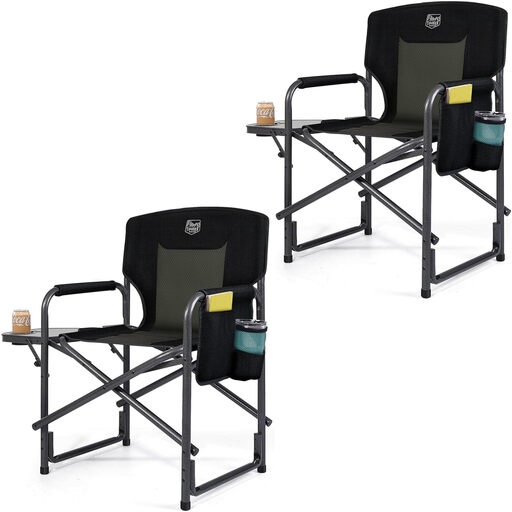
Why this choice suits this profile: This pack is ideal for outdoor meals, barbecues and visits, with two seats that are easy to set up and store away.
The specs state 3.3 kg per chair and a maximum load of 180 kg per seat. These figures let you compare the weight to carry and the supported capacity directly.
Aluminium frame, breathable polyester fabric, padded armrests and a fold-down side table. Open dimensions: 47 × 63 × 87 cm per chair.
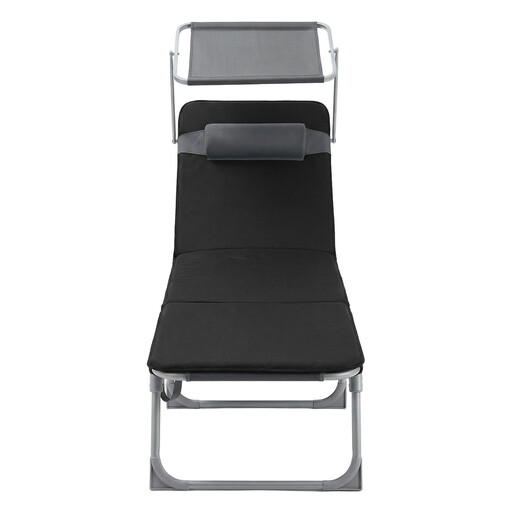
Why this choice suits this profile: This folding lounger is aimed at those who prioritise relaxation by the pool, on the patio or in the garden.
The adjustable backrest, removable headrest and adjustable visor are concrete features, not just a vague promise of comfort.
Maximum static load stated at 150 kg, breathable fabric, cushion and carry handles. Weight stated: 8.1 kg.
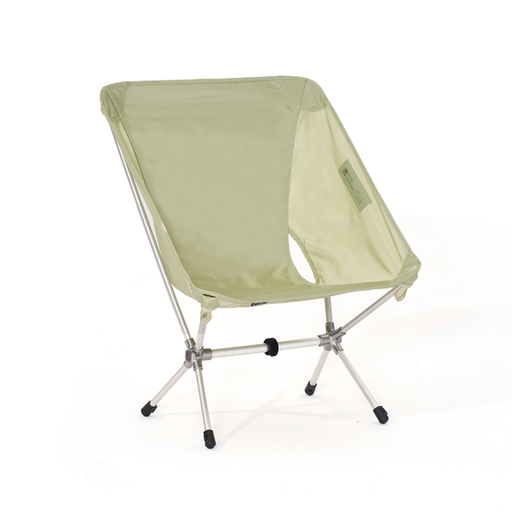
Why this choice suits this profile: With its low weight, this folding camping chair is designed for hiking, trekking and trips where every gramme counts.
The stated weight is around 765 g and the folded size is 11 × 11 × 36 cm. However, it must be used on firm, level ground.
Triangulated aluminium alloy frame, non-slip rubber feet, Oxford fabric and a stated static load of around 140 kg.
We’ve put together a full selection, updated in real time, of products that meet these demanding criteria as well as European safety standards.
To keep your folding outdoor chair in good condition, a few simple steps are all it takes:
For use near the sea, rinse any parts exposed to salt, then dry them thoroughly. On a folding garden chair, a cover can help reduce dust build-up, but it doesn’t replace storing it in a dry place during periods of non-use.
For hiking, go for a compact, lightweight model, such as a lightweight portable chair. For car camping, a wider seat with armrests will generally offer more comfort. At the beach, focus on the stability of the legs and how easy the fabric is to clean.
Place it on a firm, flat surface, open the frame fully, then check that the mechanisms are locked according to the instructions. Don’t sit down until all the legs are properly in contact with the ground.
Its lifespan depends on how often it’s used, the weight it supports, storage conditions and exposure to rain or sunlight. Regular care and storing it in a dry place help to limit rust, fabric distortion and wear on the joints.