
Livraison le jour même ou le lendemain

Qualité garantie

Débloquez vos offres de bienvenue: Livraison GRATUITE | Jusqu'à -80 % | 30 jours d'essai gratuits à JoyPlus
Téléchargez l'application
A folding fitness trampoline can turn a small space into a proper workout zone. It tucks away in a cupboard, lets you do cardio at home and offers several types of sessions: gentle bouncing, strength training or balance exercises. You just need to pick a model that’s genuinely right for your needs.
Before you order, three common mistakes keep cropping up:
Here are the criteria to consider when looking for a mini fitness trampoline that truly suits your home and the way you train.
The maximum weight stated by the manufacturer isn’t just a marketing gimmick: it’s a limit you must respect. A model rated for 25 kg may work for a child or a light user, but not for an adult wanting to do cardio.
For adult use, make sure you distinguish between:
The diameter also deserves your attention. A 91 cm model takes up little space, while a 102 cm trampoline offers a slightly more comfortable jumping surface. Measure the available area, but also the ceiling height and the space needed around the equipment.
A spring trampoline uses metal components that give a more responsive feel. These must be covered by a pad that protects the entire suspension area. The product page should also state the number of springs and the condition of the padding.
An elastic band trampoline or one with resistance bands is generally quieter mechanically. It may therefore be better suited to a flat, though it won’t be completely silent. Check the bands regularly for any signs of wear, especially if the equipment gets frequent use.
For low-impact cardio exercise, the quality of the bounce, the suspension tension and the frame’s stability matter more than just the number of springs or bands.
An exercise trampoline with a handlebar gives you a useful support point for easing back into training or working on balance. The height must be properly adjusted and locked before each session. This handlebar isn’t designed to withstand sudden movements or for performing tricks.
Folding really comes into its own in a living room, bedroom or small home, but check the following:
Even compact, a piece of fitness equipment is still a jumping device. Only one person should use it at a time, on a stable surface and well away from furniture.
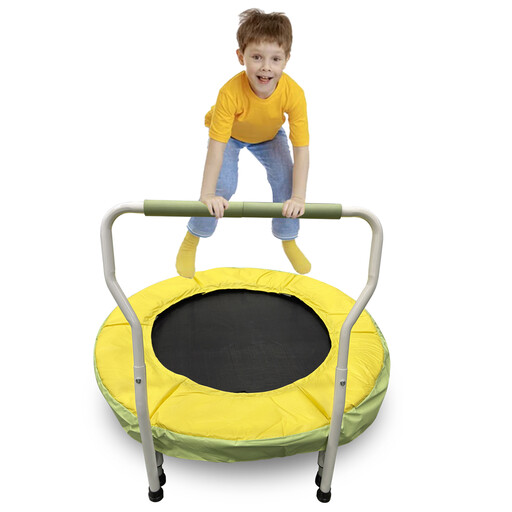
Why this choice suits this profile: With its 91 cm size, this model is designed for children aged 3 to 6 and users up to 25 kg. Its adjustable foam bar can help little ones discover bouncing, always under close adult supervision.
The 25 kg limit is clearly stated, so you won’t mistake it for an adult device. The 24 springs are fully covered by a safety pad.
Steel frame, polypropylene mat and adjustable bar. It can be used indoors or outdoors, with storage in a dry place recommended.
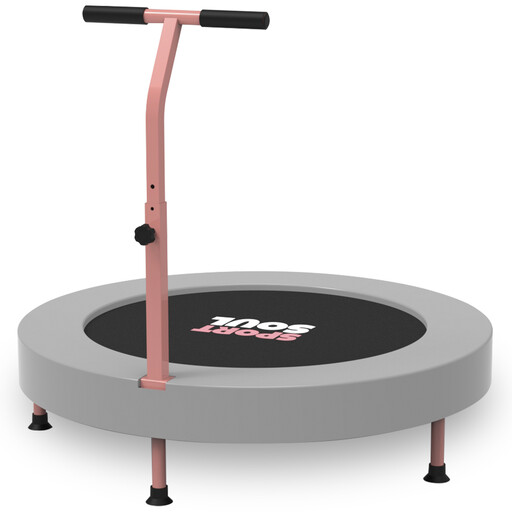
Why this choice suits this profile: This 91 cm folding mini trampoline is suitable for children and users up to 25 kg who want a pre-assembled device that’s easy to store in a small home.
The 24 elastic bands replace metal springs. They still need regular inspection, and the stated maximum weight must be strictly followed.
Folding design, pre-assembled parts and adjustable bar height. The foam pad covers the entire suspension area.
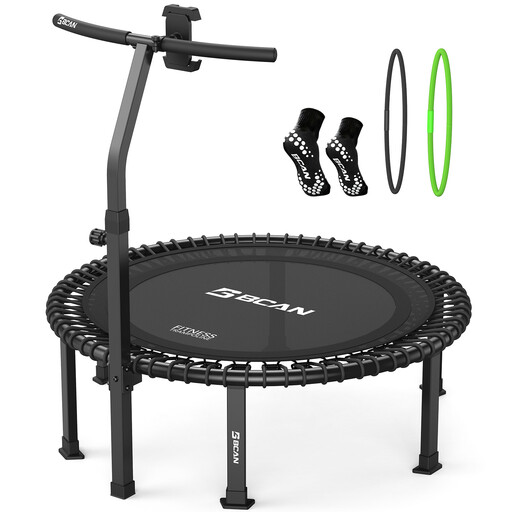
Why this choice suits this profile: This adult model comes in several diameters, with adjustable bungee tension and a handlebar. It’s aimed at those who want to tailor the bounce feel to different home workouts.
The one-piece frame reduces assembly work. The stated 500 lb capacity should still be checked for the version you choose before ordering.
Adjustable bungee tension, handlebar included, phone holder and socks supplied. Several sizes available.
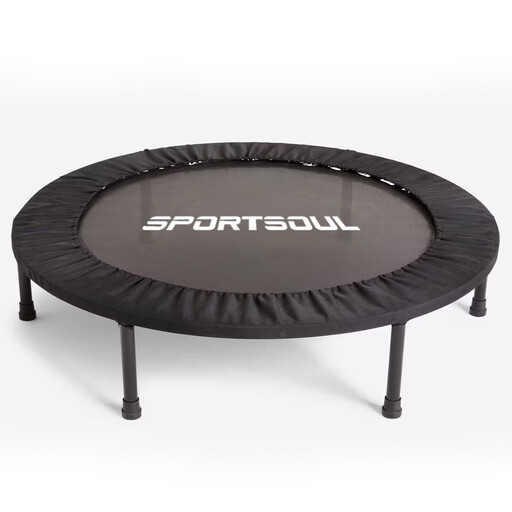
Why this choice suits this profile: This 102 cm spring trampoline is aimed at adults who want a stated 100 kg capacity for home cardio, while keeping a reasonable footprint. It comes without a handlebar, something to bear in mind for balance exercises.
The 100 kg limit is clearly stated on the product page. The feet have non-slip tips designed to protect the floor and reduce movement of the equipment.
36 steel springs, folding design and construction stated to comply with EN ISO 20957-1, GB 17498.1-2008 and ASTM F2276-10(2015) standards.
We’ve put together a full selection, updated in real time, of products that meet these demanding criteria and European safety rules.
Set up the trampoline on a flat, stable and clear floor. In a flat, a non-slip mat can protect the flooring, but it won’t fix an uneven surface. Also check the ceiling height before your first jumps.
Before each session:
The lifespan depends on how often you use it, the user’s weight, storage conditions and exposure to moisture. A dry room and regular checks will help you spot the first signs of wear quickly. If any component is cracked, loose or torn, stop using the equipment until it’s replaced.
Yes, as long as you choose a model suited to the user’s weight, limit sudden movements and consider the noise level in your home. Elastic bands can be quieter than springs, but no jumping device is completely silent. If you live in a block of flats, think about letting the neighbours below know.
Some models come pre-assembled and just need unfolding, then fitting the handlebar or checking the suspension system. Still allow time for a full check before first use. The folding mechanism should be operated according to the instructions on the product page.
Start by comparing the maximum weight capacity, then look at the diameter and frame stability. A model rated at 70 kg isn’t suitable for someone close to that limit without a safety margin. For an adult weighing up to 100 kg, go for a product page that clearly states that capacity. Also check whether a handlebar is included or not, depending on the exercises you plan to do.