
Livraison le jour même ou le lendemain

Qualité garantie

Débloquez vos offres de bienvenue: Livraison GRATUITE | Jusqu'à -80 % | 30 jours d'essai gratuits à JoyPlus
Téléchargez l'application
Balancing a hectic urban life, the need for easy mobility, and the desire for a countryside escape can be a real challenge. You dream of a bike that can squeeze into an apartment or the boot of a camper van, but can also take you on forest trails or coastal paths on the weekend. The folding electric fat bike is the solution to this dilemma: it combines the compactness of a folding bike with the robustness and versatility of a mountain bike with oversized tyres.
This guide is here to demystify the topic and give you all the keys to making the right choice. Our mission is to guide you towards relevant models suited for real-world use and to decipher technical specifications for you, without the unnecessary marketing jargon.
Before diving into our selection, let's review the technical points to check for a successful purchase.
Range is a critical factor. A long-range electric bike will allow you to plan long rides without range anxiety. Expressed in kilometres, it directly depends on the battery's capacity (measured in Amp-hours, Ah). For mixed use (city and leisure), a battery of 13Ah or more provides a comfortable baseline.
Also, consider practicality: opting for an e-bike with a removable battery is an almost indispensable advantage. It allows you to charge the battery at home or in the office without having to bring the entire bike inside, which is a game-changer if you live in an apartment.
What defines a fat bike is, of course, its tyres. A 20-inch electric fat bike with 4-inch wide tyres offers an excellent compromise between agility in the city and all-terrain capabilities. This type of folding e-bike with fat tyres literally smooths out road imperfections, from urban cobblestones to forest roots, offering superior riding comfort, often enhanced by a suspension fork. This versatility makes it a true pocket-sized all-terrain electric bike.
To be ridden on public roads in Europe, an electrically power-assisted cycle (EPAC) must comply with the European standard EN 15194. In practical terms, the motor assistance must cut out above 25 km/h, and the nominal power of the motor must not exceed 250W. A CE-certified fat bike is therefore your ticket to riding legally every day. Also, take a look at the braking system: hydraulic disc brakes offer superior power and consistency compared to mechanical disc brakes, a significant safety feature on wet terrain or downhill.
Here are a few models that stand out for their performance and cater to different user profiles.
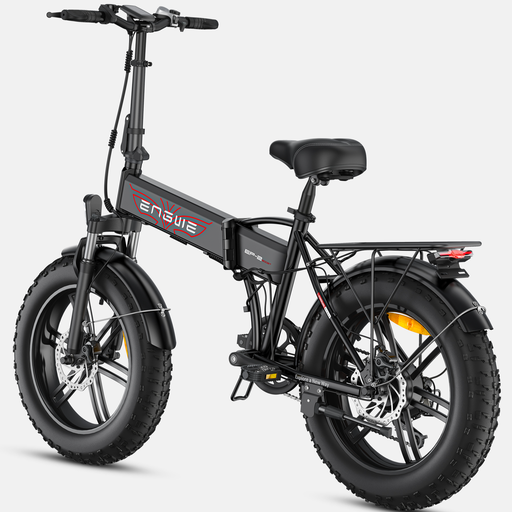
Why it stands out: The Engwe EP-2 Boost is an excellent entry point into the world of folding fat bikes. It ticks all the expected boxes (fat tyres, simple folding, removable battery) at an affordable price point.
Pros:
Who is it for?: Ideal for commuters who want a sturdy bike for their daily journeys, and for weekend riders who need a model that is easy to transport and store.
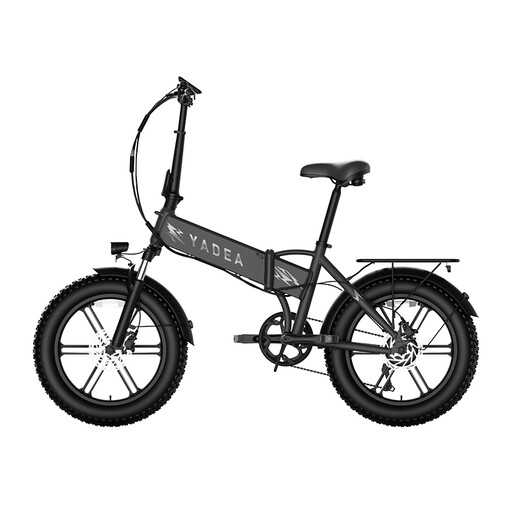
Why it stands out: The Yadea Rover is a step up, with a focus on safety and modernity. It features quality manufacturing and integrates practical technologies, all while being a CE-certified fat bike, which provides peace of mind for use on public roads.
Pros:
Who is it for?: Perfect for the user looking for a reliable and compliant folding electric mountain bike for intensive daily use, and who appreciates technologies that simplify life.
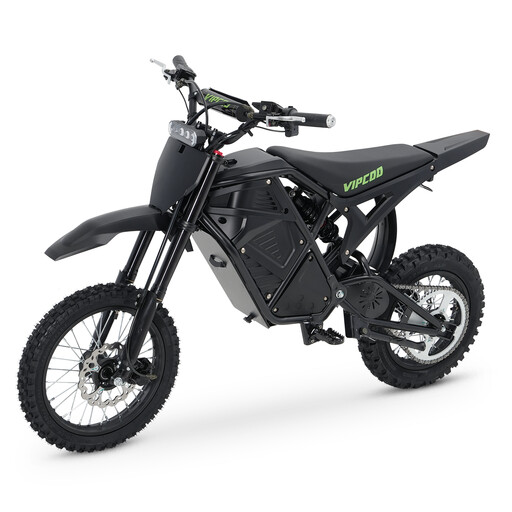
Why it stands out: Be warned, we're in a different category here. This model is not an EPAC, but a true performance beast for thrill-seekers. This vehicle is not road-legal, and its use on public roads is strictly prohibited.
Pros:
Who is it for?: Exclusively for motorsports and adventure enthusiasts who have private land or access to dedicated tracks. This is not a bike for a trip to the shops, but a pure recreational machine, designed to push the limits off the beaten path.
Our selection gives you an overview of the possibilities, from the versatile city bike to the pure sports machine. If you're looking for a different profile or simply want to broaden your comparison, feel free to explore other avenues.
Explore our complete collection of electric all-terrain bikes to discover other models suited to your adventurous spirit.
The range advertised by manufacturers is always calculated under optimal, often unrealistic, conditions. In practice, it varies enormously depending on the rider's weight, the level of assistance chosen, the terrain, and even the temperature. In real-world conditions, expect around 40 to 80 km for mixed use with a 13-15Ah battery.
Yes, and it's unavoidable. A folding fat bike is significantly heavier than a classic folding bike. The extra weight comes from the wide tyres, reinforced frame, motor, and battery. Expect a weight ranging from 25 to 35 kg. This extra bulk is the price you pay for its stability, comfort, and exceptional versatility.
It all depends on its certification. To be used legally on public roads (roads, cycle paths, etc.), a bike must be an EPAC (Electrically Power Assisted Cycle) that complies with the EN 15194 standard (250W motor, assistance up to 25 km/h). Models like the Yadea Rover are compliant. Conversely, overpowered machines like the VIPCOO are considered non-road-legal mopeds. Their use is strictly forbidden on public roads and is restricted to private land. This is THE key point to check before any purchase to avoid a nasty surprise.