
Livraison le jour même ou le lendemain

Qualité garantie

Débloquez vos offres de bienvenue: Livraison GRATUITE | Jusqu'à -80 % | 30 jours d'essai gratuits à JoyPlus
Téléchargez l'application
The Joybuy editorial team is here to help you navigate the jungle of electric bikes. Our mission: to help you make the right choice, cutting through the marketing jargon and confusing spec sheets.
Do you dream of combining the freedom of a mountain bike with the convenience of an ultra-compact model? The folding electric fat bike might just be the missing link in your mobility. Capable of joining you on city cobblestones and forest trails alike, it folds down to slip into a car boot or a cupboard. But with an overwhelming number of options, how do you find your way and what criteria should you prioritise? This guide is here to give you clear benchmarks and present a selection of relevant models for every use case.
Before you dive in, here are three essential criteria to scrutinise to find the model that will perfectly match your expectations.
Range is the number one criterion. A long-range electric bike will allow you to plan long rides with peace of mind, without worrying about running out of juice. Be aware that the range advertised by manufacturers is almost always calculated under laboratory conditions (flat terrain, minimal assistance, a feather-light rider...). In the real world, it will depend on your weight, the incline, the assistance mode you choose, and even the weather.
For daily use, an electric bike with a removable battery is a game-changer. It allows you to charge the battery at home or in the office without having to bring the entire bike up, a detail that makes all the difference if you live in a flat.
What makes a "fat bike" is, of course, its oversized tyres. A 20-inch folding bike with fat tyres (usually 4 inches wide) offers undeniable advantages:
These tyres make the all-terrain folding e-bike a true Swiss Army knife of mobility.
A folding bike that is difficult to fold or remains huge when folded is pointless. Carefully check the bike's dimensions once folded to ensure it fits where you plan to store it (boot, motorhome storage, hallway...). Weight is the other criterion not to be overlooked, especially if you have to carry it upstairs or load it frequently. A folding electric fat bike generally weighs between 25 and 35 kg, a bit of extra weight due to its reinforced frame, battery, and those famous fat tyres.
Let's move on to our selection of models that have caught our attention for their performance and relevance.
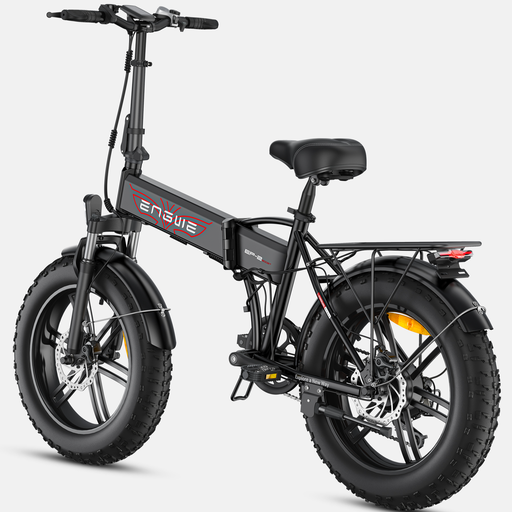
Why it stands out The Engwe EP-2 is the archetype of a well-designed folding electric fat bike. It combines a high-torque motor, wide 20 x 4.0-inch tyres, and a proven folding system, making it a particularly relevant choice for those seeking versatility above all else.
Advantages
Who is it for? Ideal for suburban users, motorhome owners, and recreational riders who want a single bike capable of going from the city to the beach via forest trails.
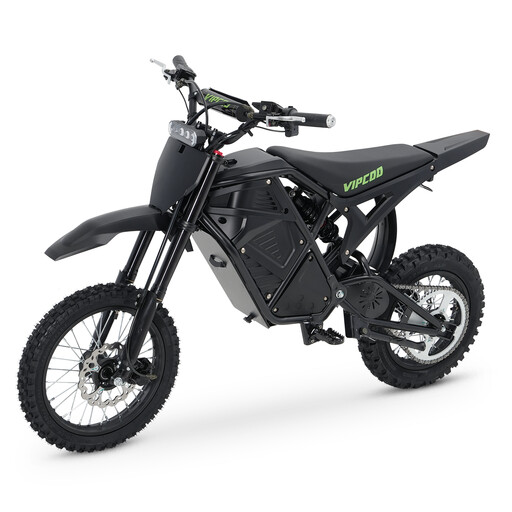
VIPCOO Electric Adventure Bike, 48V Removable Battery, Hydraulic Braking System
Why it stands out This model is in a different category and is aimed at thrill-seekers on private land. With its super-powerful motor and advanced suspension, it is built for pure off-road performance.
Warning: This machine is not an e-bike. It is an electric motocross bike, non-folding and not street-legal. Its use is strictly limited to private land and circuits.
Advantages
Who is it for? For motorsport and adrenaline enthusiasts who have private land or access to circuits to exploit the full potential of this racing machine.
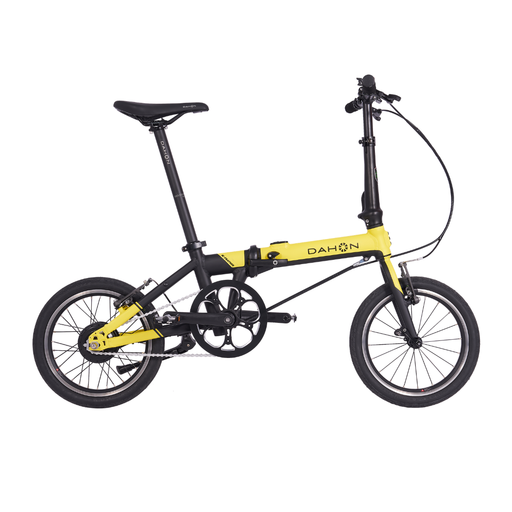
*DAHON Electric Folding Bike K feather Rear Hub-Motor, 24V 5Ah Battery 16"1.5" Tire
Why it stands out If your absolute priority is lightness and compactness for multimodal journeys (bike + metro/train), the DAHON K feather is a very smart alternative. It's not a fat bike, but an ultra-compact electric folding bike.
Advantages
Who is it for? For purely urban commuters who make short trips and are looking for an electric mobility solution that is ultra-easy to fold, carry, and store in a small space.
Our selection highlights very specific models. If your needs are different and you want to explore a wider range, from city bikes to more classic electric mountain bikes, check out our complete category of electric bikes with motors.
This is the tricky question! The actual range varies enormously. The advertised figures (sometimes up to 120 km) are theoretical maximums, achieved in minimal assist mode, on flat terrain, and by a lightweight rider. For mixed use with hills and a medium level of assistance, it is more realistic to expect 40 to 70 km. The best indicator remains the battery capacity, expressed in watt-hours (Wh).
Yes, and this is a point not to be underestimated. They are significantly heavier than classic folding bikes. The extra weight comes from the reinforced frame, the motor, the battery, and, of course, the wide tyres and rims. Expect a weight ranging between 25 and 35 kg. This is the trade-off for enjoying the comfort and versatility of an all-terrain folding e-bike.
Without a doubt! It's even an excellent idea for cities where the road surface is in poor condition. The fat tyres soak up vibrations and allow you to cross small obstacles (kerbs, tram tracks) with disconcerting ease. The only drawback might be slightly higher rolling resistance on smooth tarmac, which can very slightly reduce the range compared to a city bike with thin tyres.