
Livraison le jour même ou le lendemain

Qualité garantie

Débloquez vos offres de bienvenue: Livraison GRATUITE | Jusqu'à -80 % | 30 jours d'essai gratuits à JoyPlus
Téléchargez l'application
Whether for a family picnic, a mountain bivouac, or simply to furnish a small balcony, the folding camping table is a game-changing accessory. However, the market is flooded with models whose enticing promises often hide critical flaws. A featherlight frame that wobbles at the slightest breeze, an incomprehensible folding system, or materials that rust after the first downpour: the pitfalls are numerous.
To avoid disappointment and invest in a model that truly fits your needs, here are the essential points to check before you make a purchase.
An attractive price or a clever marketing pitch can quickly lead to a purchase you'll regret. Here are the most common traps:
To see things more clearly, focus on a few objective technical specifications. These are the true guarantors of a table's quality and suitability for your use.
The choice of material is always a trade-off between weight, durability, and ease of maintenance.
Stability is the name of the game. It primarily depends on the chassis design.
Don't confuse lightness with compactness. A table can be light but still very bulky when folded. Always check the product's dimensions when packed in its carry bag. For hiking, every centimetre and every gram counts. For car camping, you can afford a slightly larger and therefore more comfortable model.
Rather than a long list, we've matched user profiles with models that meet specific needs, keeping only those that tick all the boxes for durability and practicality.
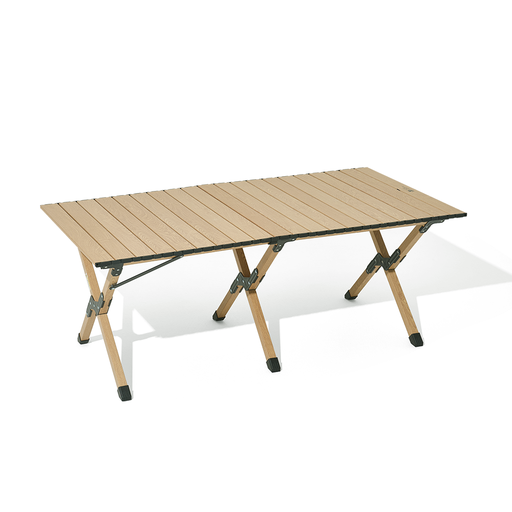
Why we chose it: Its large 116 cm tabletop makes it the ideal table for group meals. When transported by car, its 4.9 kg weight is a sign of sturdiness, not a flaw.
It doesn't fall into the trap of sacrificing stability for an ultralight design (pitfall #1). Its X-frame structure and PVC feet ensure an excellent footing. The aluminium tabletop and frame protect it from corrosion (pitfall #3).
Its ace in the hole: a large, stable surface and a roll-up tabletop for optimised storage in a car boot.
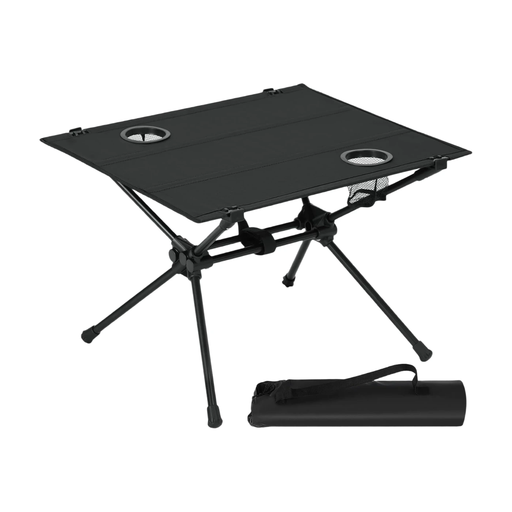
Why we chose it: At just 2.5 kg and with an ultra-compact carry bag, this table is designed for those who count every gram. Perfect for hiking, fishing, or an impromptu picnic.
Its purpose is clear: portability above all else. The Oxford fabric top is a deliberate choice to save weight. Its simple, tool-free assembly sidesteps the complexity trap (#2).
Featherlight and minimal bulk. The bonus? Two integrated cup holders, which are very practical on a soft surface.
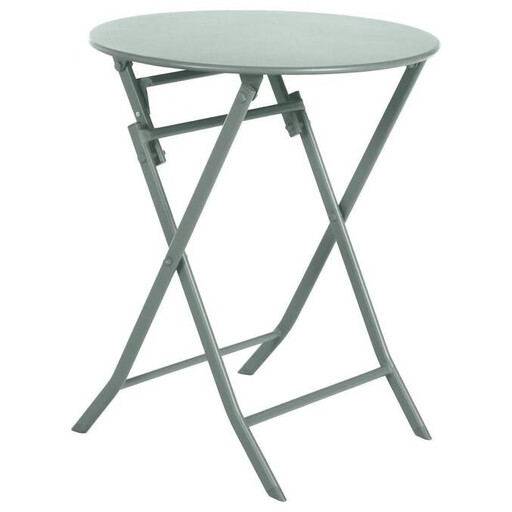
Why we chose it: Compact, stylish, and designed for two, it's perfect for small spaces. It folds vertically, allowing it to be tucked away against a wall where it will be forgotten.
Its epoxy-treated steel frame ensures excellent durability against rust and UV rays, avoiding the low-quality materials trap (#3). Its folding mechanism is as simple as it is reliable (pitfall #2).
The perfect blend of folding convenience and a polished aesthetic for everyday use.
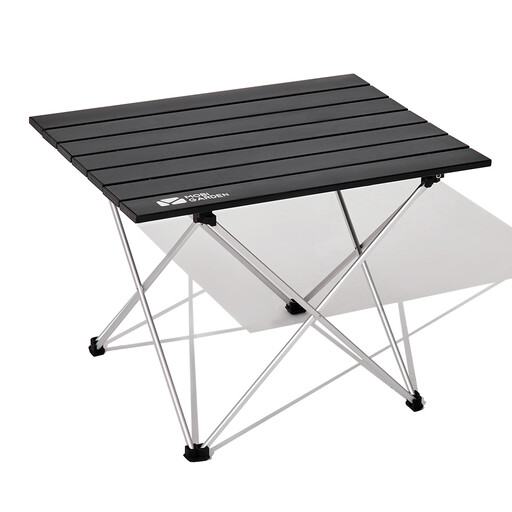
Why we chose it: Weighing only 1.25 kg, this small square table is the archetype of the **camping side table**. Ideal for holding a drink, a book, or fishing gear, it unfolds in the blink of an eye.
It doesn't overpromise. Its small dimensions and 20 kg load capacity are clearly stated. Its aluminium structure and express setup make it a reliable product that gets straight to the point, avoiding the traps of complexity and poor quality.
Ultra **lightweight** and **compact**, with an assembly time measured in seconds.
We've curated a complete selection of folding tables that meet our standards for quality and practicality.
It all depends on the maintenance! Aluminium has the advantage of not rusting, but the hinges and connection points can wear out. To extend its life, clean it after each use, store it in a dry place, and, most importantly, never exceed the static load recommended by the manufacturer.
Let's be realistic: most camping tables don't have adjustable legs. The first step is to find the flattest, most stable area possible. If the ground is soft or sloped, avoid loading the edges. The old-fashioned method still works: prop up the shortest leg with a flat stone or a piece of wood. The key is to ensure all feet are resting firmly on the ground before placing anything on top.
It's all about the intended use. A fabric-top table is designed for maximum portability. It's perfect for holding drinks (especially with cup holders), a phone, a book, or a light meal for one or two people. However, it's not made to support a heavy stove or for activities that require a perfectly flat, rigid surface. Always trust the maximum load capacity indicated by the brand.