
Livraison le jour même ou le lendemain

Qualité garantie

Débloquez vos offres de bienvenue: Livraison GRATUITE | Jusqu'à -80 % | 30 jours d'essai gratuits à JoyPlus
Téléchargez l'application
A folding camping table seems like the simplest purchase imaginable. Yet, many models end up gathering dust in the garage after just one season. The reason? Design flaws often concealed by slick marketing claims. Before you decide, it's best to know how to recognise the two most common pitfalls that turn a good deal into a regret.
The first is instability hidden by a lightweight design. A feather-light weight is appealing, but if the table wobbles at the slightest breeze or can barely support more than a plate and a glass, its usefulness is next to nil. The second pitfall is the so-called "convenient" folding mechanism. Some systems are so complex or fragile that they turn setup and takedown into a real headache, especially when a small part decides to go missing in the tall grass.
This guide breaks down for you the technical features that truly make a difference, so you can choose a reliable model suited to your needs, whether for a family picnic, a solo hike, or as a side table for the garden.
To avoid making a mistake, focus on three key parameters. They determine the durability, stability, and everyday practicality of your portable camping table.
The choice of material is crucial for the table's lifespan and how you'll use it.
Don't be fooled by appearances. Two technical specs need to be inspected closely:
Analyse the dimensions from two perspectives:
Rather than an endless list, we've selected models that meet specific needs, keeping in mind the durability and practicality criteria we've just covered.
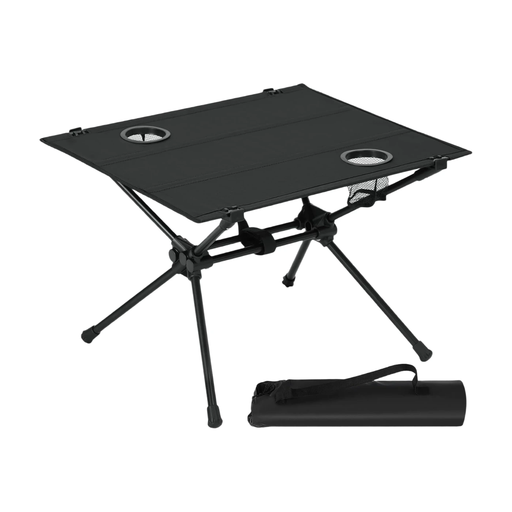
Why this model? It's the perfect companion for hiking, bikepacking, or fishing. Its 2.5 kg weight and compact carry bag make it an ally you'll forget is even there until it's time for a break.
Despite its fabric top, the cross-shaped metal frame and anti-slip feet provide perfectly adequate stability for solo use. The 30 kg maximum load is clearly specified and realistic.
Ultra-lightweight (2.5 kg) and intuitive, tool-free assembly. The two integrated cup holders are a handy little extra to prevent spills.

Why this model? Its 70x70 cm square size is perfect for 2 to 4 people. Its aluminium top is the star feature for outdoor meals: a quick wipe is all it takes to clean.
The roll-up aluminium top is much sturdier than cheap plastic. The X-frame with steel legs ensures good stability for a meal, avoiding the dreaded "wobbly table" effect.
Water-resistant and easy-to-clean aluminium top. The snap-together assembly is fast and requires no tools, making setup a breeze.

Why this model? With its large 120 cm tabletop, this table comfortably seats 4 to 6 people. It's the ideal solution for group meals, garden parties, or as a stable base for camping gear.
Its knockout feature: a load capacity of 100 kg, which eliminates any risk of instability. The aluminium-iron alloy frame and U-shaped fastening buckles ensure rock-solid rigidity.
Very high load capacity (100 kg) and an adjustable-height leg for perfect stability, even on sloping ground. Ideal for heavy-duty use.
Choosing camping furniture shouldn't be taken lightly. If these models don't check all your boxes, explore our complete selection of outdoor tables, all chosen for their reliability.
It all depends on your priority. If you're aiming for maximum lightness for transport (hiking, cycling), a fabric top is the way to go. If, on the other hand, you prioritise durability, ease of cleaning, and a perfectly stable surface for meals, an aluminium camping table is the sensible choice, especially for family or car camping.
The first trick is to find the flattest spot possible. If the terrain is truly uneven, opt for models equipped with one or more adjustable-height legs. This feature, found on tables like the EVER ADVANCED model, allows you to compensate for uneven ground and ensure a perfectly level tabletop.
Its longevity depends primarily on the quality of its materials and the care you give it. A well-designed aluminium table can last for years if stored in a dry place. For fabric models, the essential habit is to let it dry completely before folding it back into its bag to prevent mildew, its worst enemy. Finally, respecting the maximum load capacity indicated by the manufacturer is fundamental to avoid damaging the structure.