
Livraison le jour même ou le lendemain

Qualité garantie

Débloquez vos offres de bienvenue: Livraison GRATUITE | Jusqu'à -80 % | 30 jours d'essai gratuits à JoyPlus
Téléchargez l'application
Whether for an outdoor adventure, a fishing trip by the lake, or simply relaxing in your garden, a good folding camping chair is the essential companion for your moments of leisure. The problem? The market is saturated with models that make tempting promises but often prove disappointing in practice. A poor choice can not only ruin your day but also become a purchase you'll quickly regret.
To avoid falling into the trap, let's review the most common mistakes.
To make an informed choice, it's best to focus on a few fundamental criteria. These are what make all the difference between a short-lived gadget and a long-lasting investment.
A quick look at the spec sheet can often separate the wheat from the chaff and help you spot the model that will go the distance.
A chair's sturdiness depends entirely on its frame. There are two main materials:
Beyond the material, look at the frame's design. A cross-brace (X-shaped) structure is a hallmark of stability and usually makes folding easier. Also, be sure to check the quality of the rivets and joints, as these are often the first parts to fail.
Comfort depends on several factors that should be tailored to your body type and intended use.
The seat fabric must be both comfortable and durable. Polyester (e.g., 600D) is a classic choice, valued for its good resistance to tearing and abrasion. Some models incorporate mesh panels to improve ventilation—a real bonus in hot weather to prevent a sweaty back.
Enough theory, let's get practical. Here's how these criteria apply to specific models designed for different users.

Who is it for? Ideal for car campers, anglers, or anyone seeking maximum comfort in their garden. Its high back and rigid armrests make it a highly relevant option for seniors or anyone needing stable support to stand up.
This chair avoids the "false sturdiness" trap with its alloy steel frame and 180 kg weight capacity. It also solves the problem of sacrificed comfort with a 70 cm backrest and genuinely functional rigid armrests.
Optimal Support: The high back and rigid armrests provide comfort and valuable assistance for standing up.
Thoughtful Accessories: Swivelling cup holder and a side pocket with three compartments.
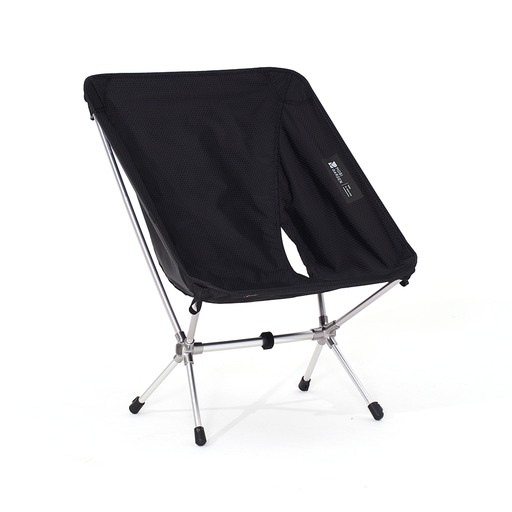
Who is it for? Designed for hikers, trekkers, and anyone for whom every gram counts. Its feather-light weight and ultra-compact folded size allow you to take it anywhere without being weighed down.
This model doesn't sacrifice sturdiness for weight. Its aircraft-grade aluminium alloy frame and triangulated structure provide surprising stability for a feather-light weight of 765 g.
Ultra-portable: Weighs just 765 g with folded dimensions of 11 x 36 cm.
Quick Setup: The frame unfolds and locks into place in a flash.
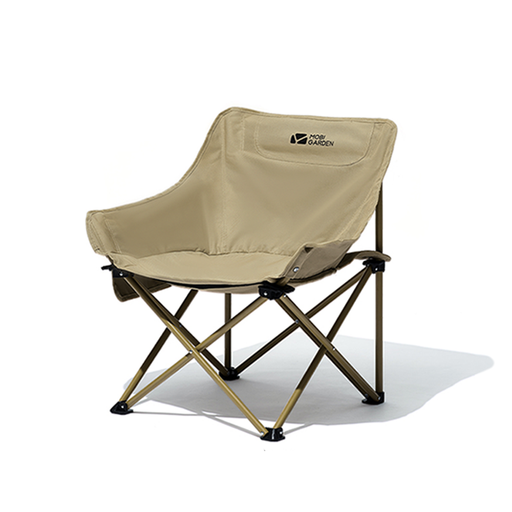
Who is it for? This is the perfect compromise for on-the-go use: festivals, picnics, camping, or even as a comfortable beach chair. Its enveloping "moon" design is especially popular for relaxing.
This model strikes a great balance. It's neither too heavy (2.35 kg) nor fragile. Its carbon steel frame and thick Oxford fabric give it commendable durability for regular use.
Enveloping Comfort: The wide, U-shaped curved seat hugs the body for a cocoon-like effect.
Reliable Structure: The cross-brace X-frame is easy to set up and ensures good stability.
We've put together a complete selection of products that check all the boxes on our list.
It all depends on the quality of its materials (frame, 500D or higher polyester fabric), frequency of use, and, most importantly, maintenance. By respecting the weight limit, cleaning it after each use, and storing it in a dry place, a well-made chair can last for many seasons.
A simple wipe-down with a damp cloth and mild soap is usually enough. Avoid harsh detergents and machine washing, which can damage the fabric and its coatings. The crucial point: make sure the chair is completely dry before folding it back into its storage bag to prevent mould and rust on the metal parts.
Not necessarily, but it's often a matter of compromise. A lightweight camping chair designed for hiking prioritises minimal weight, which translates to a lower seat and a less enveloping backrest. For extended comfort (fishing, reading, etc.), a slightly heavier camping armchair with a high back and a generous seat will often be a better bet.