
Livraison le jour même ou le lendemain

Qualité garantie

Débloquez vos offres de bienvenue: Livraison GRATUITE | Jusqu'à -80 % | 30 jours d'essai gratuits à JoyPlus
Téléchargez l'application
Whether you're hiking in the mountains, fishing by a lake, or simply enjoying the sun in your garden, a good folding camping chair makes all the difference. The problem? The market is flooded with products that rarely live up to their claims. A feather-light weight that hides extreme fragility, or boasted comfort that proves disappointing after just ten minutes... Knowing how to avoid these pitfalls is essential to making the right choice. As the Head of Product Selection at Joybuy, my mission is to help you navigate the options.
In the excitement of planning an upcoming trip, it's easy to overlook the essentials. Here are the most common mistakes that will make you regret your purchase.
To avoid these traps, it's best to rely on objective criteria. Here are the three points to scrutinise before you buy.
The frame material is the skeleton of your chair. It determines both its weight and its durability.
The one spec you should never ignore: the maximum static load. A quality chair worthy of the name must support at least 100 kg, even for the lightest models.
A portable camping seat must be practical, not just on paper. Look at the folded dimensions (length, width, height) to ensure it will fit in your backpack or car boot. Most importantly, pay attention to the folding mechanism. A quick-fold structure or a cross-braced X-frame unfolds in seconds—a major advantage in the field.
The comfort and resilience of your chair largely depend on its seat fabric. Oxford fabric is THE gold standard in this area. Usually made of polyester, it is renowned for its high resistance to abrasion and tearing. A well-tensioned canvas and an ergonomic cut that contours to your back are the keys to long-lasting comfort.
To help you see how these criteria translate into real-world products, here is our selection of models for different uses.
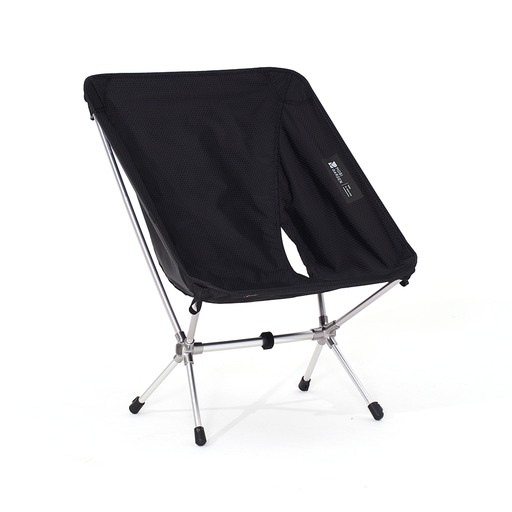
Why it's a great choice: For those who count every gram in their backpack, this model is a top-tier choice. Its extremely low weight and compact size make it virtually unnoticeable on long treks, while offering a welcome relief when you set up camp.
It avoids the trap of fragile ultralight design thanks to its aircraft-grade aluminium alloy frame and stable triangulated structure, supporting up to 140 kg.
Only 765 g on the scales and folded dimensions of 11 × 11 × 36 cm. Also available in green.
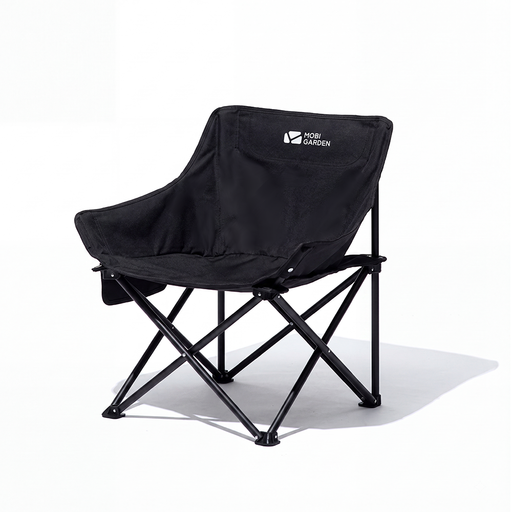
Why it's a great choice: Perfect for car camping, fishing, or picnics. The weight (2.35 kg) takes a backseat to the absolute comfort of a wide, enveloping seat, perfect for lounging for hours.
It doesn't fall into the trap of false comfort: its genuine U-shaped curved seat provides perfect support for the back and hips. The bonus: a handy side storage pocket.
Ultra-sturdy carbon steel frame, a generous 64.5 cm seat, and lightning-fast setup thanks to its X-frame structure.

Why it's a great choice: Its understated design and reclining function make it an excellent spare chair, equally at home on a balcony or in the garden, for use at home or outdoors.
It avoids the false compactness trap. While heavier (3.5 kg), its fold-flat design is a breeze and allows for easy storage against a wall, without the chore of a tedious assembly.
Adjustable seat angle for personalised comfort and a seat made of Textilene, a breathable and weather-resistant material.
Explore our full selection of products that meet our quality criteria and current safety standards.
A chair's longevity depends on a winning trio: material quality, frequency of use, and maintenance. A chair with a treated aluminium or steel frame and a robust Oxford fabric can last for many seasons. The secret to making it last is simple: clean it after each use (mud, dust), dry it completely if it gets wet to prevent rust, and store it in its bag in a dry place away from UV rays.
It all depends on your use case and priorities.
Absolutely, provided its design is well-engineered. Stability doesn't just depend on weight, but primarily on the frame's geometry. Look for a triangulated structure, which distributes weight ideally, and non-slip feet for a good grip on the ground. A well-designed chair, even one under a kilo, can be perfectly stable on flat ground. The rule of thumb: always check the maximum static load specified by the manufacturer.