
Livraison le jour même ou le lendemain

Qualité garantie

Débloquez vos offres de bienvenue: Livraison GRATUITE | Jusqu'à -80 % | 30 jours d'essai gratuits à JoyPlus
Téléchargez l'application
Finding the right folding camping chair can make all the difference on an outdoor trip. But with a market saturated with models making tempting promises, it's hard to know where to start. Many chairs simply don't hold up once they're in the field. Our mission? To help you decode the spec sheets and separate the marketing from reality. Before you commit, let's review the mistakes to avoid and the criteria that truly matter.
The excitement of a new purchase can sometimes make us forget the essentials. Here are three common pitfalls that can lead to buyer's remorse.
A hiking chair that weighs less than a kilo is certainly appealing on paper. But be warned: this lightness often comes at the expense of sturdiness. Frame tubes that are too thin or low-quality plastic joints can fail after just a few outings, especially on uneven terrain. While weight is a key factor, it should never take precedence over the structure's stability and durability.
Some models, often marketed as camping armchairs, focus entirely on a wide, padded seat. The comfort is immediate, but the bulkiness of the folded chair can quickly become a headache. A product that takes up half your car boot or weighs a ton to carry a few hundred metres loses all its portable appeal.
The static load capacity (e.g., 140 kg) is a laboratory measurement. It indicates the weight the chair can support while stationary on a perfectly flat surface. In the real world, you move, you lean, and the ground is rarely level. A robust frame and ripstop fabric are much better indicators of your chair's longevity in the field.
To avoid these traps, focus on the features that truly make a difference and define the quality of a folding camping chair.
The choice of frame material is crucial.
The canvas is just as important as the structure. Oxford fabric, often available in 600D (denier), is a reliable choice. It is known for its high resistance to wear and tear, and it's easy to clean. Some models use Textilene, a breathable and weather-resistant material, perfect for use at the seaside or on a balcony.
Never look at the weight without checking the dimensions of the folded chair.
Rather than a simple list, here is our selection designed for different user profiles, based on the criteria we've just discussed.
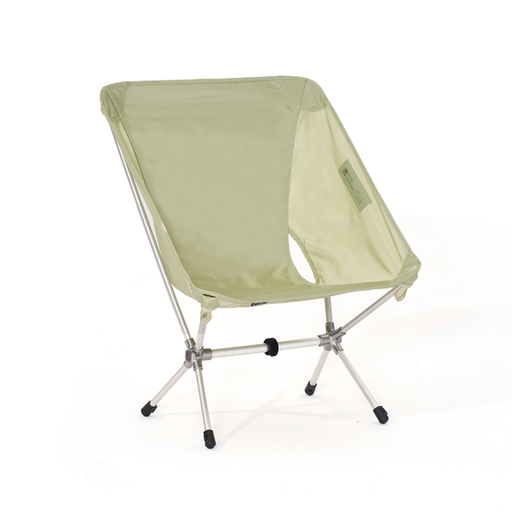
Why we chose it: For the gram-counters. Its featherlight weight and minimalist pack size make it the perfect companion for a well-deserved break during a backpacking trip or at the summit of a hike.
It counters the risk of fragility by combining its record-low weight (approx. 765 g) with a high-quality, aerospace-grade aluminium alloy frame and a triangulated structure that ensures excellent stability.
Ultra-compact: Its folded dimensions (11 × 11 × 36 cm) allow it to be forgotten at the bottom of a backpack.
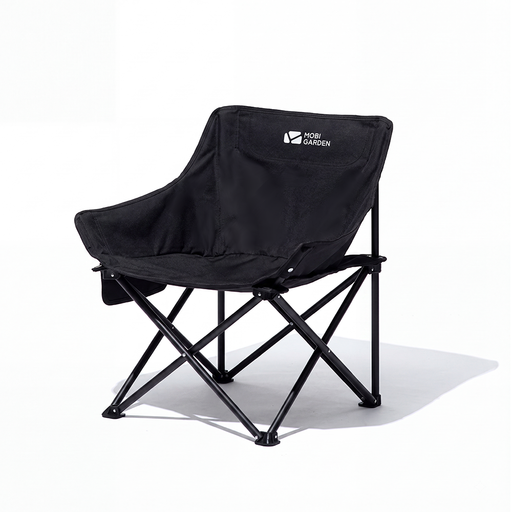
Why we chose it: Perfect for car camping, festivals, or long fishing trips where comfort outweighs weight. Its wide, enveloping seat is a true invitation to relax after a busy day.
It strikes a balance by not being overly bulky. Despite its generous and comfortable 64.5 cm seat, it folds down efficiently thanks to its X-frame structure and remains easy to transport (2.35 kg).
Robust structure: Its reinforced carbon steel frame with an anti-corrosion coating ensures great stability and excellent durability.

Why we chose it: This is the ideal spare seat for the balcony, garden, a picnic, or a festival. Its understated design and versatility make it an excellent all-rounder.
It offers an excellent compromise between comfort and practicality. Its 3.5 kg weight is reasonable for occasional transport, and its Textilene seat is comfortable, breathable, and weather-resistant.
Reclining backrest: A rare and appreciated feature that allows you to adjust your position for maximum comfort, whether you're reading on the patio or waiting for a bite.
Explore our full selection of models that meet our quality charter and European safety standards.
Longevity primarily depends on the quality of the materials and how you care for it. A chair with a quality aluminium or anti-corrosion treated steel frame and a robust Oxford fabric can last for many years. Prolonged exposure to sun and rain, as well as exceeding the maximum load capacity, are the main factors that reduce its lifespan.
Fortunately, maintenance is very simple. After each outing, a wipe-down with a damp cloth on the frame and fabric is enough to remove dust, mud, or pollen. Never use harsh detergents, and do not machine wash. Let the chair air dry completely (but in the shade) before storing it in its bag in a dry place away from heat.
Yes, provided it is well-designed. Quality ultra-light models rely on triangulated structures or central hubs that distribute weight effectively. Their feet are also equipped with wider, non-slip caps for better purchase on soft ground. However, it is always advisable to set it up on terrain that is as flat and stable as possible.