
Livraison le jour même ou le lendemain

Qualité garantie

Débloquez vos offres de bienvenue: Livraison GRATUITE | Jusqu'à -80 % | 30 jours d'essai gratuits à JoyPlus
Téléchargez l'application
Crowded public transport, lack of space at home, the need to weave through city traffic... it's a daily puzzle. Faced with these challenges, the folding bike is emerging as the smartest solution. Compact, practical, and increasingly high-performance, it's reinventing the way we move around the city.
Our mission: to guide you step-by-step with clear, objective criteria. Our experts are decoding the market for you so you can find the perfect urban folding bike for your needs and lifestyle.
Before diving into the jungle of available models, let's review the criteria that truly matter for daily use. Here are the three essential points to check to ensure you make the right choice.
This is the crucial factor for a folding bike: how easily it disappears once folded. A lightweight folding bike (ideally under 12 kg) will be a game-changer when carrying it upstairs or navigating the metro. Pay close attention to the folded dimensions (L x W x H). A good compact folding bike should slide effortlessly under a desk, into a car boot, or in a luggage compartment. The frame material is key here: aluminium is often chosen for its lightness, while steel, though heavier, offers rock-solid durability.
A good commuter bike must be versatile. The number of gears should be chosen based on the terrain of your routes. A 6 or 7-speed system, like those from Shimano, is generally sufficient for handling gentle inclines and accelerating from traffic lights. Wheel size also directly impacts comfort and performance. The 20-inch format is the gold standard on the market. It offers the best balance between good momentum for comfortable riding, welcome responsiveness in the city, and preserved compactness when the bike is folded.
For regular use, it's the details that make all the difference. The presence of mudguards will save you from splashes on rainy days, while a luggage rack will quickly prove indispensable for carrying a bag or your shopping. Also, remember to check the quality of the folding mechanism: it must be simple, fast, and secure. Folding pedals and a kickstand are other small extras that will make your life much easier.
To guide you, here are the models that caught our eye, vetted by our experts on technical specs, urban suitability, and overall design.
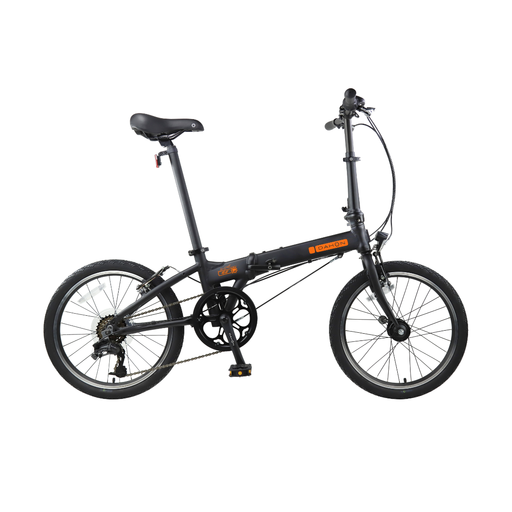
Why it stands out
The Dahon folding bike HIT D6 is a model that embodies balance. It combines a low weight, thanks to its aluminium frame, with the reliability of a Shimano drivetrain. Delivered ready-to-ride with mudguards and a luggage rack, it's designed for commuters from the ground up.
Pros:
Who is it for? The commuter who juggles public transport and is looking for a turnkey solution: reliable, lightweight, and fully equipped.
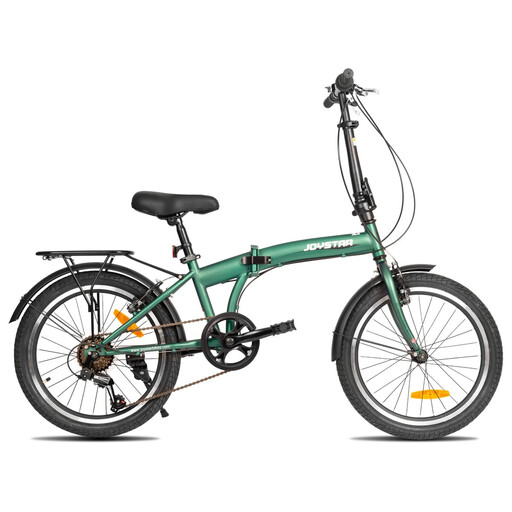
Why it stands out
The JoyStar Super focuses on robustness and simplicity. Its high-carbon steel frame guarantees excellent durability, while its folding mechanism and proven components make it an accessible and effective option for all kinds of journeys.
Pros:
Who is it for? For those seeking a functional and sturdy folding bike for commuting, weekend rides, or even camping, with an emphasis on durability and a controlled budget.
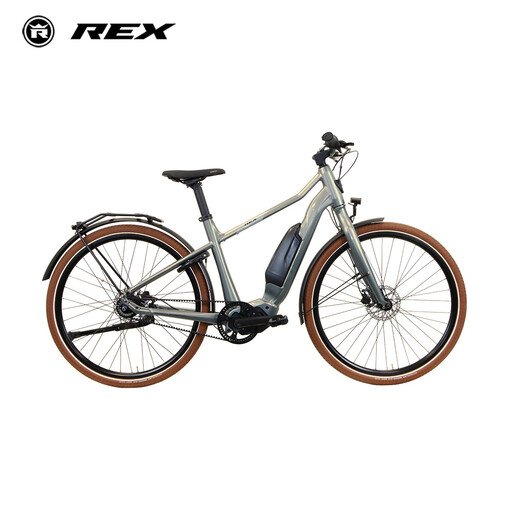
Why it stands out
This isn't a folding bike, but it's an excellent alternative for the urban cyclist who prioritises electric assist and minimal maintenance over compactness. Its Gates carbon belt drive replaces the traditional chain. The result: goodbye to grease, rust, and noise.
Pros:
Who is it for? The urban cyclist who covers longer or hillier routes and wants a transport solution that is effortless, silent, and almost maintenance-free, for whom storage is not the top priority.
Every rider has different mobility needs. If our selection doesn't check all your boxes, or if you're simply curious to explore other avenues, take a look at our complete collection.
? Discover our complete collection of unisex bikes to find the model that will accompany you on all your journeys.
Weight is a trade-off between price, materials, and features. A good, high-performance lightweight folding bike typically weighs between 10 and 13 kg. Aluminium models often fall into this range. Steel bikes are closer to 14-16 kg but can be more affordable. Below the 10 kg mark, you enter the ultra-light category, which is often much more expensive.
Yes, modern folding bikes are often surprisingly comfortable. Their 20-inch wheels better absorb road imperfections, while the saddle and handlebars, which are usually height-adjustable, allow you to find a comfortable riding position even on journeys of 30 to 60 minutes.
Most public transport networks allow folding bikes on board, provided they are folded and treated as hand luggage. Permitted maximum dimensions can vary. However, it's wise to check the specific regulations of each operator, especially regarding any restrictions during peak hours. It is precisely this flexibility that is the folding bike's greatest strength.