
Livraison le jour même ou le lendemain

Qualité garantie

Débloquez vos offres de bienvenue: Livraison GRATUITE | Jusqu'à -80 % | 30 jours d'essai gratuits à JoyPlus
Téléchargez l'application
A foldable storage box is a quick way to free up space in a bedroom, wardrobe or home office. However, choosing the right model is essential. After a few weeks, some can prove disappointing: dimensions that are incompatible with your shelves, fragile handles, fabric that is difficult to clean or a structure that collapses as soon as it is loaded.
Before buying a fabric storage box, basket or cube, it is therefore worth looking beyond its appearance. Here are the key criteria to consider when storing clothes, toys, laundry and accessories without turning your home into a dumping ground.
A large storage box is not necessarily designed to hold heavy items. Clothes, household linen and soft accessories are generally suitable for fabric or reinforced cardboard models. However, books, heavy shoes and metal objects can deform the sides.
Always check the maximum static load, expressed in kilograms. This value refers to the weight the box can support while remaining stationary. It does not mean that it is advisable to carry it regularly at that weight.
The external dimensions do not always tell the whole story. A 30 × 30 × 30 cm box may need a slightly larger compartment to slide into a unit without forcing it. Measure the available width, depth and height, remembering to allow for the space taken up by doors, hinges and neighbouring baskets.
For storage in a wardrobe, a front handle is often the most practical option. On a high shelf, side handles or a lid that does not obstruct opening may be preferable.
Fabric, woven paper, bamboo, metal and plastic do not all react to moisture in the same way. A fabric box is well suited to a bedroom or dressing room, but it requires appropriate care. Some models can only be cleaned with a damp cloth and are not machine washable.
In a bathroom or utility room, keep moisture-sensitive materials away from splashes. For dirty laundry, a ventilated basket with a removable bag may be more practical than a standard closed hamper.
A foldable box should be easy to collapse and take up as little space as possible when not in use. Examine its assembly system: on some models, you simply insert a base, while others include rigid panels and a zipped lid.
For clothes stored between seasons, a storage box with a lid limits exposure to dust. For items used every day, an open basket or a cube with a handle provides quick access to the contents.
Non-woven fabric, linen and Oxford fabric are lightweight, but their rigidity often depends on a reinforced base and internal panels. Sewn-in or integrated handles should be wide enough to distribute the pulling force and prevent them from tearing away.
A basket with a metal frame will generally retain its shape more effectively. Woven-paper models add a more decorative touch, but should be kept away from moisture and not overloaded.
When sorting small items, several medium-sized containers are often easier to use than one large catch-all box. A set of six cubes can separate socks, accessories, toys and office supplies. For laundry, a multi-compartment sorting unit helps prevent colours and categories from being mixed together.
Also consider how often you will need to move the box. A storage hamper with handles is ideal if its contents move between the bedroom, living room and utility room.
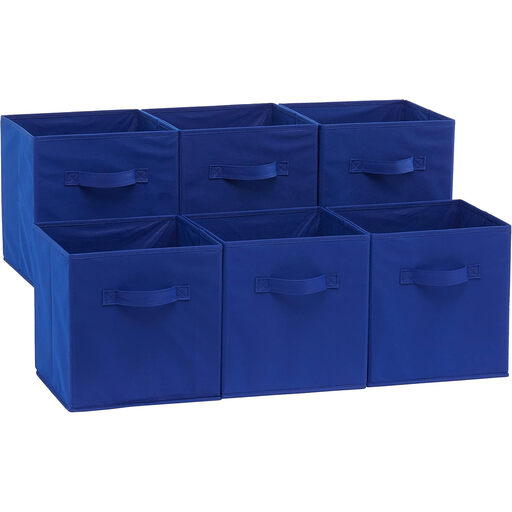
Why this choice suits this profile : This set lets you build your storage system gradually with six 8.5 L containers, suitable for wardrobes, shelves and desks.
The dimensions of each cube are stated: 26.7 × 26.7 × 27.9 cm. Measuring your storage unit before buying is still recommended.
A lightweight construction, integrated handles and easy cleaning with a damp cloth.
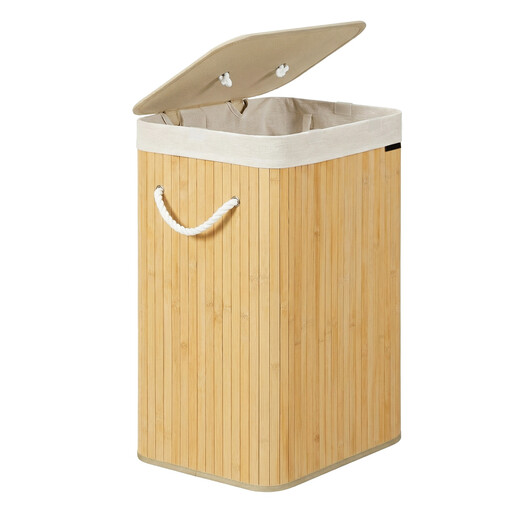
Why this choice suits this profile : With its bamboo frame, lid and removable inner bag, it fits just as well in a bedroom as in a bathroom or student studio flat.
The 72 L capacity and 10 kg maximum load give you a clearer idea of how it should be used. The manufacturer recommends avoiding prolonged exposure to moisture.
A removable inner bag, cotton handles and a flat-folding design.
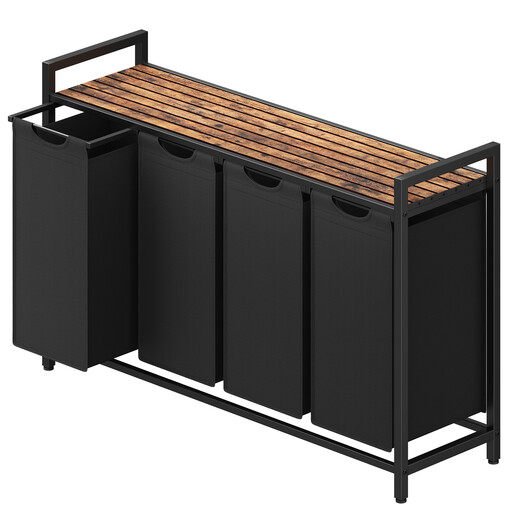
Why this choice suits this profile : Its four 40 L compartments are ideal for families and anyone who sorts laundry by colour or category.
The limits are clearly stated: 8 kg per bag, 30 kg for the shelf, with anti-tip wall fixing recommended.
A steel frame, adjustable feet and bags with reinforced base panels.
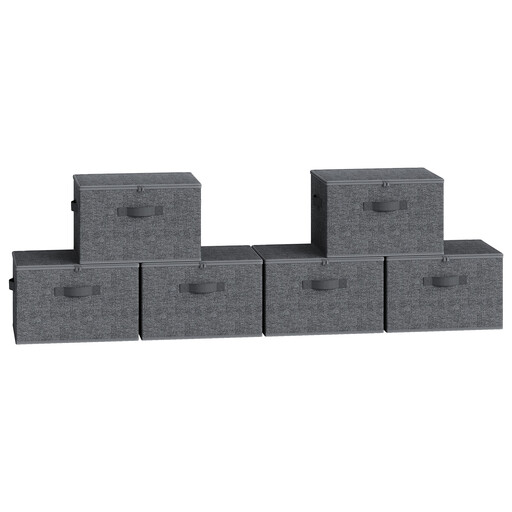
Why this choice suits this profile : These 40 × 30 × 25 cm boxes fit inside a wardrobe, on a shelf or under a bed, making them particularly suitable for a studio flat or student bedroom.
Each box has a zipped lid and a stated maximum static load of 3 kg. It folds away easily when not in use.
Three handles per box and good protection from dust thanks to the lids.
Start by grouping items according to how they are used rather than the room they are kept in. One box can hold winter accessories, another documents and a third toys. Add a label to each container so that you do not have to open them all to find a single item.
Do not pull excessively on the handles or place a soft box under a heavy load. To protect the fabric, dust it regularly and follow the manufacturer’s care instructions. A model that is not machine washable should be kept away from damp laundry.
We have put together a complete, real-time updated selection of products that meet these demanding criteria and European safety regulations.
Yes, provided it is kept in a dry environment with limited exposure to dust. For seasonal clothing, choose a model with a lid, do not exceed the stated load and make sure the textiles are completely dry before storing them.
Insert the base or reinforcing panels correctly, distribute the contents evenly and respect the maximum load. Avoid sharp objects and excessively heavy stacks. When the cube is empty, fold it according to the manufacturer’s instructions to avoid deforming the sides.
An open basket is practical for items used every day and encourages ventilation. A lidded box offers better protection for clothes, household linen and accessories stored for longer periods. The right choice therefore depends on how often you need to access the contents, the room and the level of protection required.