
Livraison le jour même ou le lendemain

Qualité garantie

Débloquez vos offres de bienvenue: Livraison GRATUITE | Jusqu'à -80 % | 30 jours d'essai gratuits à JoyPlus
Téléchargez l'application
Foldable UV400 sunglasses meet a very real need: protecting your eyes from the sun without cluttering a pocket, bag or glovebox. However, manufacturers’ promises don’t always tell the full story. Fragile hinges, an uncomfortable frame or poorly documented UV protection can quickly spoil your purchase.
Before you place an order, check three things: the stated level of protection, the quality of the lenses and how well the frame suits your intended use. A pair designed for driving won’t necessarily have the same qualities as sunglasses for cycling, fishing or sailing.
The UV400 label means the lenses filter ultraviolet rays up to 400 nanometres. On its own, it does not guarantee reduced glare from a wet road, water surface or window.
To limit glare, look for a separate mention of anti-glare sunglasses, an anti-reflective coating or polarisation. Polarised sunglasses generally improve comfort against horizontal reflections. However, they can make some screens harder to read depending on the viewing angle.
A lightweight frame is often more comfortable to wear, especially during a long journey or a day of travel. However, a very thin frame can lack stability if the arms slip or the bridge doesn’t suit your face shape.
TR90, a polymer prized for flexible, lightweight frames, is a good option for everyday use. Still, do check the frame width, arm length and type of nose pads.
Folding is only useful if the hinges are easy to operate and the pair comes with a case. Never force the arms and never fold the sunglasses the wrong way. Once folded, they should be stored in their protective case to minimise scratches and the risk of distortion.
A product listing may state UV400 protection, sometimes with a percentage of filtered rays. This information should be treated as manufacturer-declared specifications. For a purchase in the UK, also check for compliance information, the solar filter category and any usage warnings.
Standard sunglasses are not a substitute for protection designed for directly observing the Sun, an eclipse, welding or a powerful artificial light source.
Polarised lenses are particularly suited to activities where reflections are common: daytime driving, the seaside, fishing, golf or hiking. They don’t eliminate all contrast issues and are not suitable for night driving.
Photochromic lenses change tint depending on the brightness. This technology can be handy on a bike or during trips that alternate between shaded and open areas. However, their reaction speed varies depending on conditions and the type of glass you’re behind.
At a minimum, compare:
For sports sunglasses, a wraparound frame with good ventilation can reduce movement and fogging. Behind the wheel, prioritise clear peripheral vision and a tint suited to the brightness. Oversized sunglasses and cat-eye styles focus more on style, but their coverage must still suit your face shape.
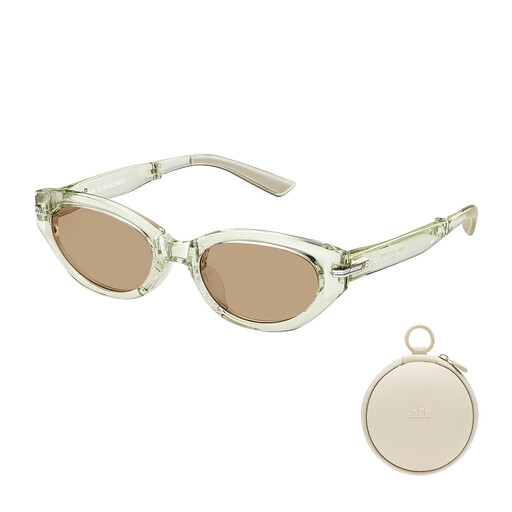
Why this choice suits this profile: This translucent cat-eye frame is ideal for everyday use. Its foldable design slips easily into a bag or pocket, while the flexible arms keep up with city travel.
The listing mentions a foldable TR90 frame, air-cushion nose pads and soft tips designed to reduce slipping.
Nylon lenses stated as UV400, OAR anti-reflective coating and five-point spring hinges.
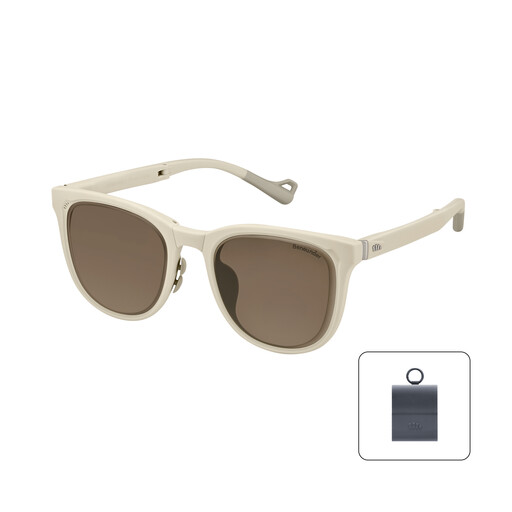
Why this choice suits this profile: Its understated Boston silhouette works equally well with a professional outfit or a casual look. The various adjustments let you fine-tune the fit for daily wear.
The model combines compact folding, three-position adjustable arms and dual-axis butterfly nose pads.
TR90 frame, nylon lenses stated as UV400 with anti-reflective, oleophobic and scratch-resistant coatings.
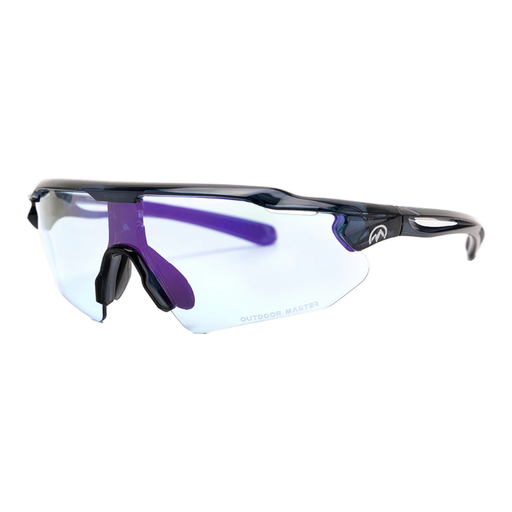
Why this choice suits this profile: This model targets cycling and outdoor activities, especially when brightness varies, thanks to its photochromic and polarised lenses.
The lenses are stated as impact-resistant and the TR90 frame weighs approximately 26 to 29 g, depending on the configuration listed.
Adjustable nose pads, stated wider peripheral field of vision and accessories including a case, cloth and inner frame for prescription lenses.
We’ve put together a complete, real-time updated selection of products that meet these demanding criteria and European safety regulations.
The lifespan depends mainly on the condition of the lenses, the hinges and how they are stored. Clean your sunglasses with a microfibre cloth, never with kitchen roll or an abrasive household cleaner. Rinse off any dust first before wiping, to avoid micro-scratches.
Replace the pair if the lenses are scratched enough to impair vision, if the frame no longer fits properly or if the folding mechanism becomes loose. Even if impact-resistant, sunglasses are not designed for an industrial environment or to withstand heavy impacts.
They can be suitable for daytime driving if the tint, filter category and peripheral vision are appropriate. Polarised lenses can reduce glare, but check their compatibility with dashboard screens. Never wear tinted sunglasses for night driving.
It all depends on how often you fold them, how you store them and their exposure to heat. A rigid case, careful handling and proper cleaning all help to limit wear. In particular, avoid leaving the pair in a car in direct sunlight: the frame and lens coatings can become distorted.
Not necessarily. They are handy when brightness changes, for example on a bike or while travelling. For strong sun exposure, driving or water sports, compare the actual tint achieved, the polarisation and the stated filter category before buying.