
Livraison le jour même ou le lendemain

Qualité garantie

Débloquez vos offres de bienvenue: Livraison GRATUITE | Jusqu'à -80 % | 30 jours d'essai gratuits à JoyPlus
Téléchargez l'application
A foldable trolley can make life easier when you're doing the shopping, moving parcels or carrying gardening equipment. But you need to pick the right model. Wheels that jam on cobbles, a handle that's too low, a flimsy bag or a stated capacity with no clear maximum weight can quickly turn a good idea into a disappointing purchase.
To avoid nasty surprises, it's better to look at the actual specifications rather than relying on marketing promises. Here are the criteria to check before choosing a foldable shopping trolley, a foldable sack truck or a folding transport trolley.
A large compartment doesn't necessarily mean the trolley can carry heavy loads. Some models boast several tens or even hundreds of litres, yet support a relatively limited weight.
Always check these two details:
For everyday shopping, a trolley of 50 to 60 litres is usually sufficient. For camping or gardening, it's better to go for a large-capacity trolley with a reinforced frame.
Small, narrow wheels will do the job in a supermarket or on perfectly smooth ground. On cobbles, gravel, wet grass or sand, they become noticeably less pleasant to use.
An all-terrain trolley fitted with wide wheels generally offers greater stability on uneven surfaces. The trade-off is that it can be heavier and bulkier once folded.
Not all folding systems are created equal, especially when you need to store the trolley in a small space. Before ordering, check:
A compact model that's a pain to fold is likely to end up at the back of a cupboard.
For carrying shopping bags, parcels or crates, choose a frame whose maximum load matches your usual needs, leaving a reasonable margin. When a model is convertible, its product page must state the permitted load for each configuration.
A folding wagon trailer of 200 litres is aimed at more bulky uses than a traditional shopping trolley. It can come in handy for camping, at the market or in the garden, but remember to check its dimensions and weight before buying.
Aluminium is often the preferred choice for a lightweight aluminium trolley, especially when you need to lift it regularly. Steel can offer a more robust frame and a higher capacity, but at the cost of greater weight.
For a fabric bag, look into the material and the care instructions. An Oxford 600D fabric, for example, may be listed as the manufacturing material – that doesn't mean you can ignore the cleaning and drying recommendations. After using it on wet or sandy ground, remove any debris caught in the wheels before folding the trolley.
An adjustable handle lets you set the height for different users and makes pulling more comfortable. On a slope, a trolley with a brake provides a handy way to keep it stationary. However, you must remember to engage it every time and never exceed the maximum load.
Ball bearings, twin wheels or wide tyres can improve smoothness, depending on the trolley's design. The most sophisticated model isn't necessarily the most suitable for short trips on a flat surface – the terrain and your intended use should guide your choice.
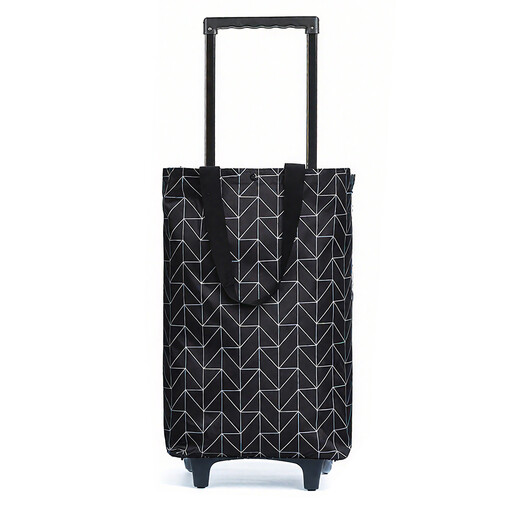
Why this choice suits this profile: Lightweight and foldable, this model is ideal for first-time use, short trips, daily shopping or storing in a small space.
It prioritises compactness and ease of transport over excessive capacity. The risk of ending up with an oversized trolley for simple use is therefore limited.
Foldable format, black colour and a design described as lightweight. Check the product page for dimensions and permitted load.
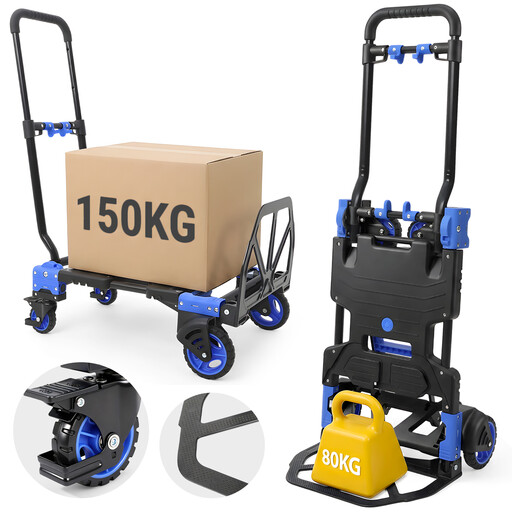
Why this choice suits this profile: Its transformation into a sack truck or platform adapts to the needs of a household that transports boxes, crates and bulky items alike.
The maximum load varies by configuration: 80 kg as a sack truck and 150 kg on the platform. This distinction prevents you from taking the maximum capacity as a value that applies in all cases.
Aluminium frame, net weight of 7 kg, adjustable handle and integrated parking brake.
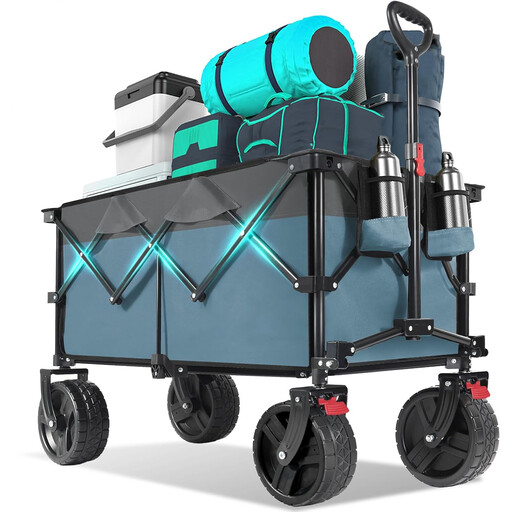
Why this choice suits this profile: It's aimed at campers, gardeners and families who need to move equipment across grass, mud or uneven paths.
Its wide wheels, approximately 18 cm, and its brake overcome the limitations of small wheels on uneven ground. The stated load must still be respected.
200-litre volume, stated load of 200 kg, Oxford 600D fabric and tool-free folding.
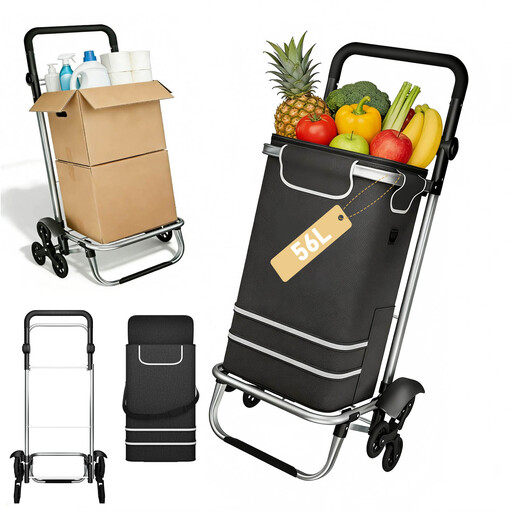
Why this choice suits this profile: This hybrid format is suitable for local shopping, picnics or trips where the trolley needs to remain easy to carry.
With its stated 56 litres, it gives you a clearer idea of the actual capacity, unlike models that mention a large volume without providing a precise measurement.
Foldable design, backpack-trolley combination and three wheels according to the product page. Check the version you choose before ordering.
We've put together a complete, real-time updated selection of products that meet these demanding criteria and European safety standards.
Yes, provided its volume and maximum load match the amount you carry. For a big shop, also think about checking its width, whether it fits through doorways and the space available in your boot. A very bulky model can become difficult to manoeuvre on public transport or stairs.
Respect the stated maximum load, avoid pulling the trolley when the handle isn't properly locked, and clean the wheels regularly. After using it on sand or mud, remove any particles before folding it. Store it in a dry place and regularly check the joints, fixings and brake.
Two wheels often suit a foldable sack truck or a shopping trolley that you pull behind you. Three wheels can make it easier to get over certain kerbs, depending on the design. Four wheels generally offer a more stable base for bulky loads, but they can also increase weight and bulk. The right choice therefore depends on the terrain, the load to be carried and the storage space available.