
Livraison le jour même ou le lendemain

Qualité garantie

Débloquez vos offres de bienvenue: Livraison GRATUITE | Jusqu'à -80 % | 30 jours d'essai gratuits à JoyPlus
Téléchargez l'application
Foldable sunglasses solve a very real problem: protecting your eyes without taking up too much room in a pocket, bag or glovebox. But you need to choose a pair that doesn't sacrifice lens quality, hinge durability or everyday comfort for the sake of style.
Before you order, there are three pitfalls worth paying attention to:
The term UV400 sunglasses means, according to the information provided by the manufacturer, that the lenses are designed to filter ultraviolet rays up to 400 nm. This cannot be replaced by a simple dark tint or a vague promise of "sun protection".
For driving, walking around town or travelling, an anti-glare treatment can make vision more comfortable by reducing reflections on the road, shop windows or water. Polarisation, on the other hand, reduces certain directional reflections, but it never replaces UV protection. So check these two features separately.
A TR90 frame is often appreciated for its lightness, flexibility and resistance to deformation. However, the stated weight is more telling than any marketing claim: a pair weighing 25 to 30 g can be easy to forget you're wearing for several hours, provided the arms don't press on your temples.
Also remember to compare the dimensions:
An oversized frame covers more of your face. Conversely, a narrower cat-eye shape can offer a bold silhouette without feeling too overpowering.
The right choice really depends on your habits:
Foldable sunglasses also benefit from being supplied with a suitable case or pouch. Without protection, the lenses risk getting scratched at the bottom of your bag.
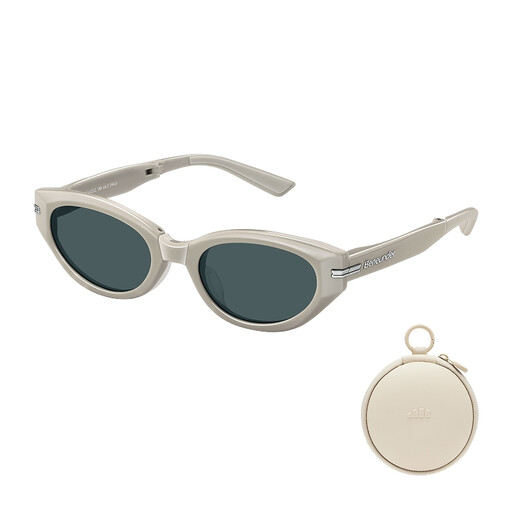
Why this choice suits this profile: Its cat-eye shape and compact frame are perfect for everyday use, city commutes and occasional outings. The product page mentions a lightweight TR90 frame, UV400 nylon lenses and a folding mechanism.
The key features are clearly stated: UV400 protection, OAR anti-reflective treatment, air-cushion nose pads and five-point elastic hinges.
Foldable design, arms with flexible zones and a stated frame width of 14.7 cm.
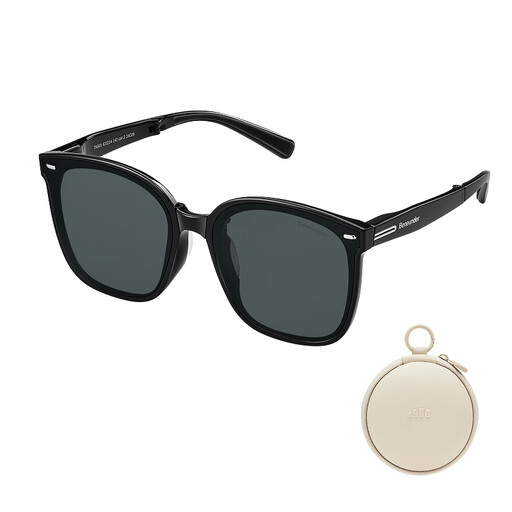
Why this choice suits this profile: This model is for those who want generous visual coverage and a travel accessory that's easy to slip into a bag. Its three-fold format is said to measure just 35 mm when folded.
The stated weight is 26 g. The product page also mentions an OAR anti-reflective coating and UV400 protection.
TR90 frame, oversized format, high-definition nylon lenses and a treatment described as resistant to everyday scratches.
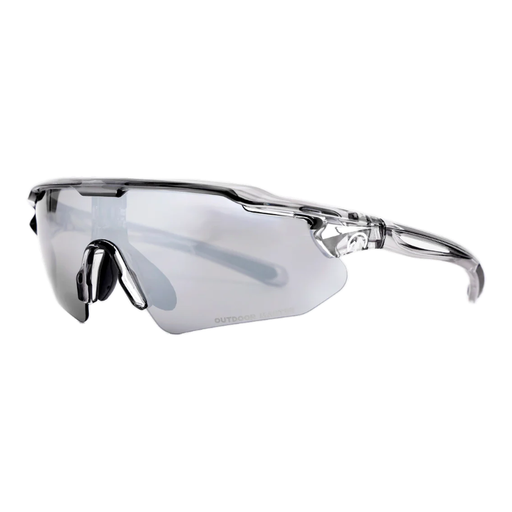
Why this choice suits this profile: This model is aimed at cycling and outdoor sports, with photochromic and polarised lenses, a TR90 frame and adjustable nose pads.
The page specifies its sporting uses, nose adjustment, everyday impact resistance and UV400 protection. It also notes its limitations: these glasses are not industrial safety eyewear.
Combination of photochromic and polarised lenses, weight of 26 to 29 g depending on configuration, and storage case included.
We've compiled a complete, real-time updated selection of products that meet these demanding criteria as well as European safety regulations.
To keep your foldable sunglasses in good condition, open and close the frame without twisting it. Clean the lenses with a microfibre cloth, never with paper or an abrasive fabric. Store them in their case and avoid exposing them to high heat, especially in a car parked in direct sunlight.
Replace the pair if the lenses are heavily scratched, if the frame no longer sits properly on your face, or if the hinges have developed significant play. Their lifespan depends largely on how often they are folded, storage conditions and exposure to knocks.
Yes, for daytime driving, provided the tint, visibility and fit are right for you. Check the manufacturer's instructions and avoid lenses that are too dark or unsuitable for low-light conditions. No sunglasses should be worn for driving at night.
No. Their tint varies depending on UV exposure, but the result depends on the environment and lighting conditions. For a specific use, compare the stated tint range, for example from category 0 to category 3, as well as the presence of UV400 protection.
A weight of around 25 to 30 g can help reduce the feeling of pressure, but comfort also depends on the bridge, nose pads and arm length. Check the frame dimensions before ordering, especially for everyday or sporting use.