
Livraison le jour même ou le lendemain

Qualité garantie

Débloquez vos offres de bienvenue: Livraison GRATUITE | Jusqu'à -80 % | 30 jours d'essai gratuits à JoyPlus
Téléchargez l'application
An overflowing cupboard, seasonal clothes you can never find or things gathering dust in the garage: plastic storage boxes with lids can make it much easier to get organised, as long as you choose a model that suits the job. A box designed for shoes won’t meet the same needs as one for blankets, tools or food.
Before you head to the checkout, avoid these three common mistakes: relying solely on the stated capacity, underestimating the importance of the lid and stacking boxes without checking that they’re stable. Here’s what to look for when choosing a practical storage box, whether you need one for a flat, house, office or workplace.
A large storage box may look like a good option on paper, but its external dimensions don’t always reflect the space available inside. Thick walls, reinforcements or rounded corners can significantly reduce its internal capacity.
Measure the space before you buy: the width of a shelf, the clearance under a bed, the depth of a car boot or the gap between two pieces of furniture. In a wardrobe, several medium-sized stackable boxes are often easier to handle than one very large storage box.
A clip-on lid generally protects the contents better than one that simply rests on top, but it doesn’t automatically make the box watertight. Check the product details for handles, clips or a seal.
For clothes and documents, a snug-fitting lid helps keep dust out. In a cellar, on a balcony or in a garage, you’ll also need to avoid prolonged contact with water, extreme temperature changes and direct sunlight, unless the manufacturer says the product is designed for these conditions.
Stacking boxes without considering their weight can warp the lids and make the pile unstable. Books, tools and heavy appliances need a reinforced box placed on a stable base. For lighter items such as laundry or accessories, a foldable box or a model with more flexible sides may be enough.
Polypropylene (PP) is widely used for storage containers. It offers a good balance of rigidity, light weight and easy maintenance. A clear or translucent box lets you see what’s inside at a glance, but a label is still useful when several boxes look alike.
Reinforced fabric models, such as some under-bed organisers, take up less space when empty. They’re best suited to clothes, blankets and shoes rather than rigid or particularly heavy items.
For a small shelf or desk, capacities of around 12 to 23 litres are generally easiest to move. 20-litre boxes with handles can hold toys, stationery or hobby supplies.
Models ranging from 45 to 70 litres are better suited to duvets, coats, seasonal equipment or camping gear. Always check the exact dimensions: a box intended for under-bed storage must fit within the available height, including the wheels and lid.
A clip-on or press-on lid should close without forcing it. Built-in handles make the box easier to carry, especially when it’s full. Some models also have a front opening, which is particularly handy when boxes are stacked and you need to get to their contents without moving everything.
For food storage, choose only a product whose details clearly state that it’s suitable for this purpose. An 800 ml airtight food container shouldn’t be confused with a box designed for household storage. Also follow the instructions for freezer and microwave use, washing and maximum temperature.
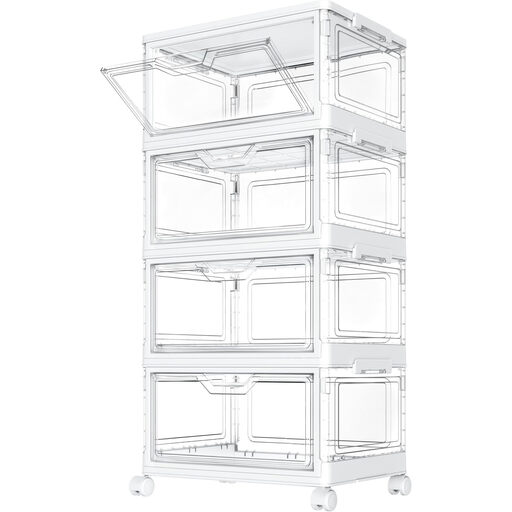
Why this suits you : With a capacity of 23 litres, this model is ideal for stationery, shoes, cosmetics and everyday essentials. Its foldable design makes it easy to store when not in use.
The transparent sides and dual-opening design save you from repeatedly rummaging through an opaque or overly deep box.
23-litre capacity, top lid, magnetic front opening and four wheels.

Why this suits you : Measuring 50.4 × 37.6 × 28.8 cm, these boxes are ideal if you want a coordinated storage system for your wardrobe, pantry or garage.
The reinforced body, non-slip base and press-on lid help reduce the risk of an unstable stack.
PP plastic, listed as 2.5 mm thick, with built-in handles and transparent sides.
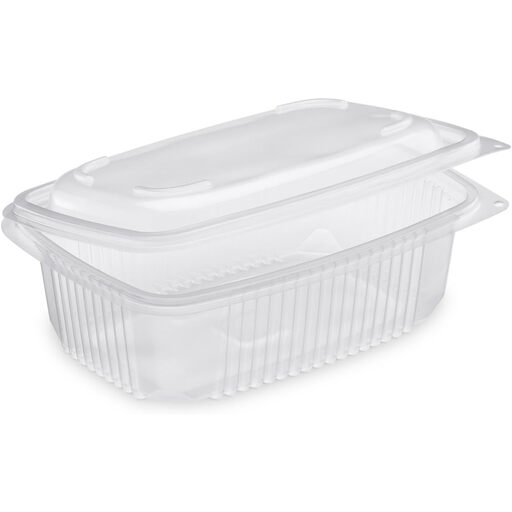
Why this suits you : This pack is handy for meal prep, transporting portions or meeting the needs of a small catering business, provided you follow the instructions for use.
The 800 ml size and hinged lid make portioning easier, and there’s no separate lid to lose.
Pack of 50 clear polypropylene containers, stackable and listed as freezer- and microwave-safe in the product description.
We’ve put together a comprehensive selection, updated in real time, of products that meet these demanding criteria and European safety standards.
Place the containers on a flat surface and check that each lid is properly closed. Models with a non-slip base or a lid designed to hold another box offer extra stability. Make sure you don’t exceed the recommended load, either.
Measure the available height, then allow enough clearance to handle the lid. A wheeled, foldable organiser makes it easier to access your things, while a rigid plastic box offers better protection against knocks. Before storing clothes and blankets, make sure they’re clean and completely dry.
No. Only use a container whose product details state that it’s suitable for food, and follow the symbols and temperature limits. When using it in the microwave, remove the lid or leave it ajar if the instructions say to. For long-term storage, check the condition of the plastic and closure regularly.